(Im)moveables on canvas
The renovation of a ‘loft-no-loft’ on Carrer Parlament in Barcelona, or how to fill a blank canvas through furniture with sinuous shapes that define the rooms.
Difficulty and virtue
Casa Xurigué, designed and built in 1868 by the master builder Pau Martorell in the heart of the Sant Antoni neighbourhood, was one of the first (illegal) constructions in the Ensanche Cerdà. Located just outside the walls of what had been the portal of Sant Antoni and where, 10 years later, the current market would appear, it was one of those Barcelona buildings that lived between eras. In an Ensanche still without imagining that it would take 30 more years for the “typology” to materialize, Casa Xurigué is still part of a tradition exported from the Ciutat Vella, where master builders built buildings accustomed to their narrow bays.
This is how the status of a pioneer building in the Eixample of Casa Xurigué is manifested in the peculiar structural and lighting solutions. Originally, the spatial organization was conditioned by two very deep bays (6m) crossed by a load-bearing wall with a small opening that communicated, but also stifled the continuity between rooms. On the other hand, three luminous patios generously oxygenated the house.
Loft yes and loft no on a blank canvas
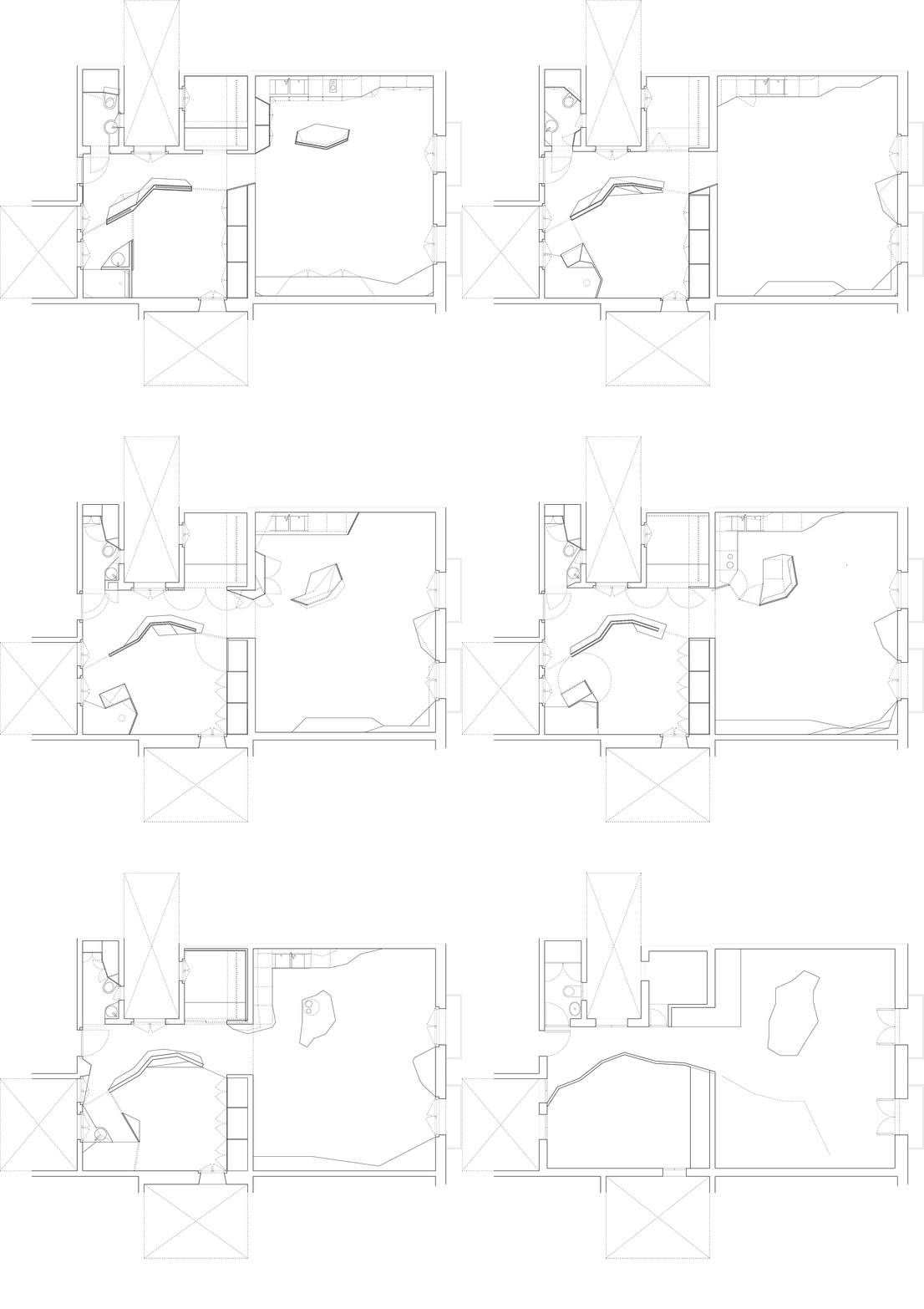
The challenge of the project was to find, as opposed to the original distribution, an open-plan house that would allow the 80m2 to be enjoyed as a spatial continuum but at the same time could be compartmentalized.
With this objective in mind, we decided to organize the program in successive strips from the access to the façade. From more to less closed. From least to brightest. The wet areas are associated with the load-beareing wall and the 2 technical patios. The night area in the middle, more internal and protected. The living room and kitchen on the facade of the street facing south.
One of the first decisions was to empty and unify the space, turning it into a blank canvas defined by its 3 patios and the load-bearing wall that cuts it into 2 pieces. Thus, the sensation of a generous space brimming with light is expanded.
Secondly, we define the uses and supports inside.
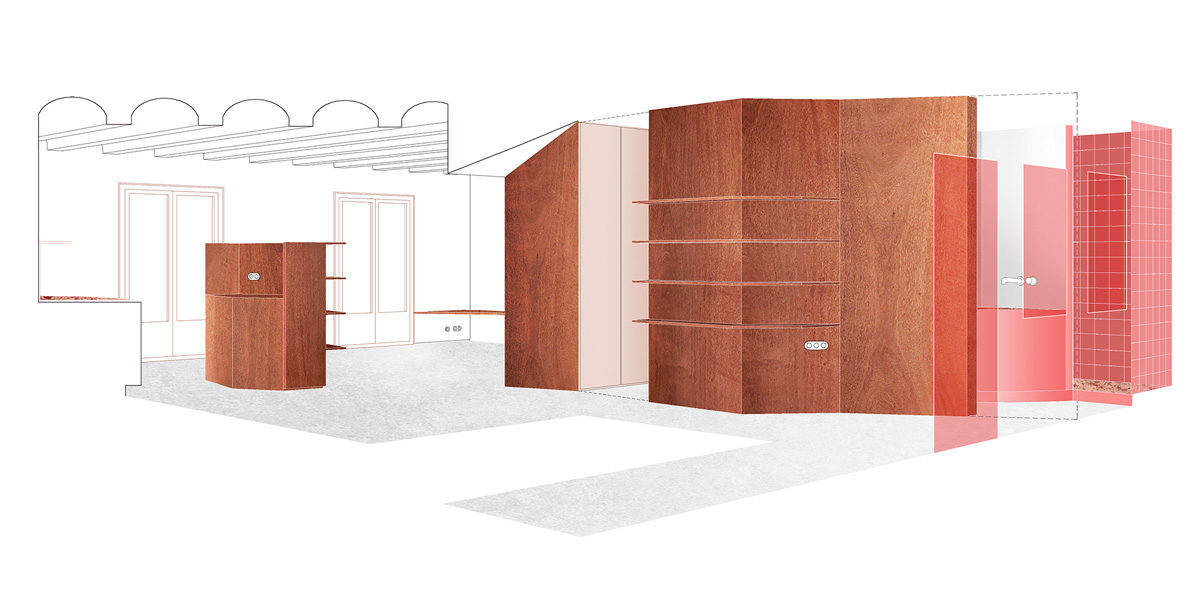
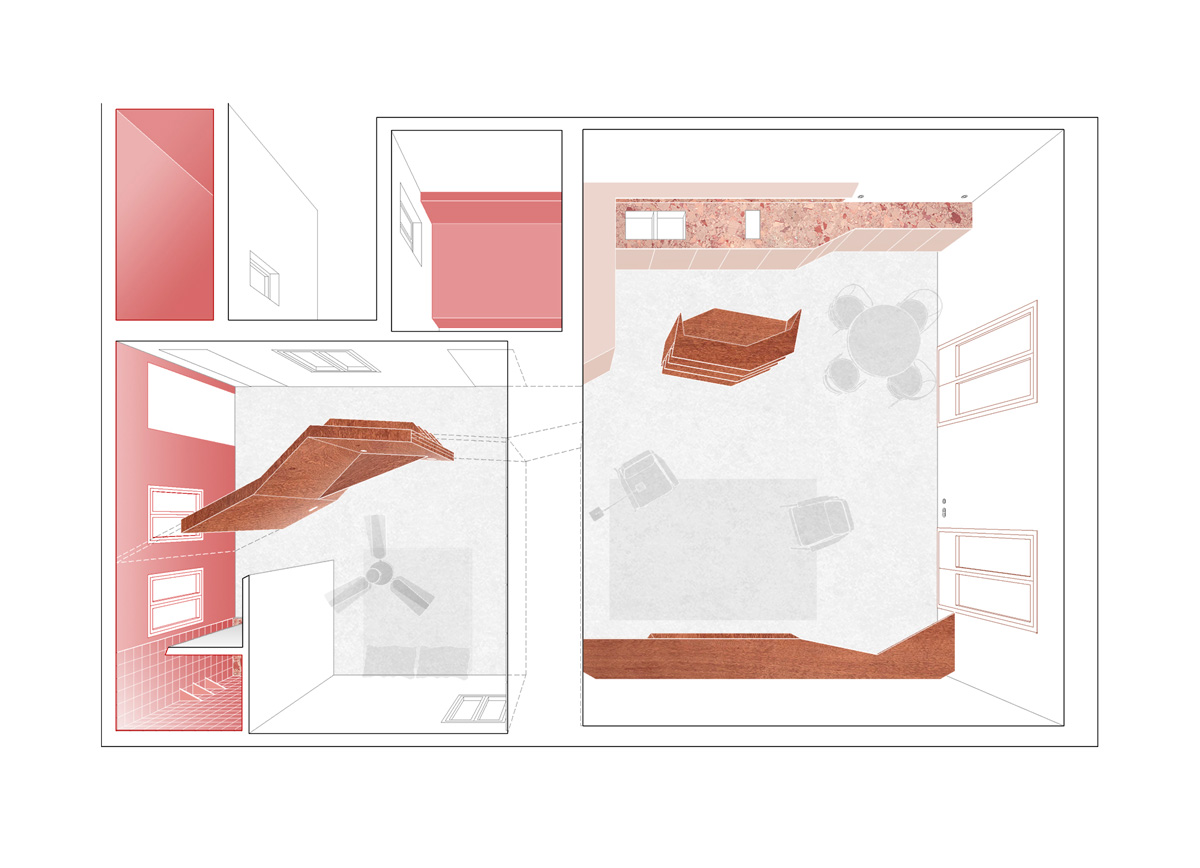
The (im)moveables: the heart
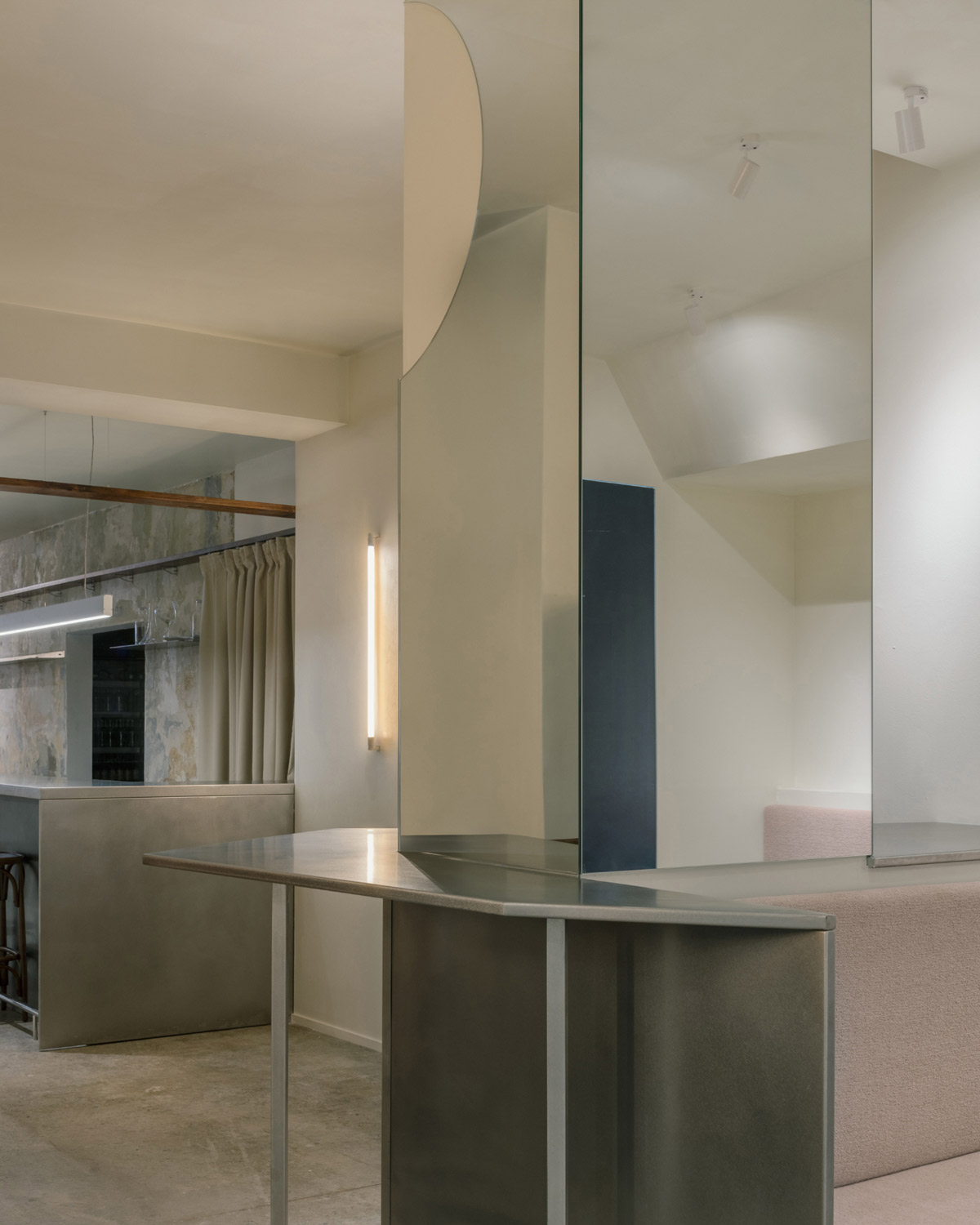
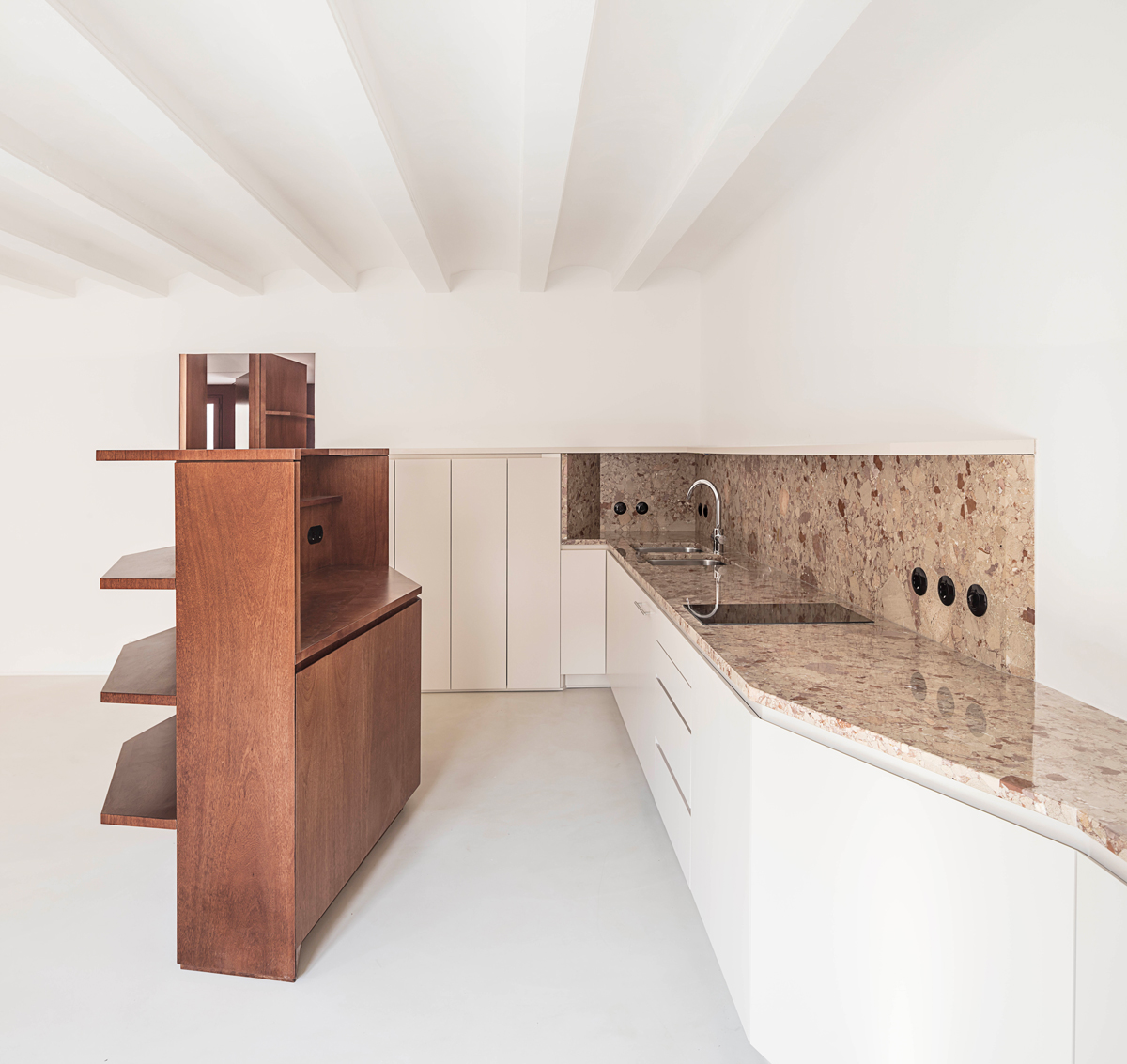
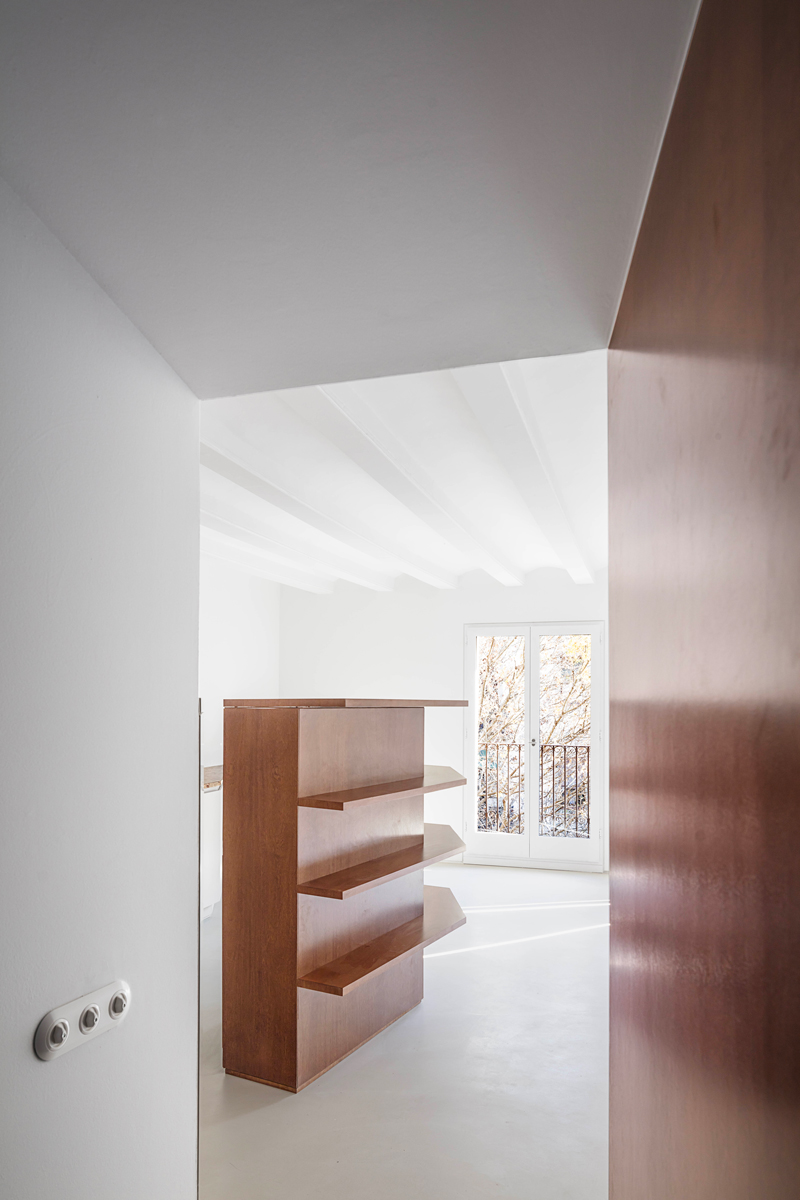
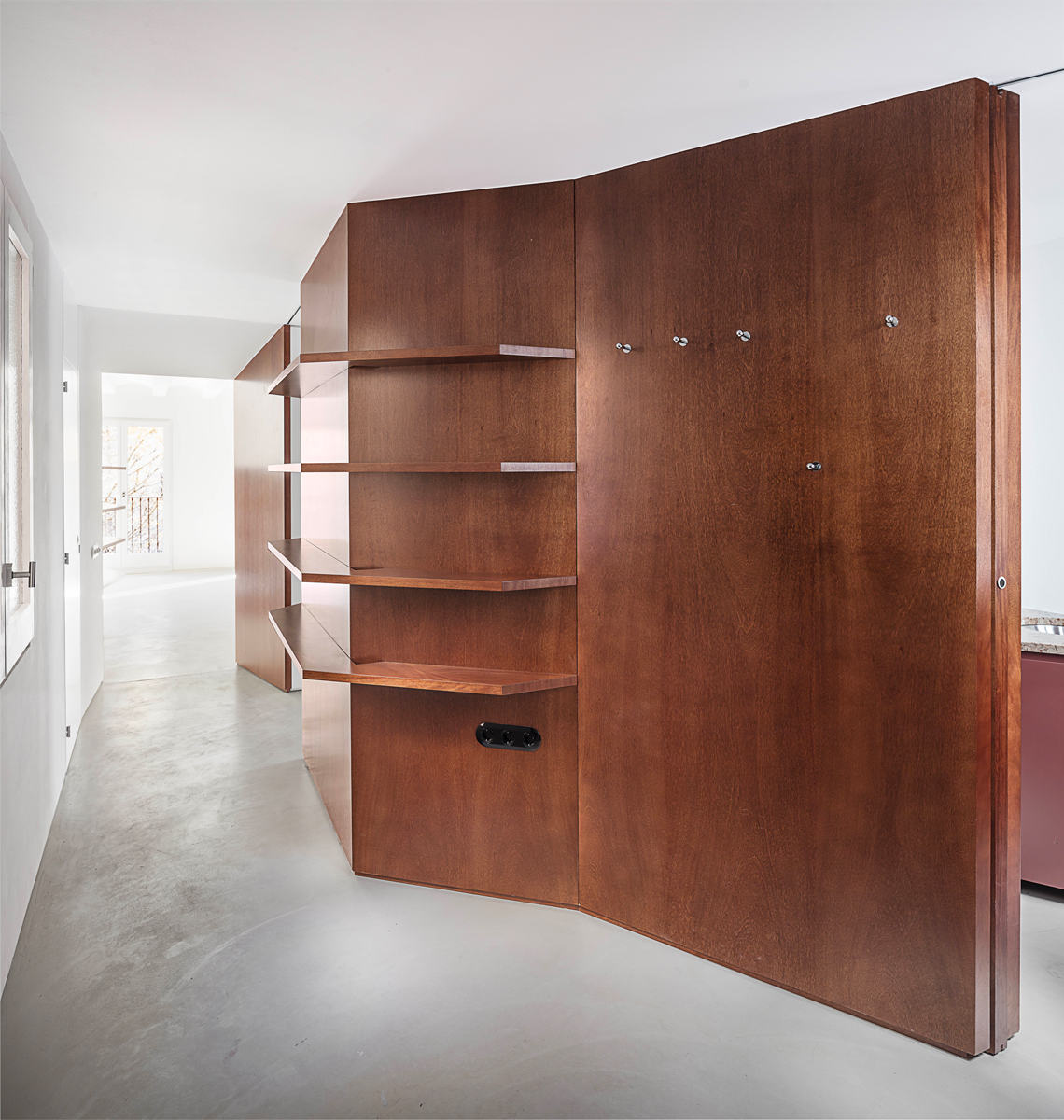
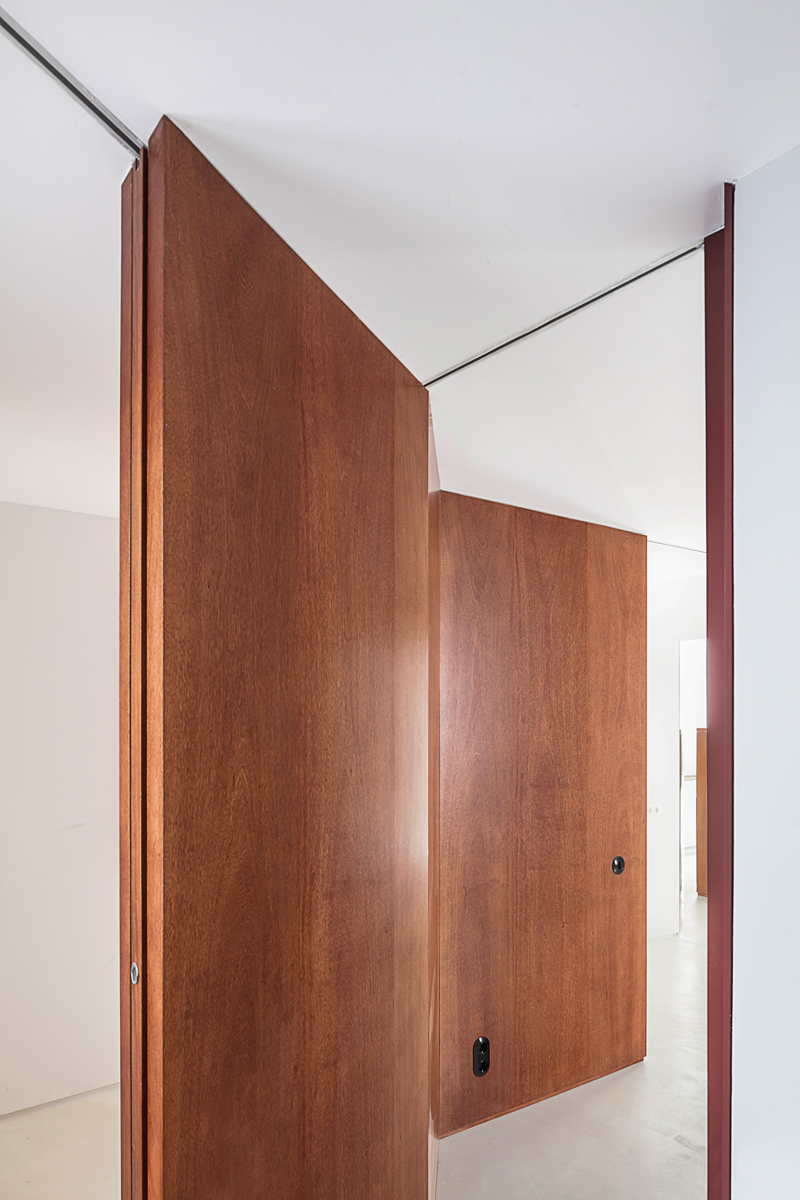
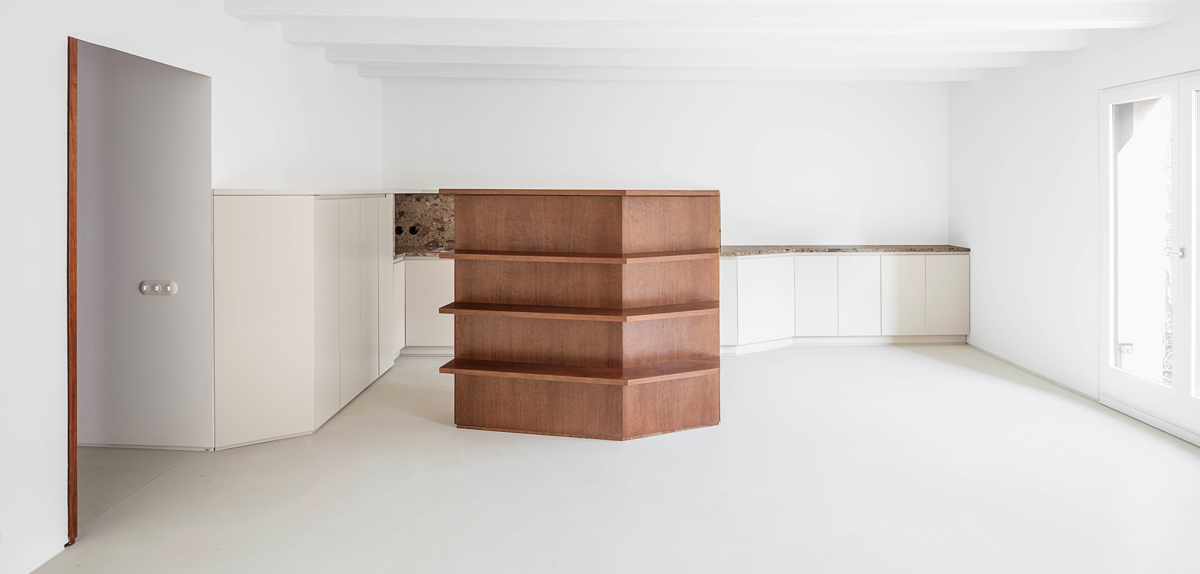
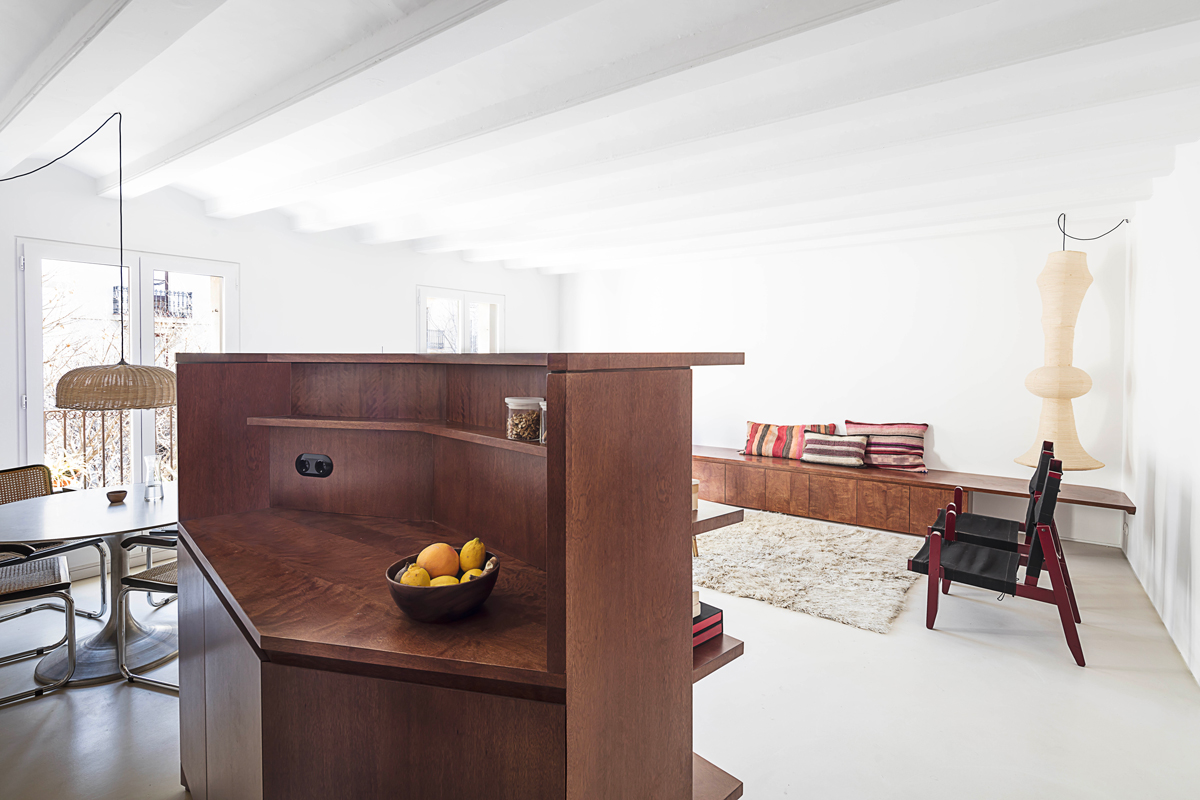
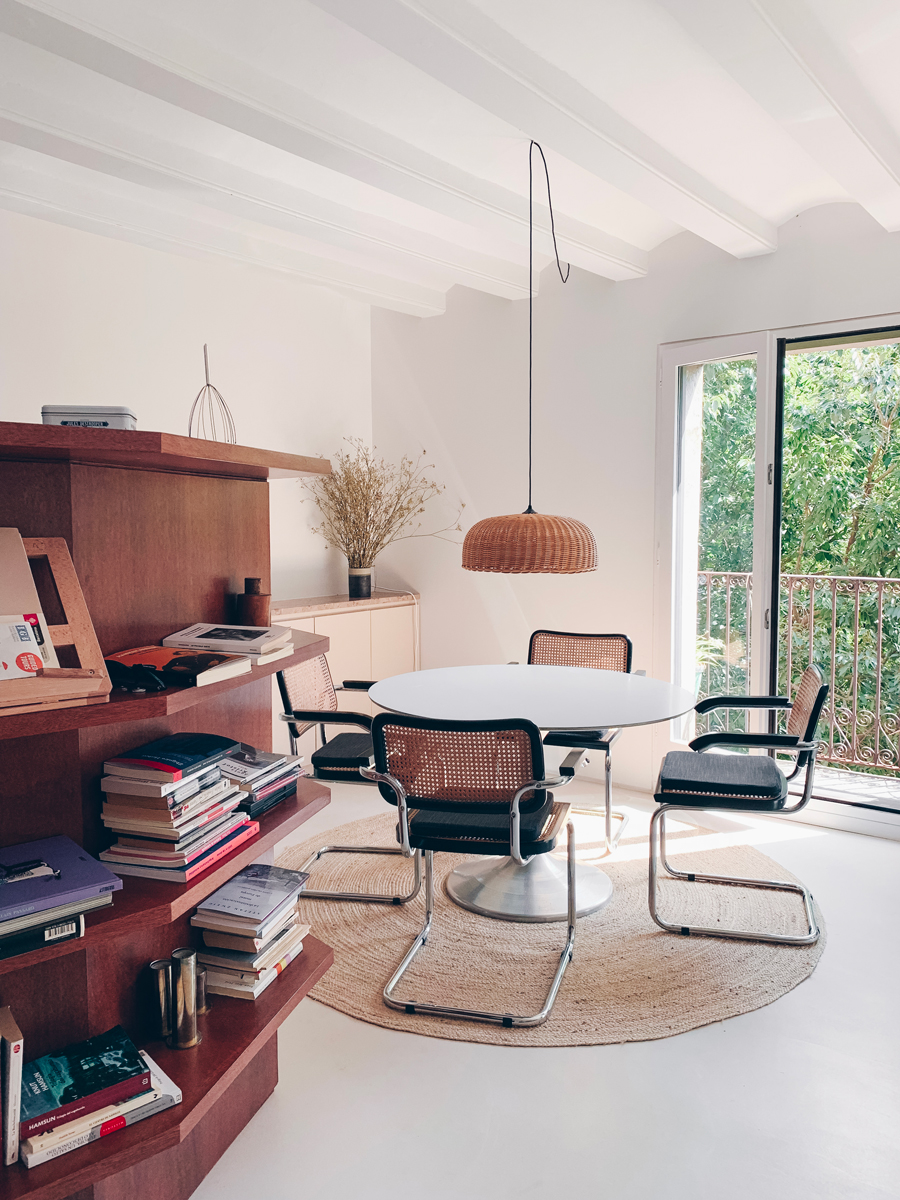
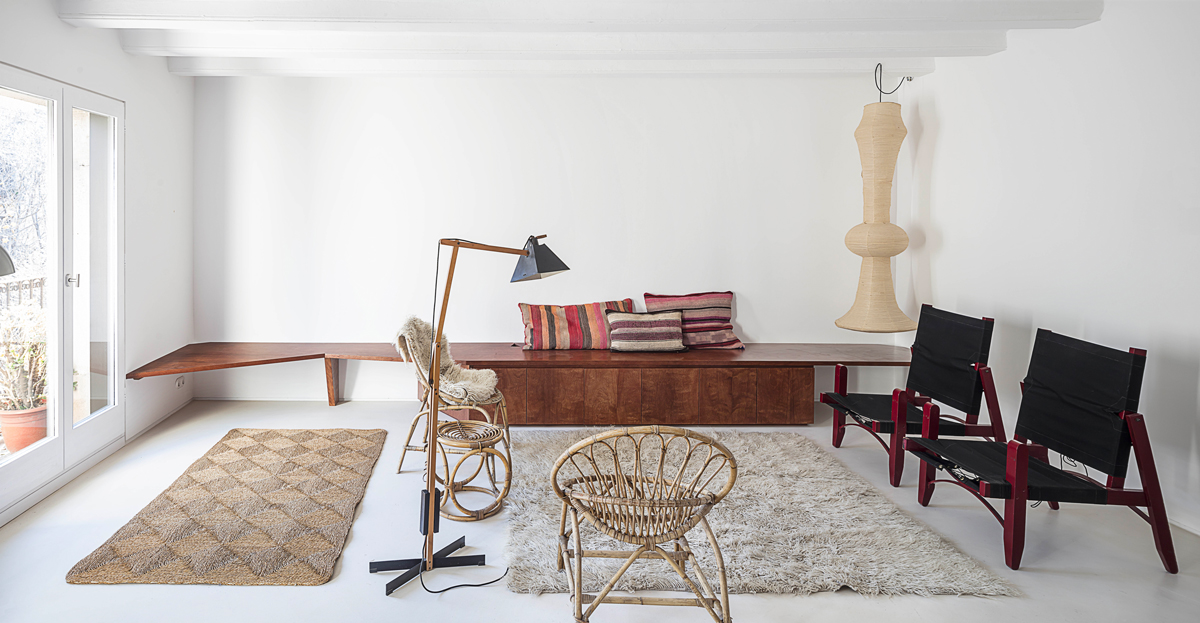
Given the uniformity achieved through the white color, we introduce the “(im)moveables” which, due to its materiality and shape, vibrate and fill the home with life. It is immobile furniture.
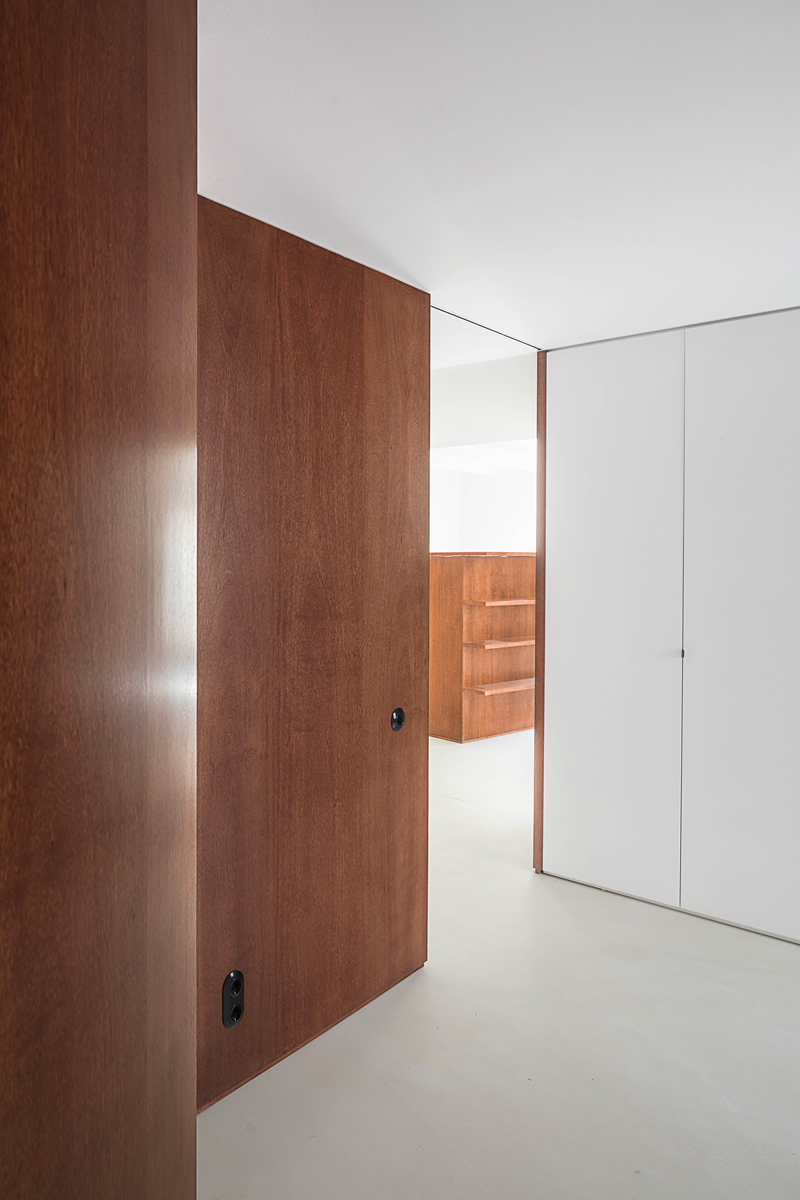
(Im)moveables that, arranged in tension within the neutral void, allow the generation of identifiable and differentiable spaces while related in a continuum.
(Im)moveables that energizes the home and creates circular paths as a strategy to increase the complexity of the spatial game.
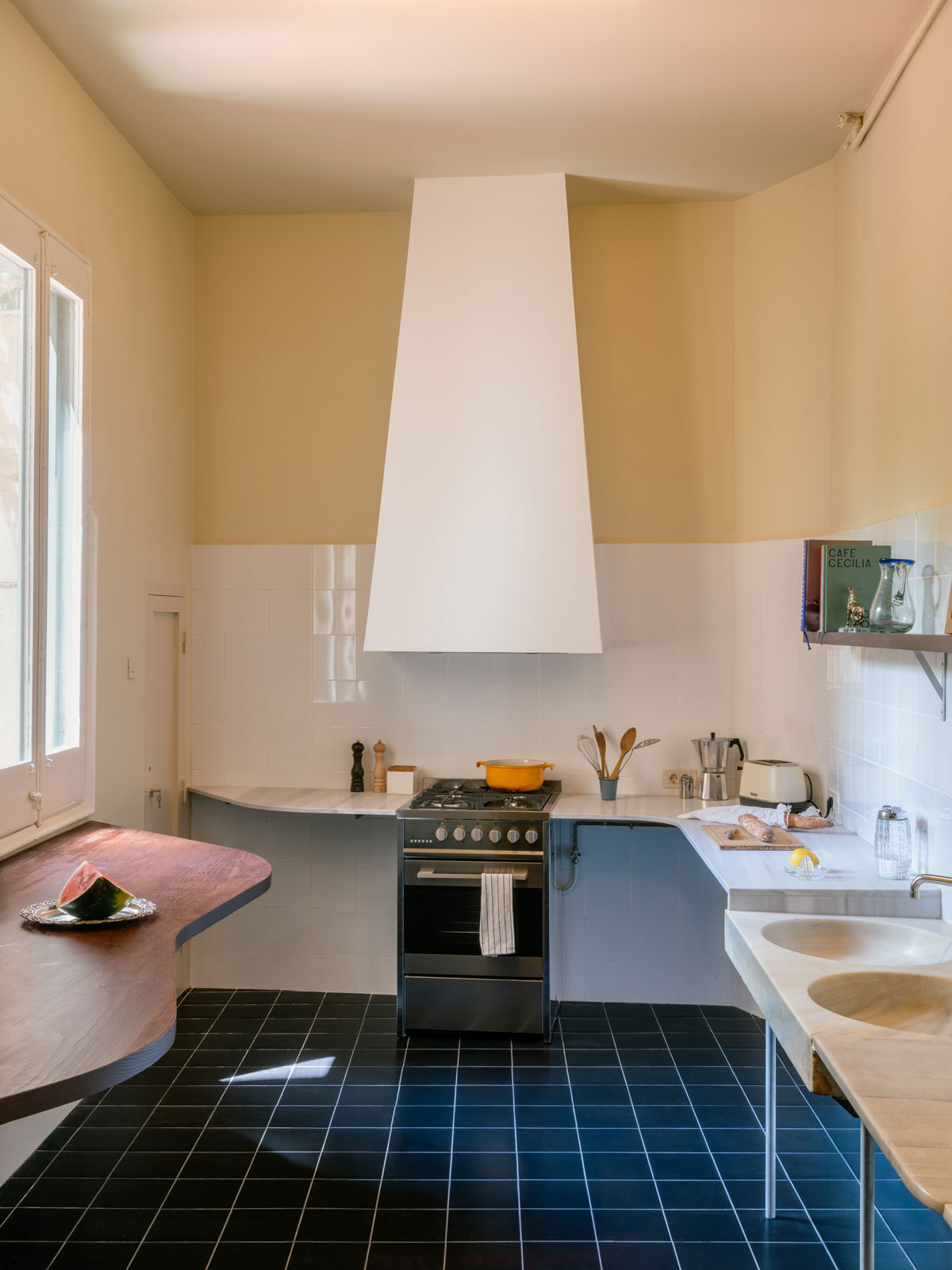
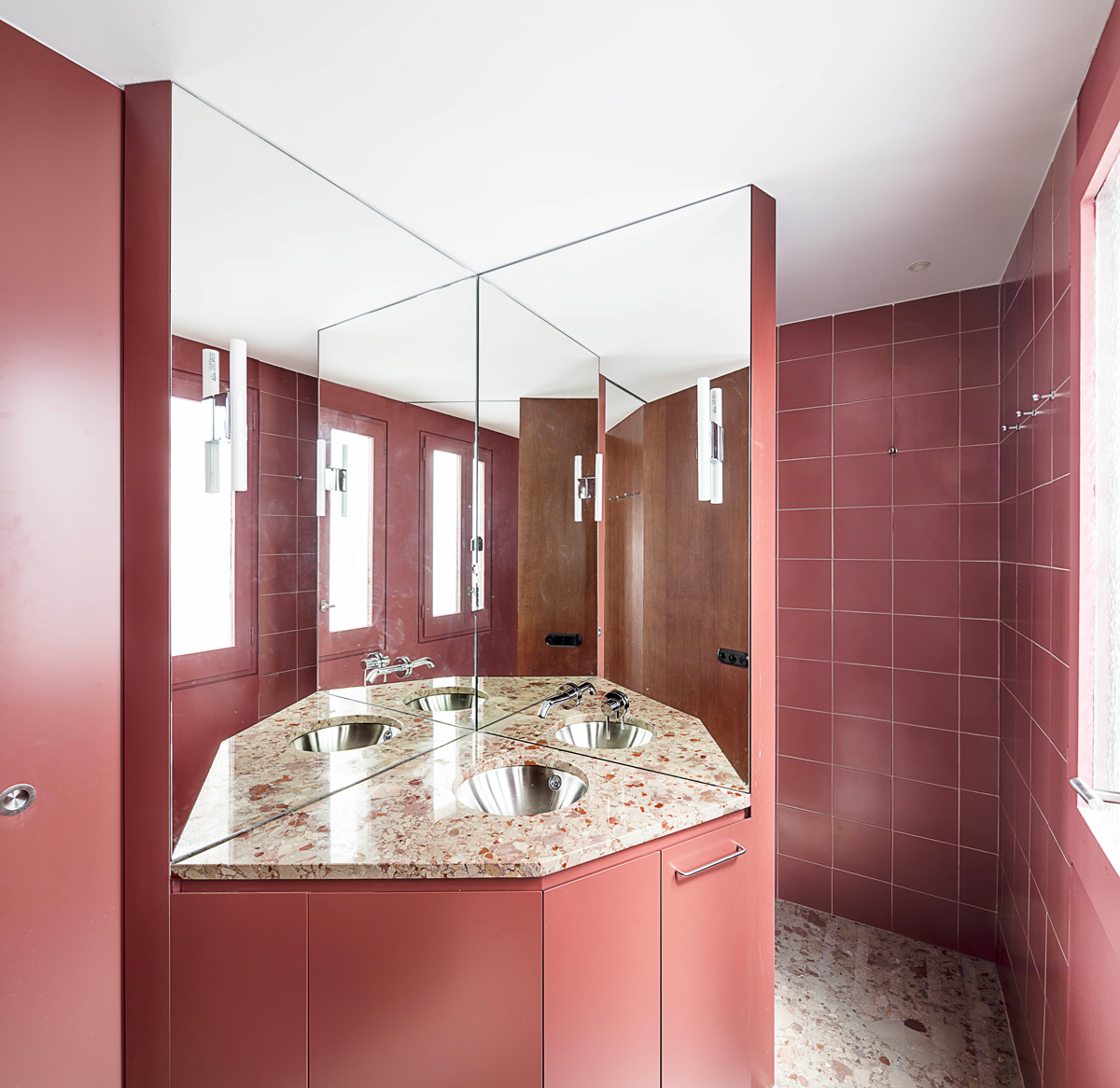
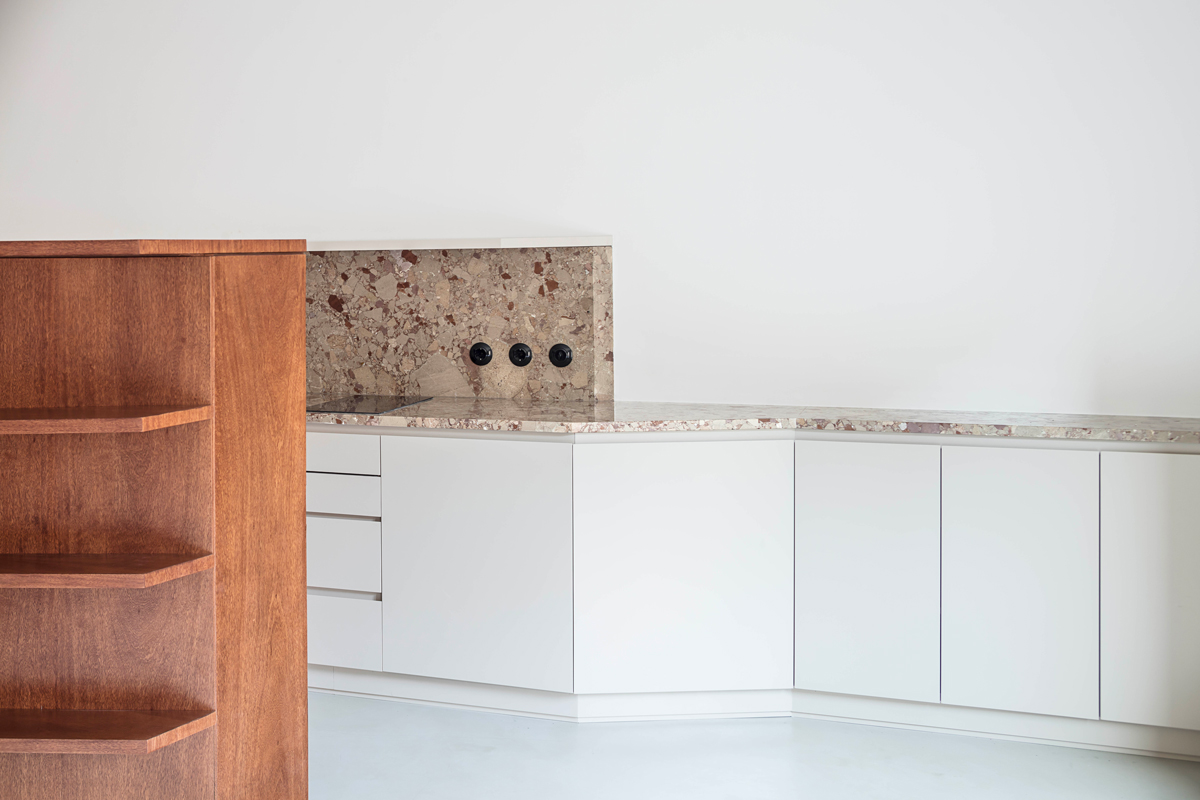
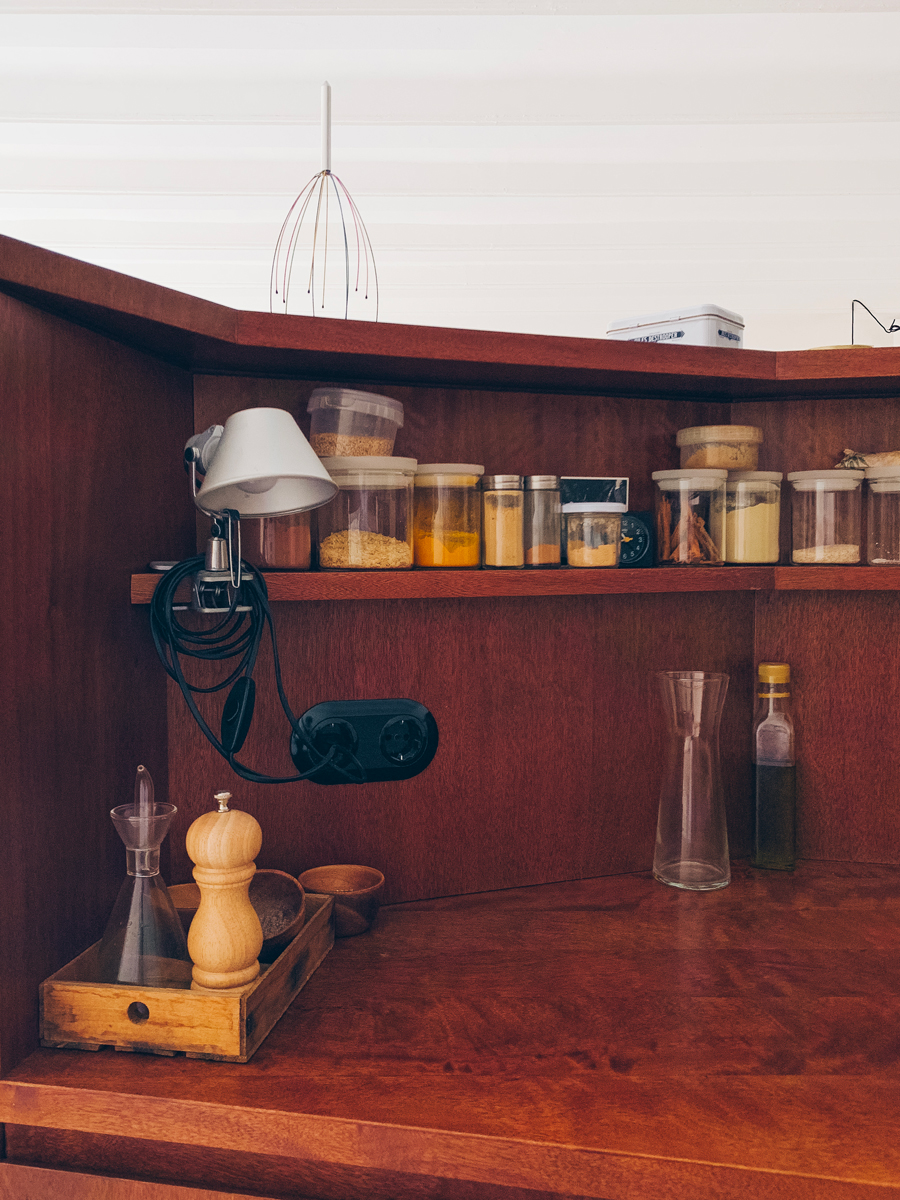
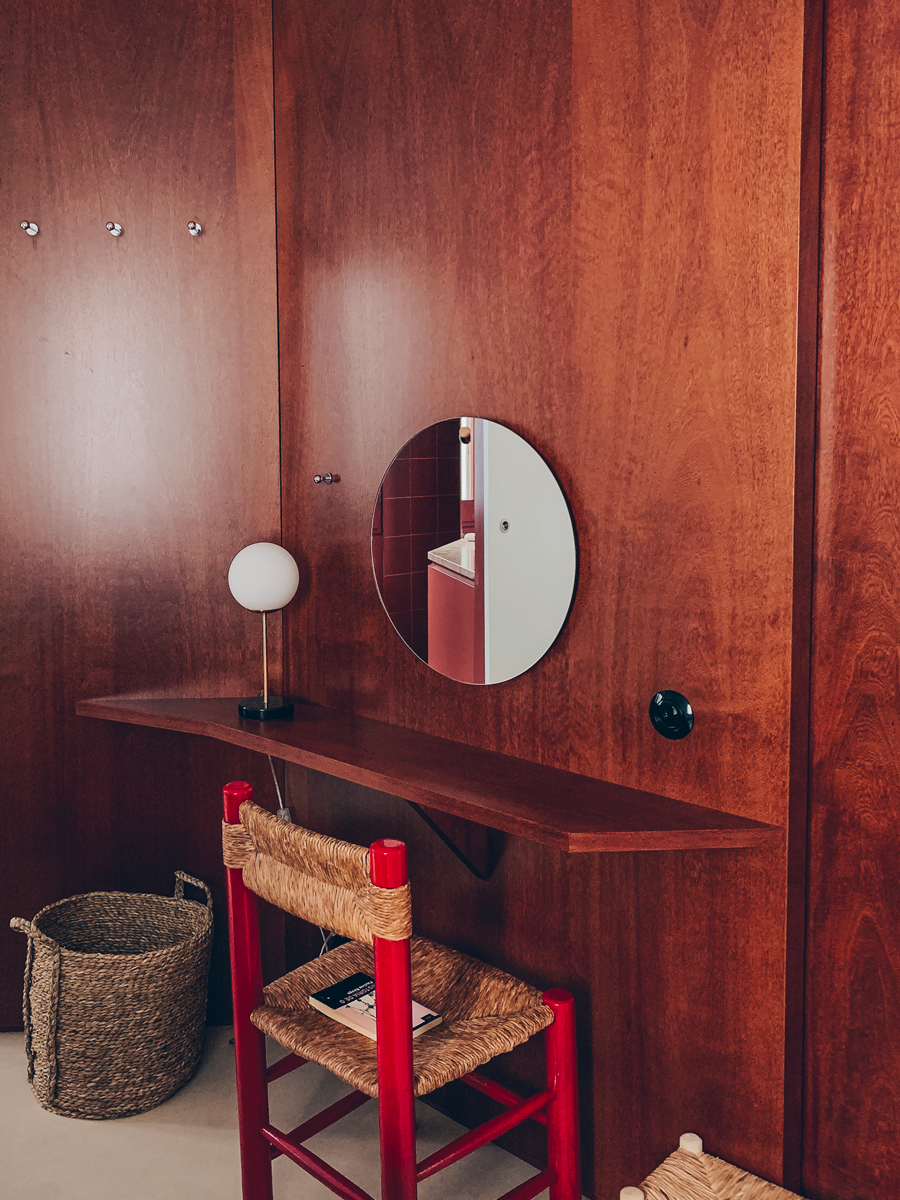
(Im)moveables that, like all furniture, integrate functions of living; library, bench, kitchen, sofa, sink and shower.
(Im)moveables that mixes cream color, pink marble, stained cedar, stainless steel and a handful of black sockets.