


THE COMMUNAL BARBECUE
Collective eating in a re-naturalized parking lot
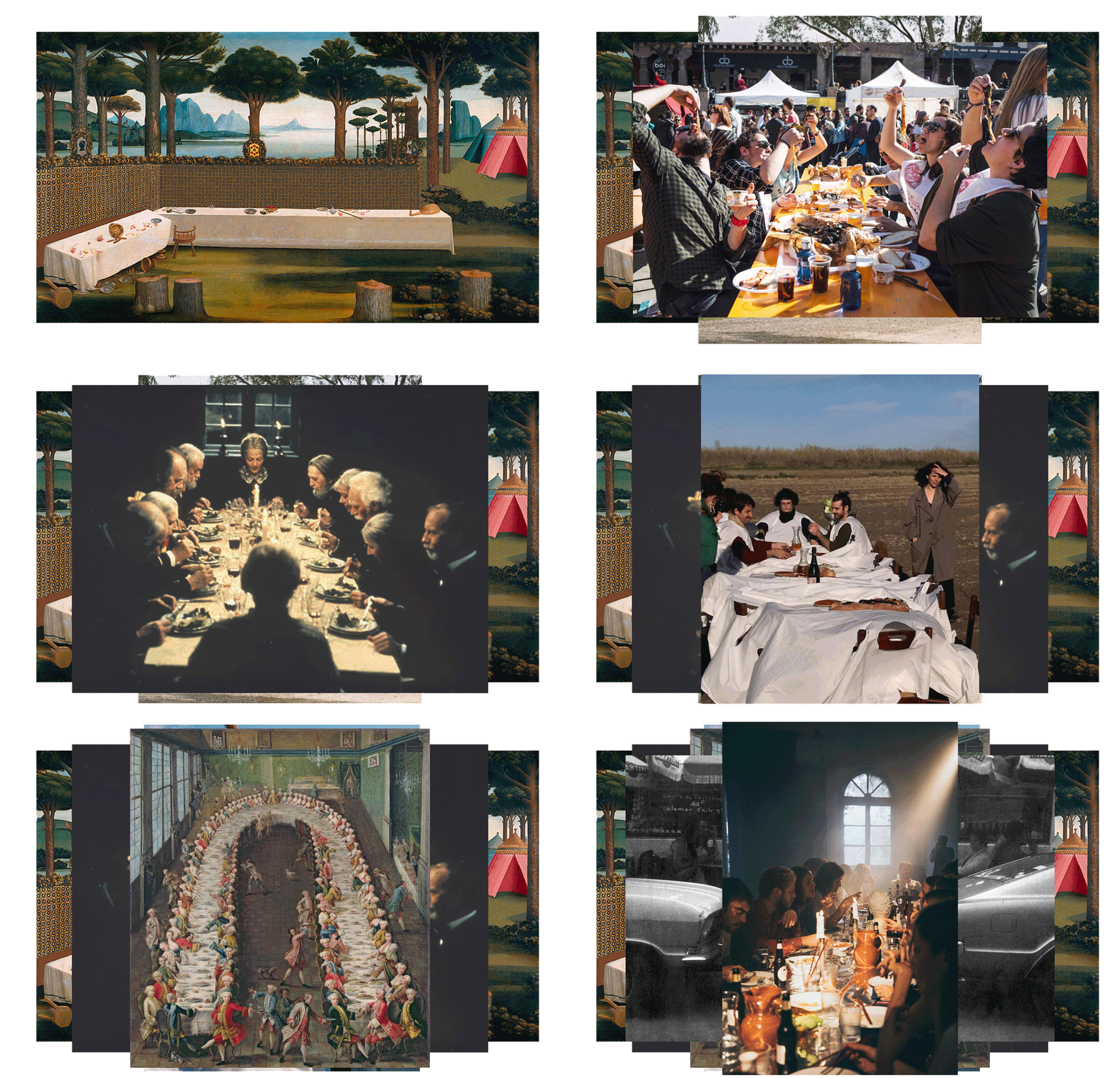
Collective eating has always been a cornerstone of community identity and social cohesion in Mediterranean culture. Whether it’s street dinners during local festivities, “calçotades” with friends on cold February days, Sunday barbecues, or blowing out birthday candles with classmates in the park, food has a way of bringing people together. As Carolyn Steel points out, eating doesn’t just nourish individuals, it also shapes and activates public spaces, ultimately influencing the design of cities. The Agora in Athens, the Forum in Rome, London’s Borough Market, Barcelona’s Boquería, and Marrakech’s Djemaa-el-Fna are all examples of how food drives urban life and serves as a gathering point.
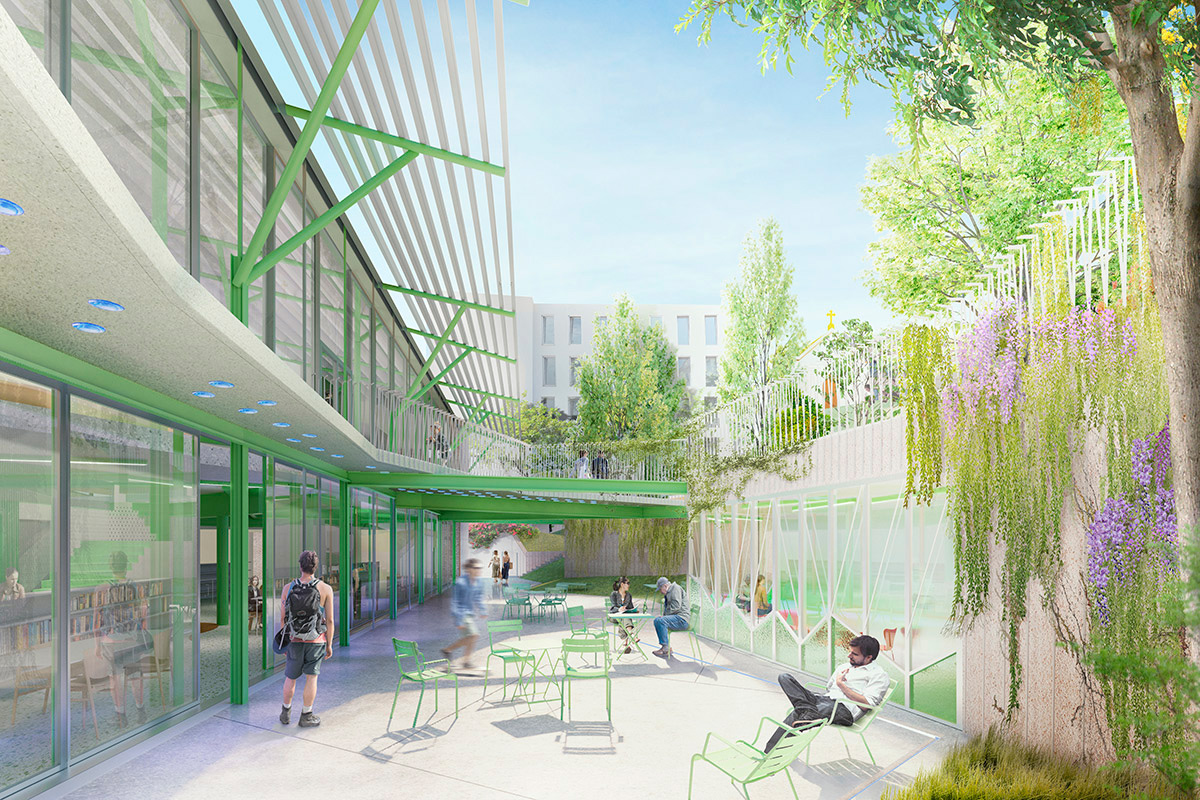
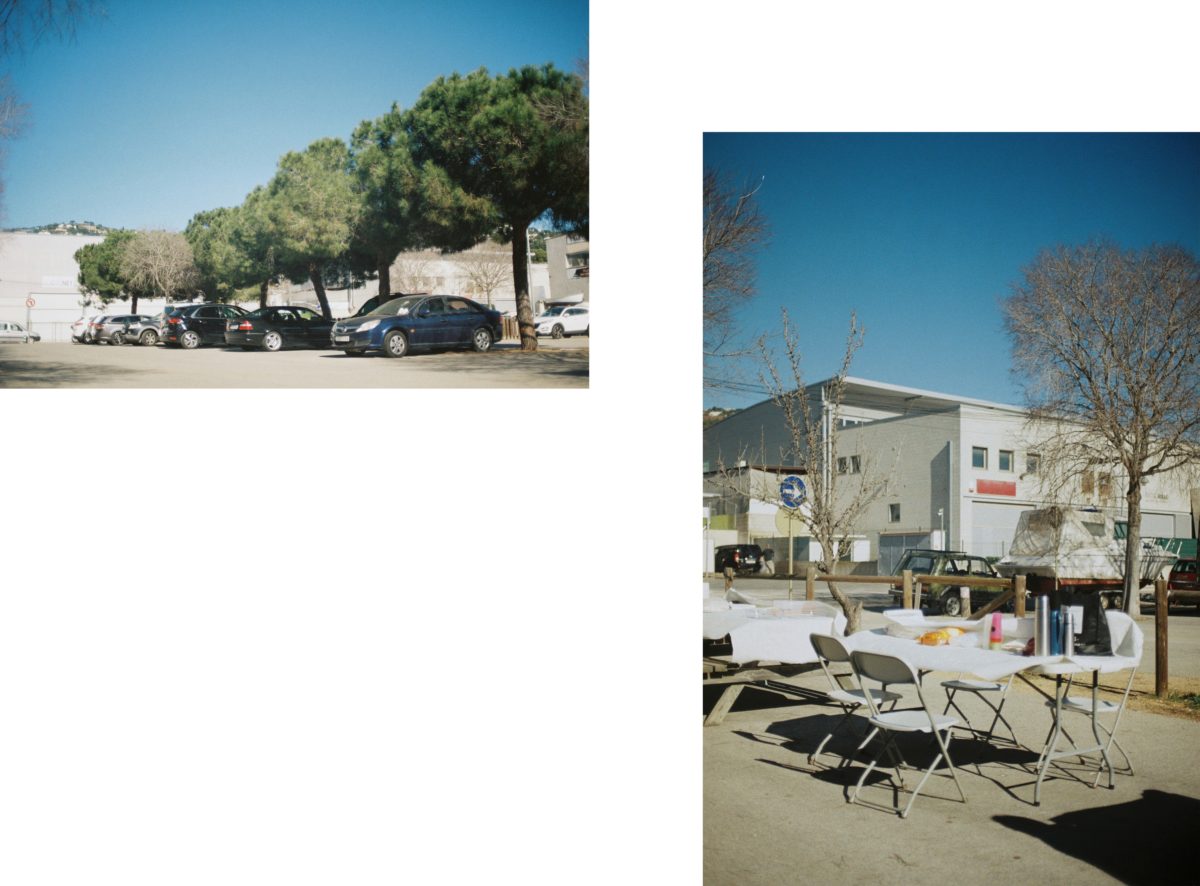
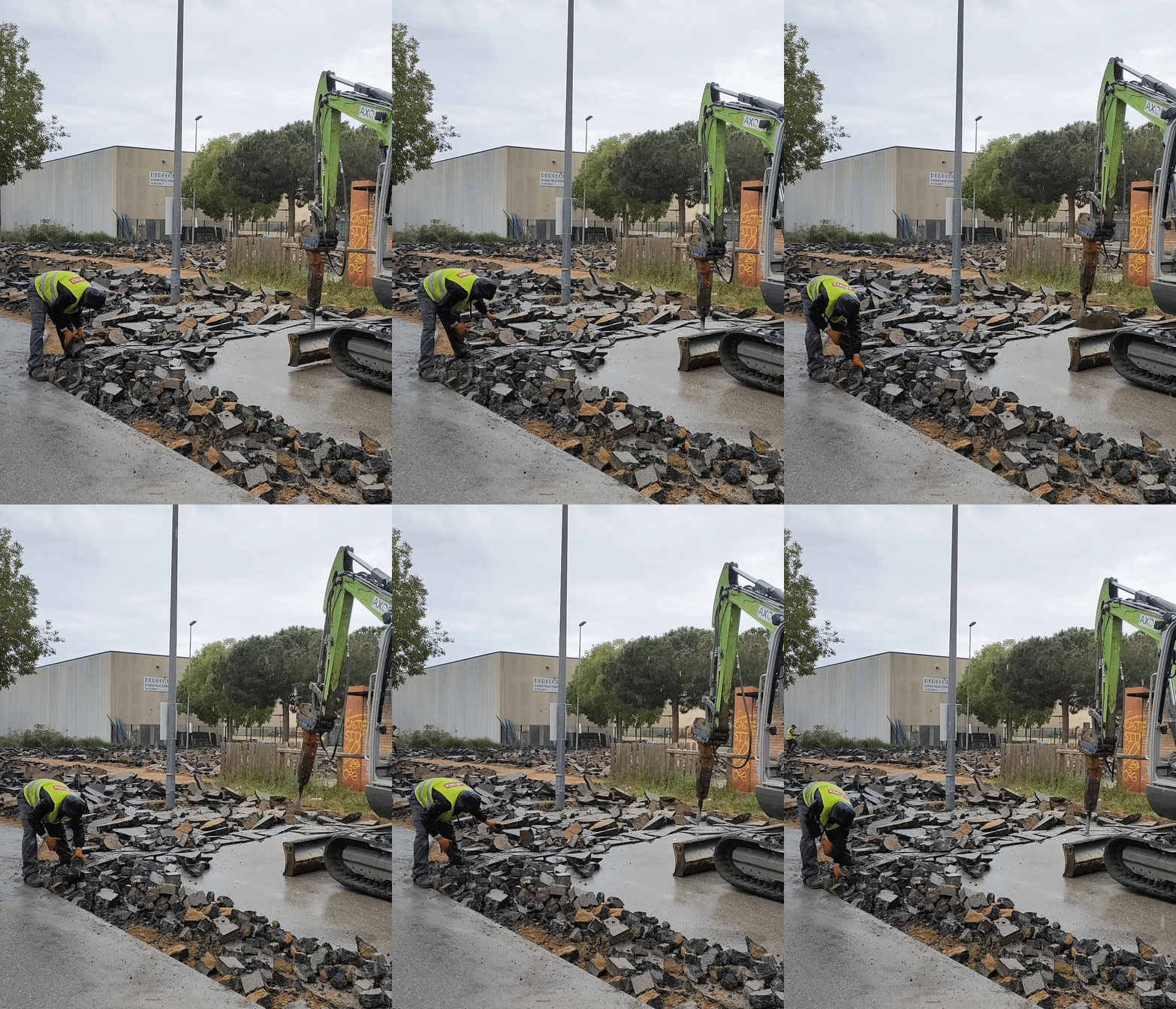
In today’s world, where urban life is in decline and community ties are weakening, it’s more important than ever to redefine and revitalize our public spaces. The COVID-19 pandemic showed us that many of our needs can be met from home, whether for work or entertainment. Yet, it also underscored the importance of shared spaces to keep social connections alive and strengthen community bonds. At the same time, in the face of climate change, paved spaces—symbols of our reliance on fossil fuels—can and should be transformed into much-needed green areas. This project seeks to do just that: to turn a soulless parking lot into a place of connection and re-naturalization, where communal eating becomes a catalyst for new social interactions.
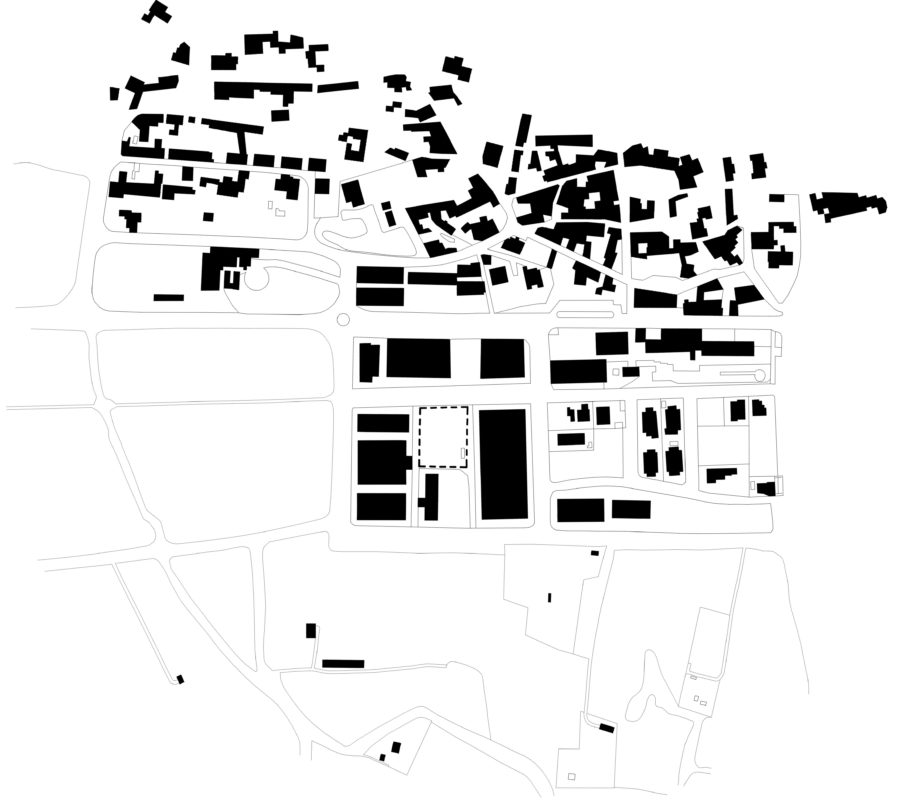
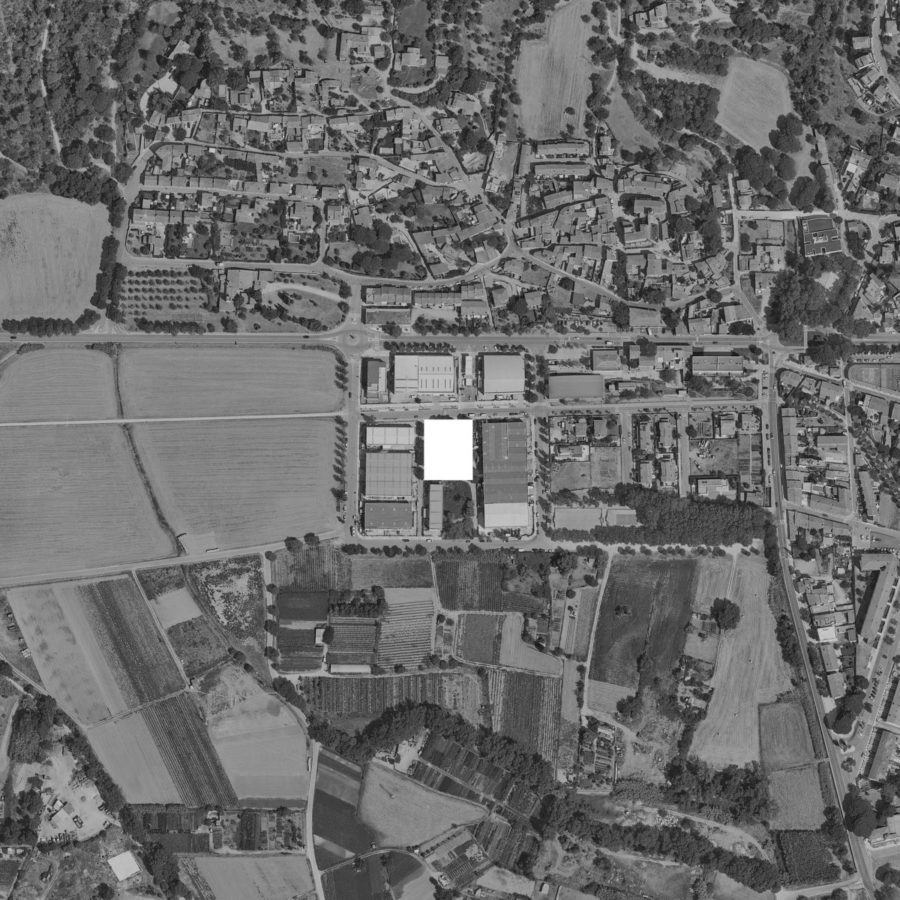
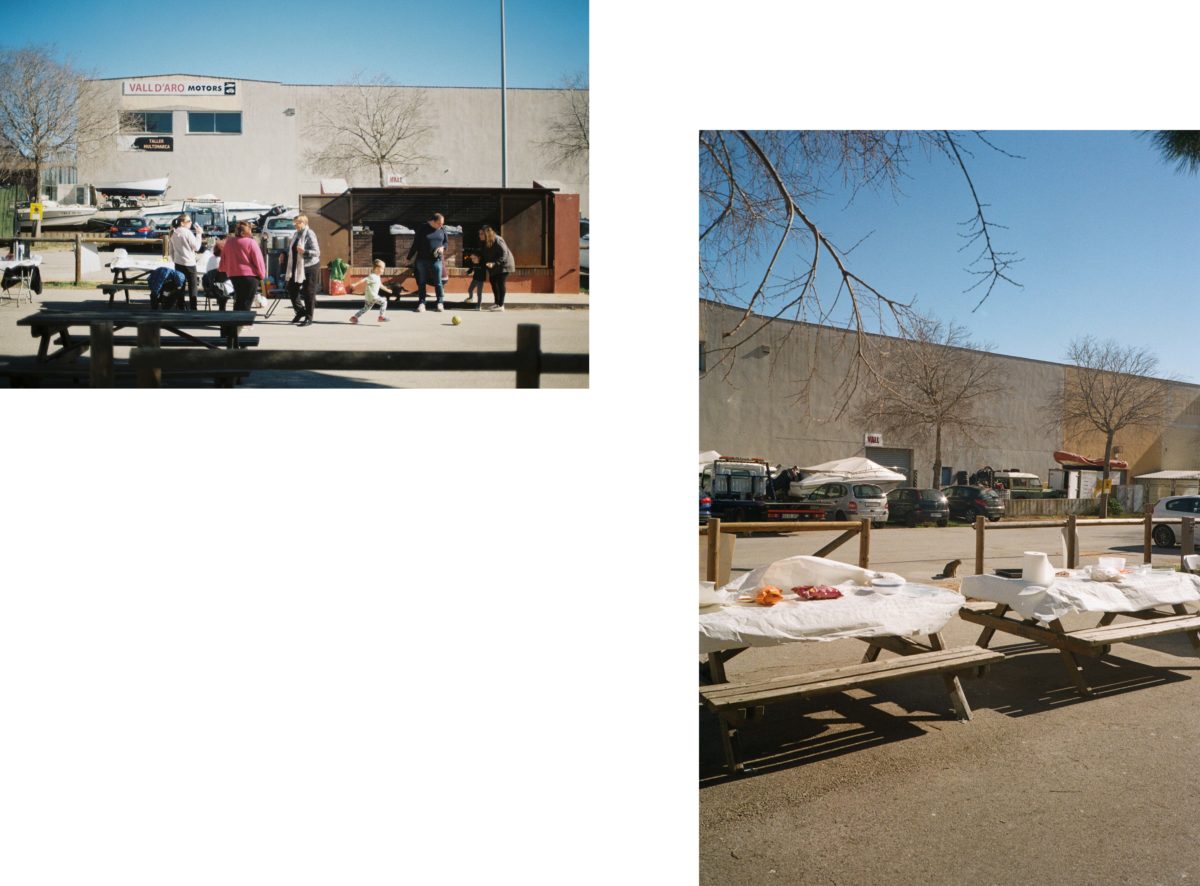
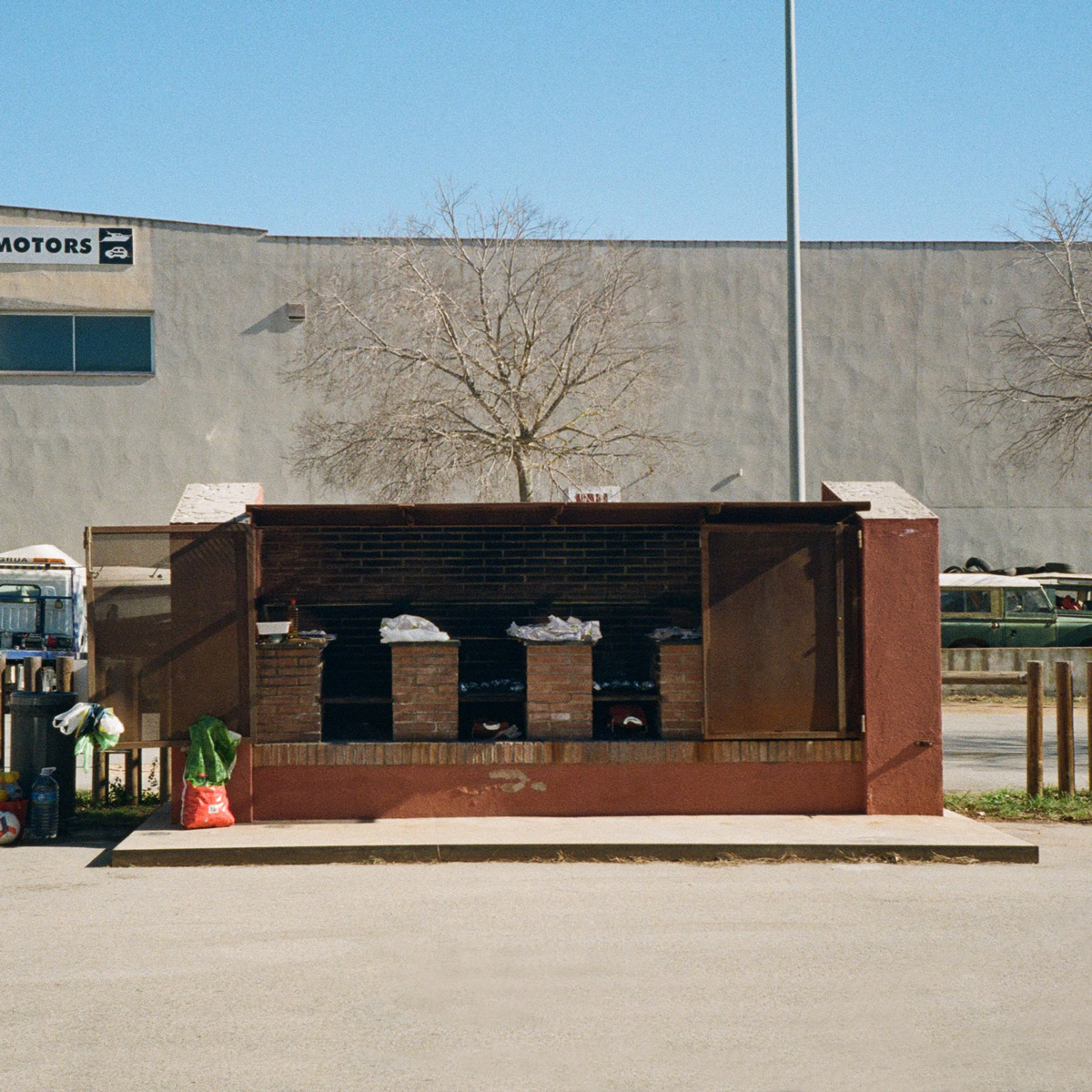
The project focuses on transforming a forgotten, desolate parking lot on the outskirts of Castell d’Aro, originally intended as a park but which over time became a lifeless asphalt field, a storage space for vehicles disconnected from the surrounding urban fabric. Amidst this barren setting, a small, free-to-use public barbecue—tucked behind a wooden fence—has quietly become a lively spot on weekends and holidays, drawing locals and cyclists alike. This modest activity highlights the powerful role food can play as a social connector.
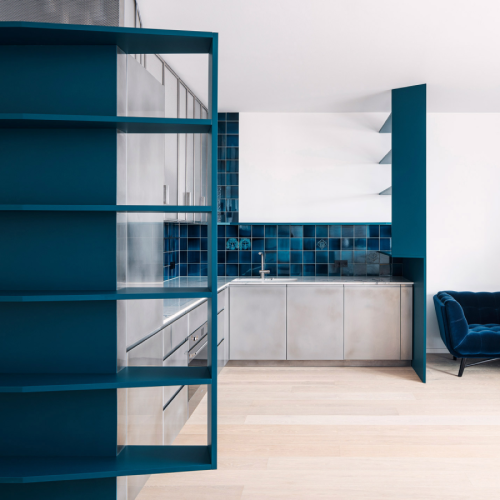
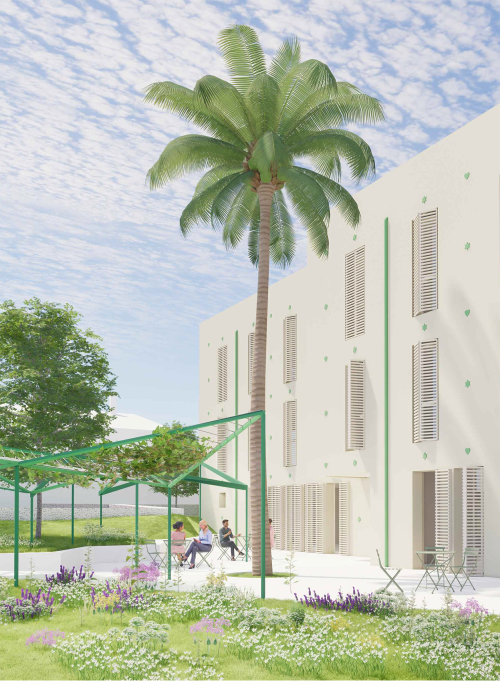
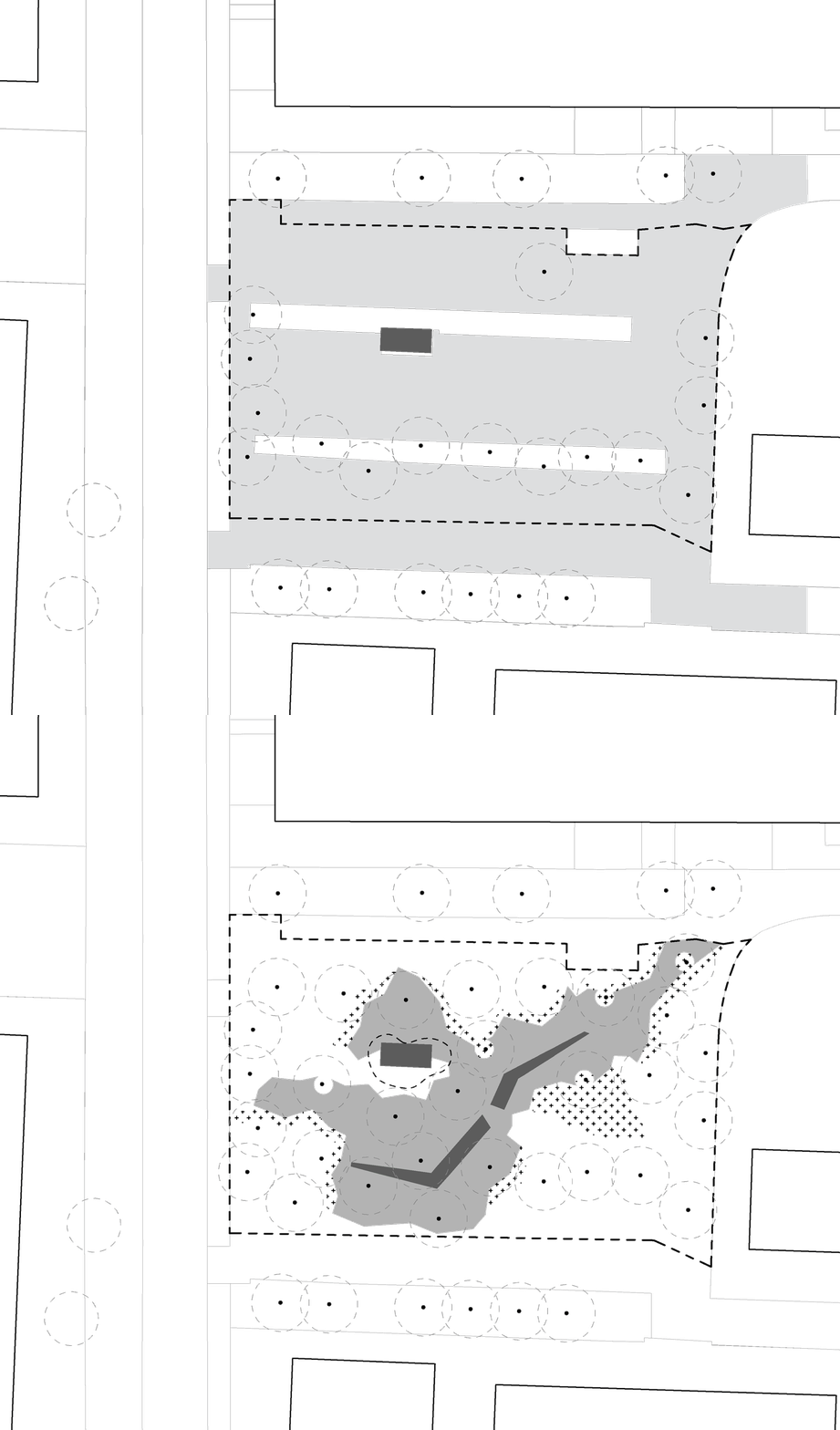
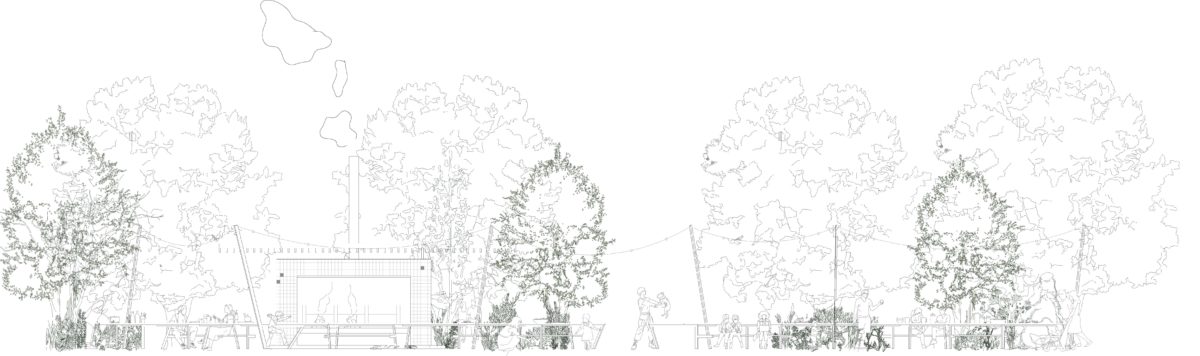
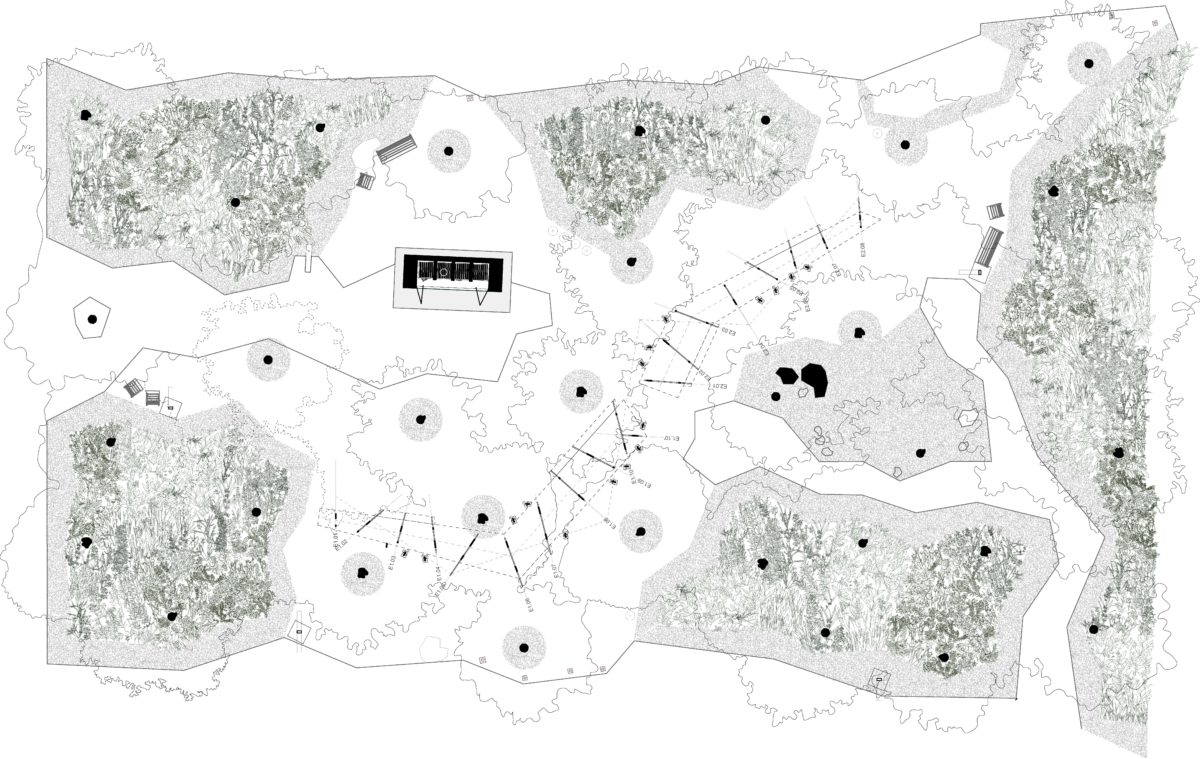
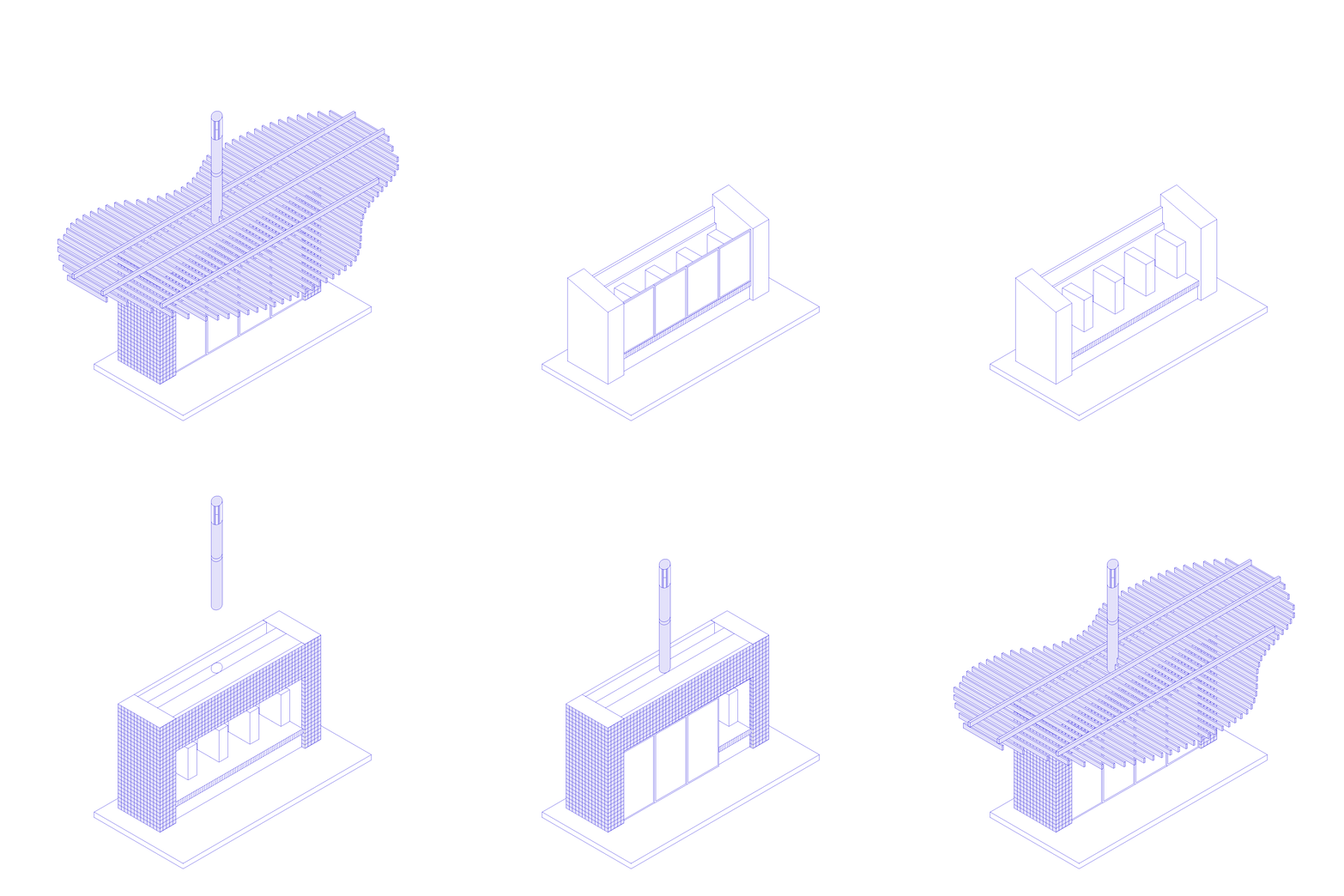
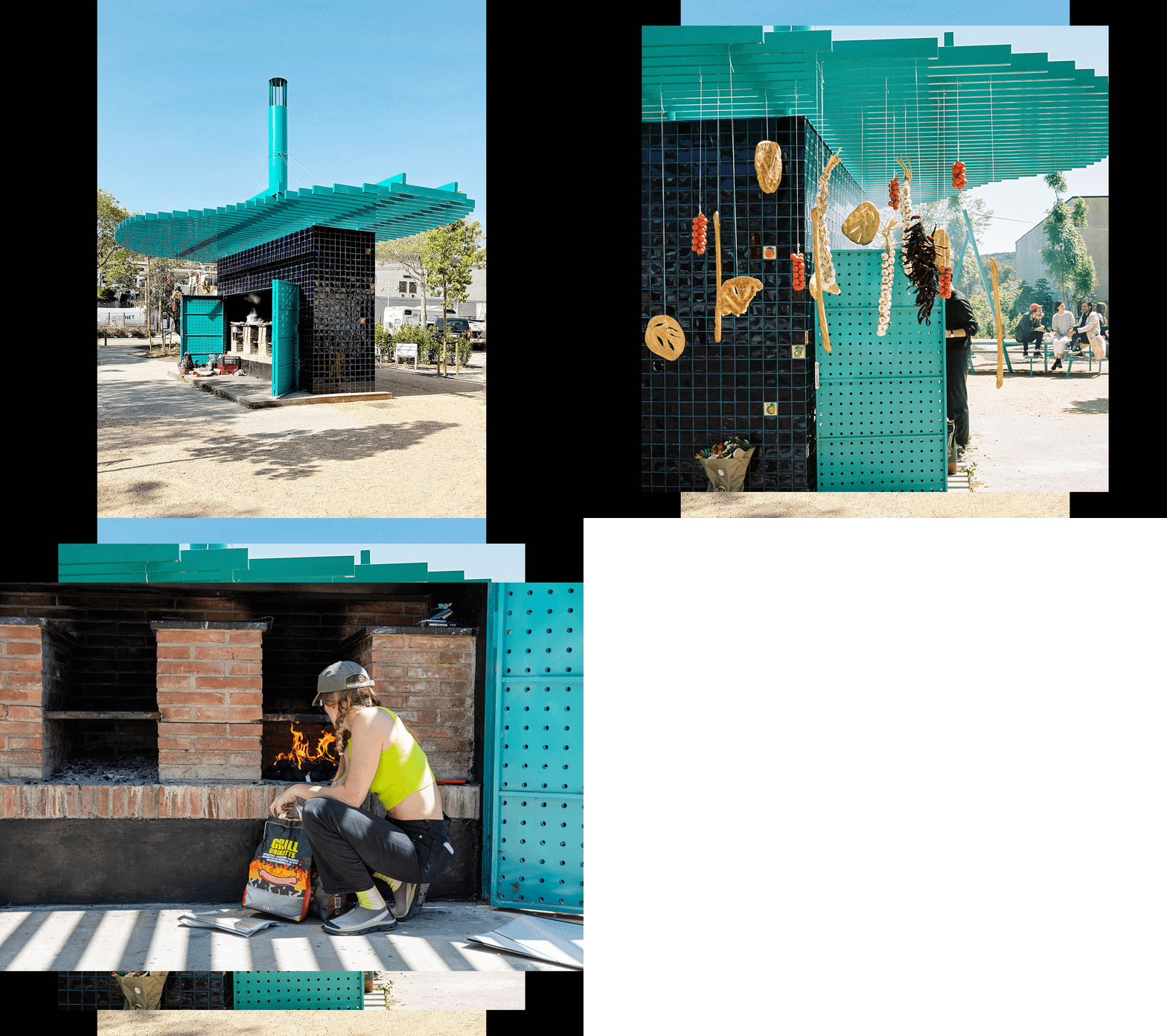
Why not build on what already works in the space to spark change? We envision the existing barbecue as the heart of the project, transforming this forgotten spot into a lively space open to both people and nature, creating new connections and a sense of identity through collective meals in a re-naturalized setting. Where there was once only asphalt, now there are trees and Mediterranean aromatic plants. Instead of being demolished, the barbecue becomes a central feature of the design. Its structure is clad in traditional blue tiles from La Bisbal, evoking the Mediterranean’s colors. A new pergola provides shade for the cooks, while a Hansel and Gretel-inspired chimney carries the smoke up beyond the trees, signaling that it’s time to eat!
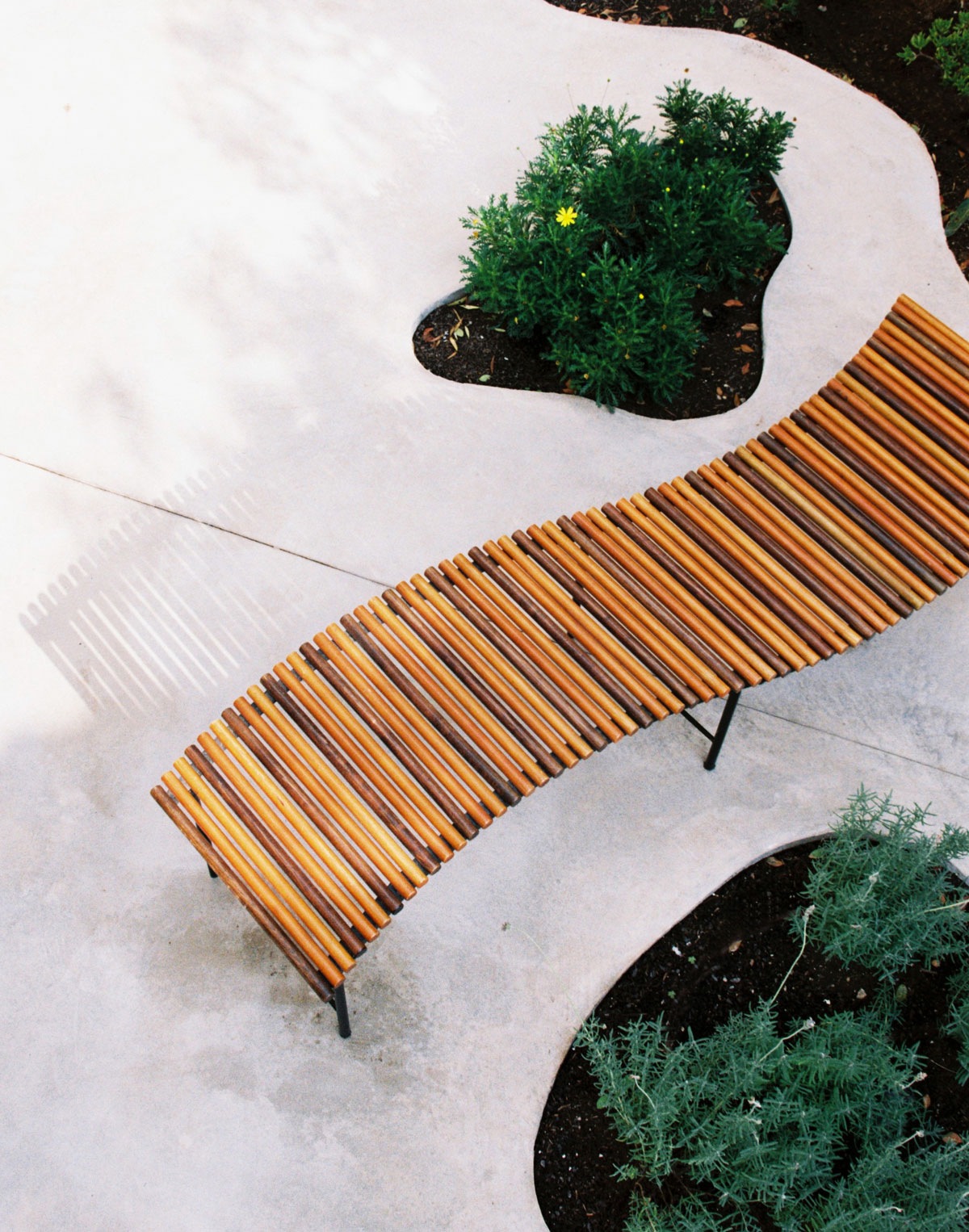
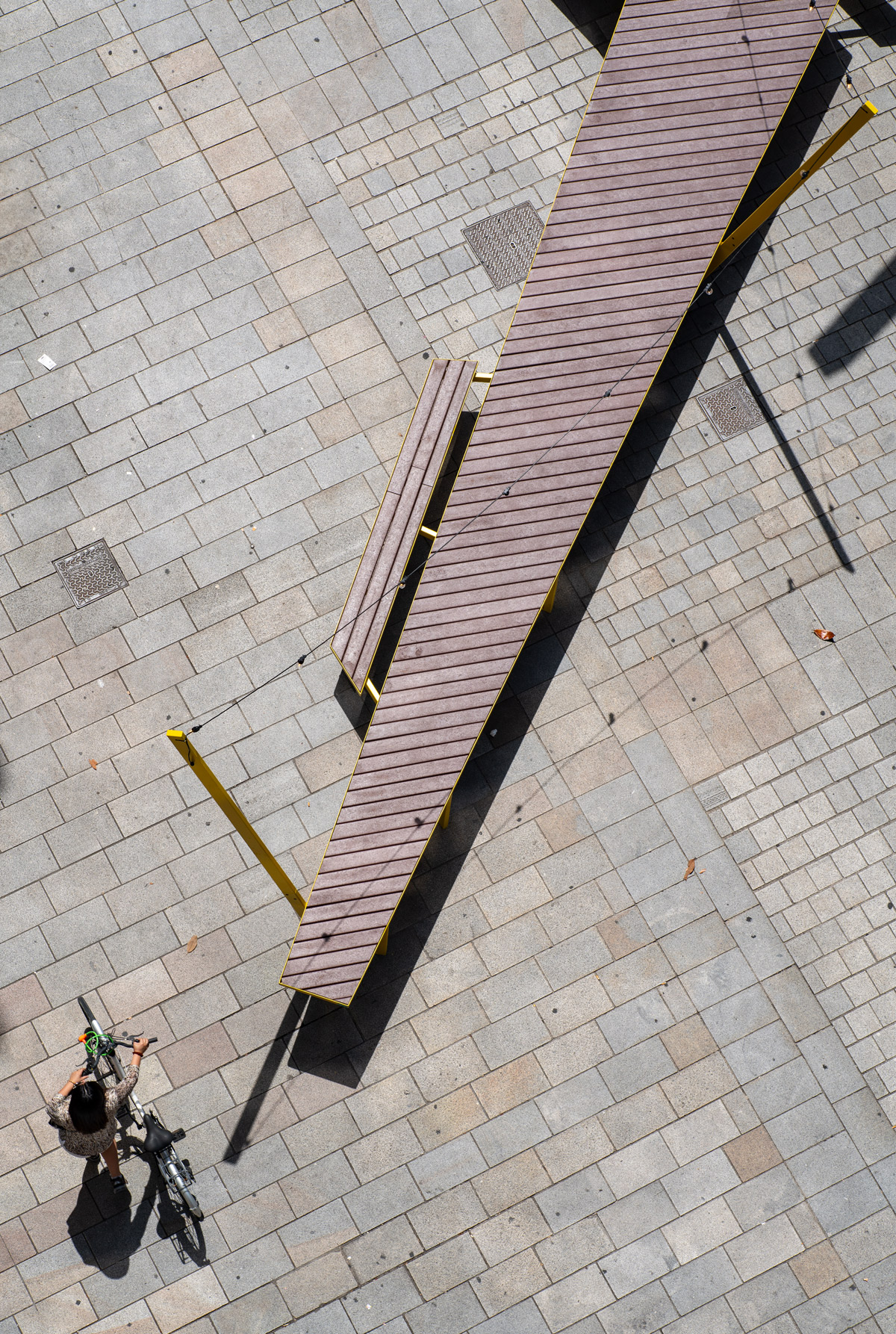
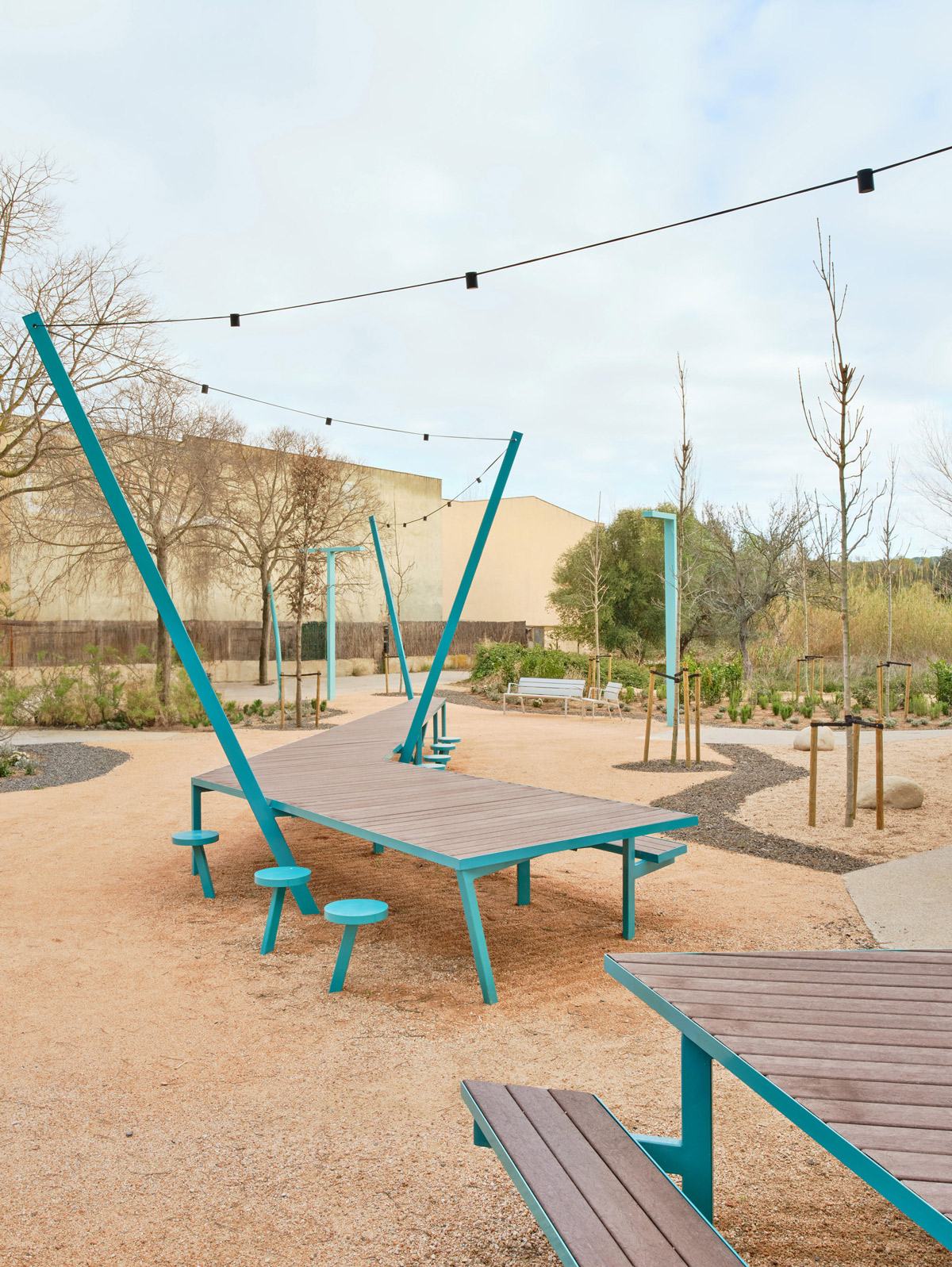
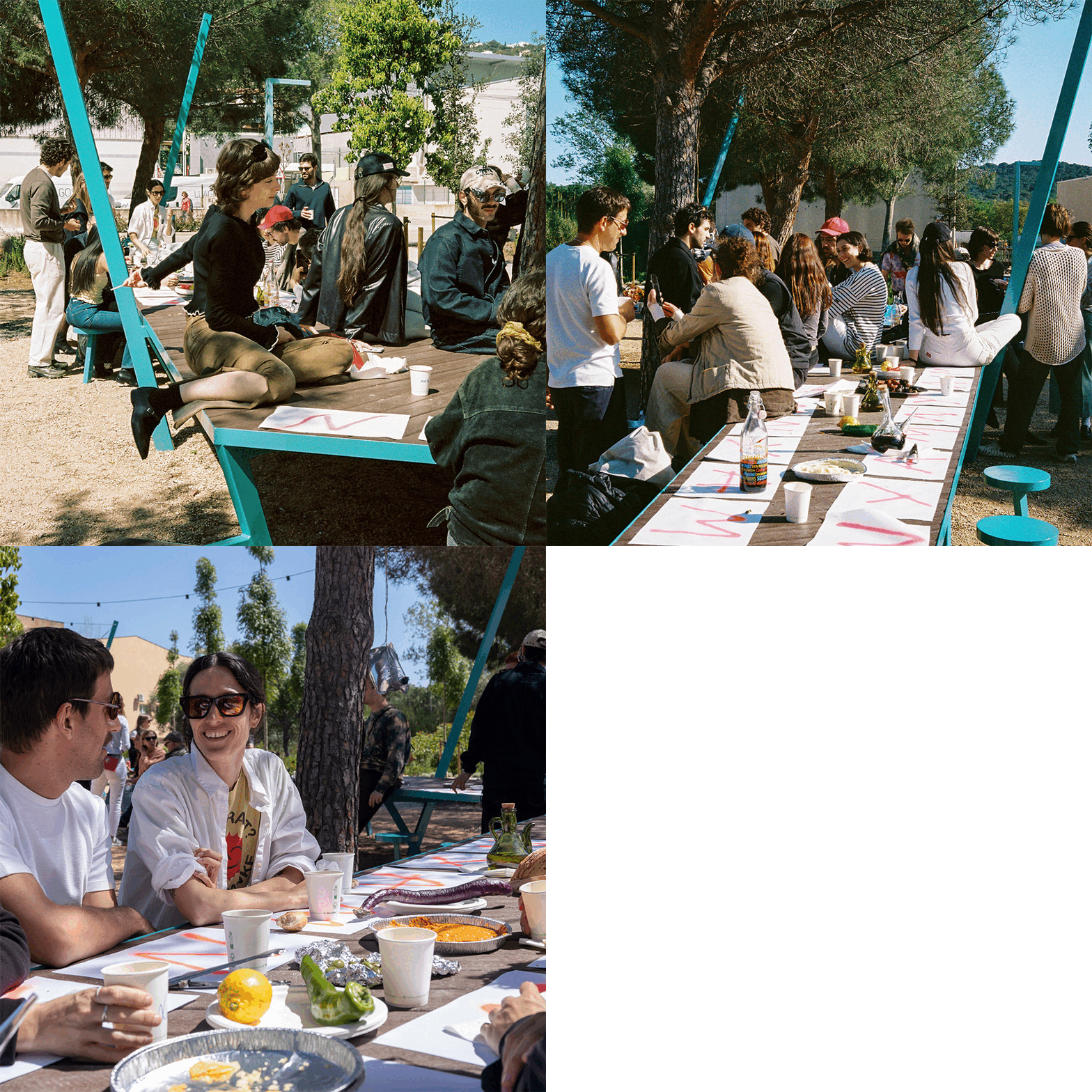
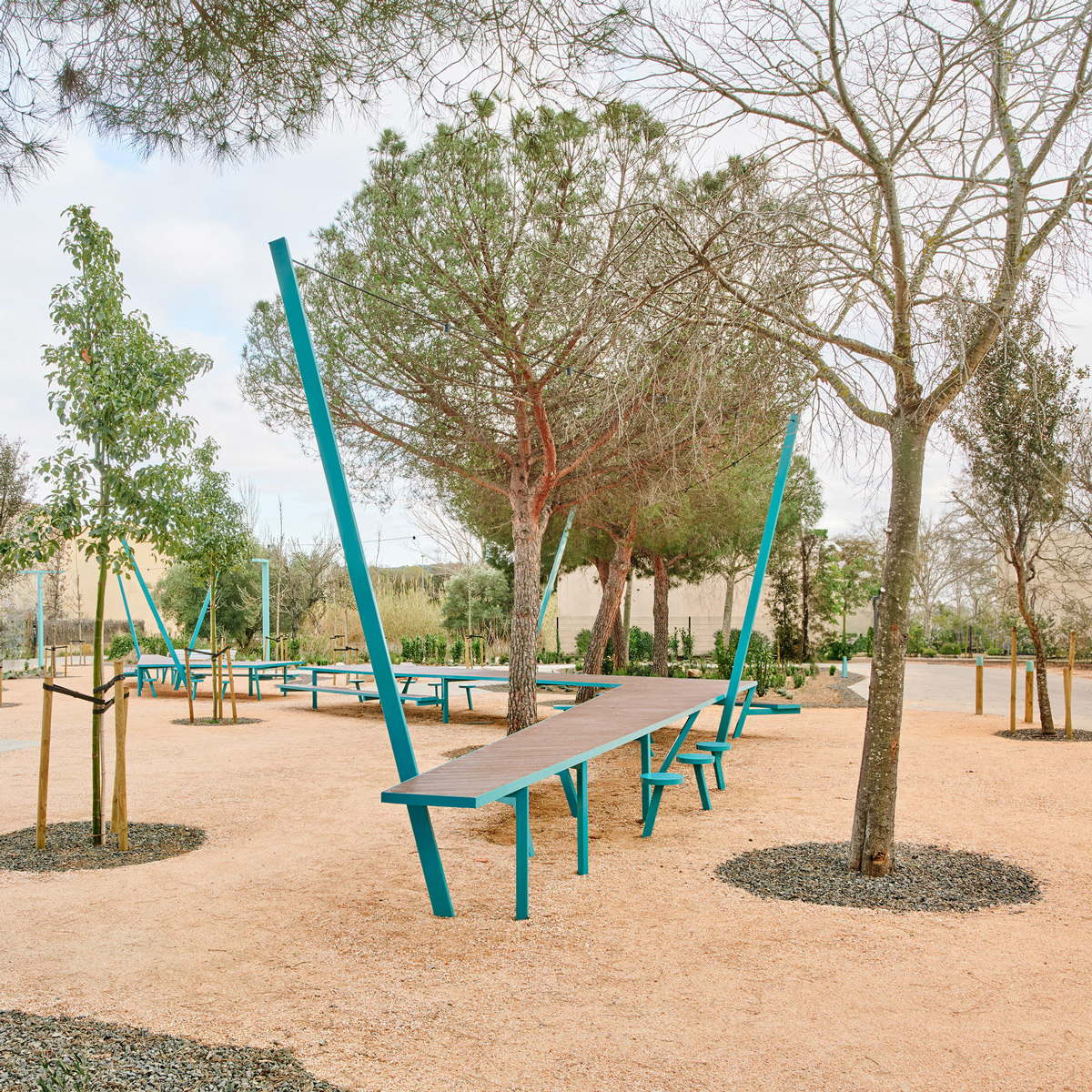
To encourage socialization and collective eating, we designed a large zigzagging table for 50 diners. Inspired by the shape of a centipede, the table gently intertwines with the trees. This layout invites neighbors to share moments of friendship in a relaxed and welcoming atmosphere in the shade of the canopy.
The project seeks not only to revitalize the social and natural aspects of the space but also emphasizes its landscape potential. We have planned the introduction of native vegetation that requires minimal irrigation, ideal for periods of drought. Additionally, aromatic plants will not only enhance the beauty of the surroundings but also be used to flavor communal meals, alongside flowering species that promote pollination. The focus extends beyond plants to include local wildlife: bird nesting will be encouraged in the newly planted trees, and bats will be attracted by repurposing old light posts as nesting sites, transforming them from utility structures into havens for wildlife.
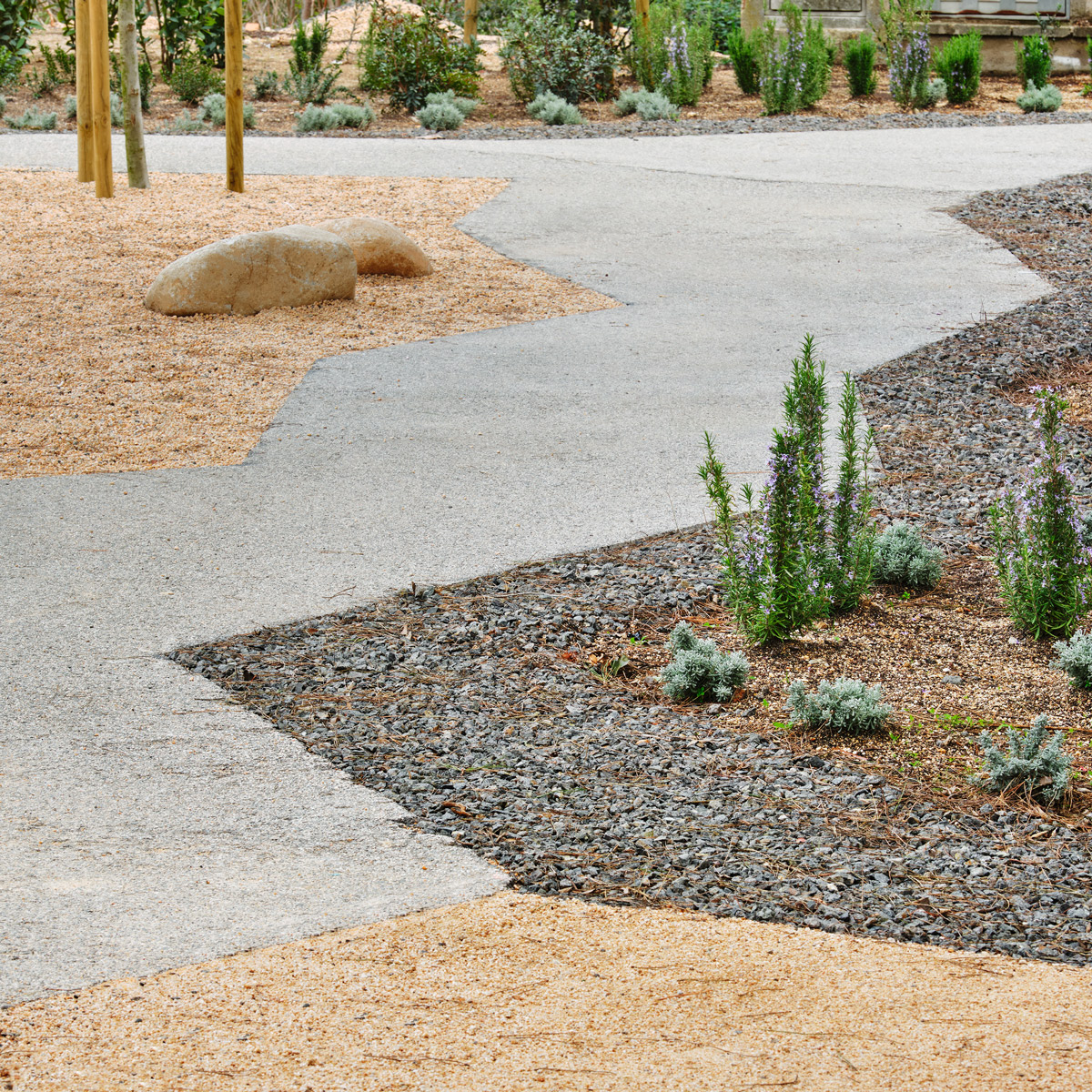
The landscape design features broken shapes that evoke geomorphism, with strategically placed rocks of various sizes adding depth and structure to the space. The textures and colors of the plaza stand in sharp contrast to the starkness of the old asphalt parking lot, creating a striking visual shift that underscores the transformation. The bright, cheerful colors of the barbecue, reminiscent of the clear sky and coastal landscape, blend harmoniously with the earthy tones of the rocks and soil, and the greens and yellows of the surrounding pines and vegetation.
The intervention also works on an urban scale, linking the countryside with the center of Platja d’Aro. The communal barbecue is strategically located at the town’s entrance along the “Via Verda”, a path that weaves through fields and connects villages, making it easy for people to walk or cycle through Baix Empordà. This project aims to go beyond the local scale, redefining the town’s sense of welcome for those arriving, and transforming what was once a non-place into a vibrant space for social interaction, nature, and architecture that celebrates community and life.
In “The Communal Barbecue,” food becomes the thread that connects new stories, while the garden serves as the backdrop for celebrating a renewed sense of community.