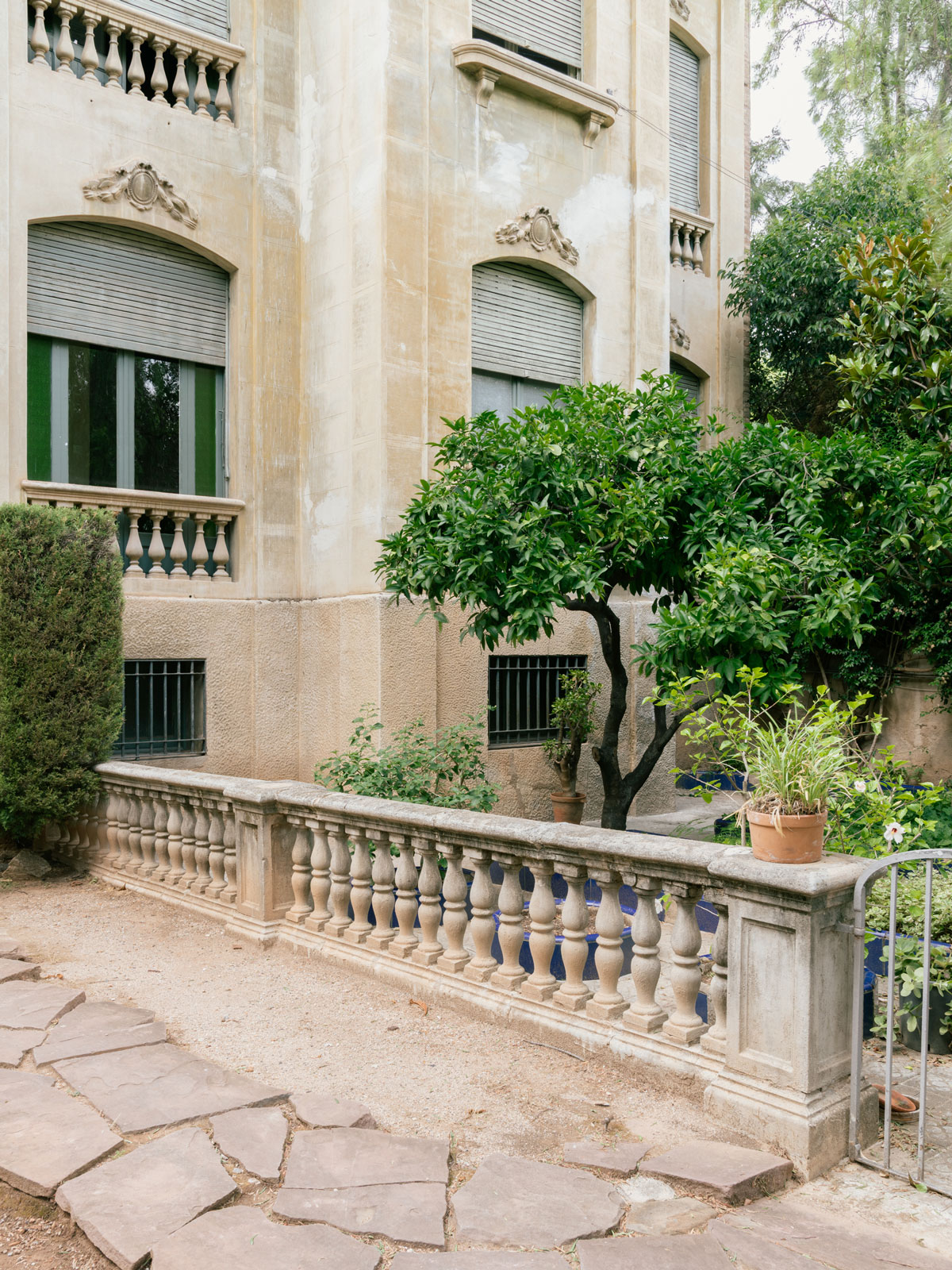
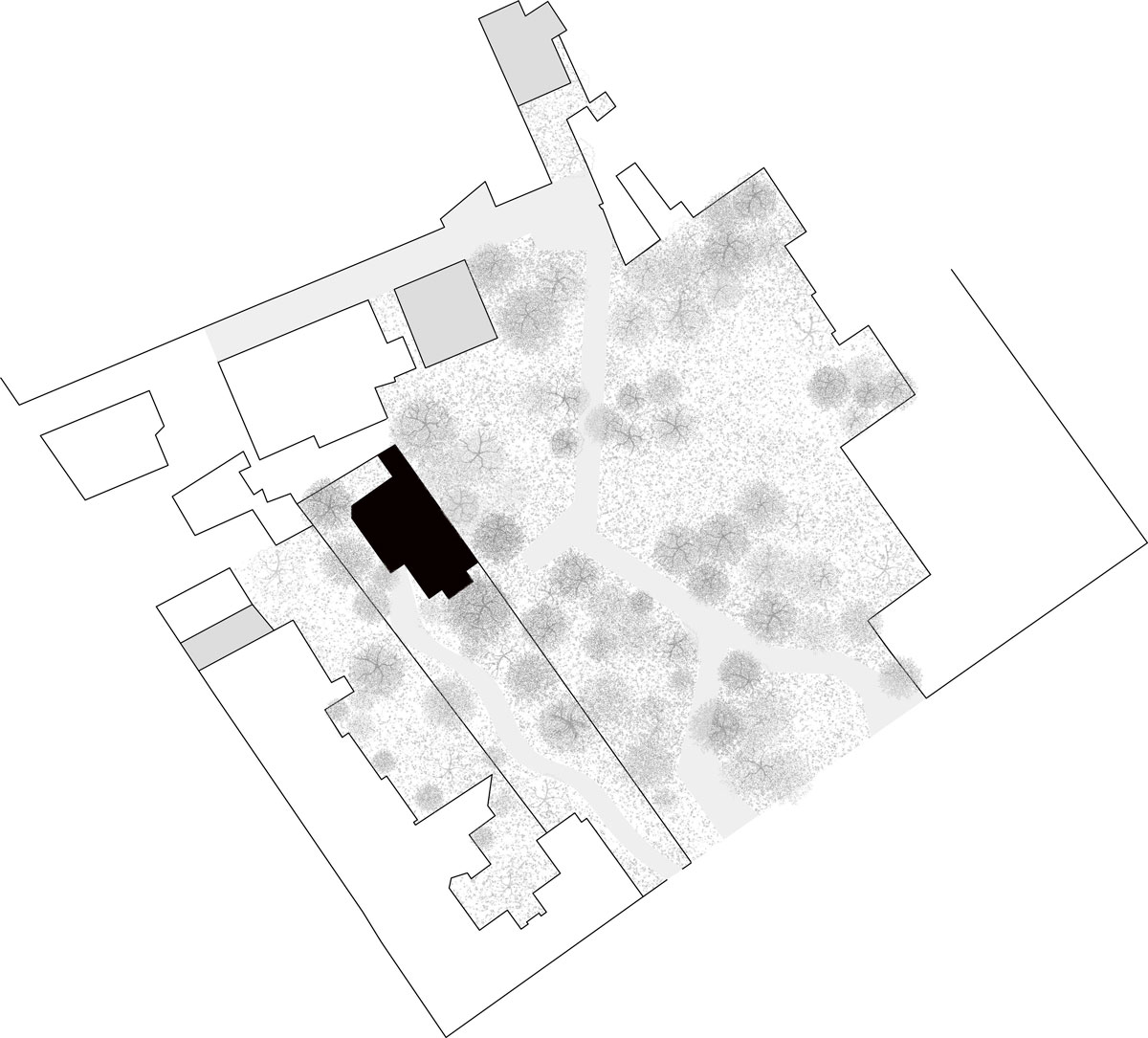
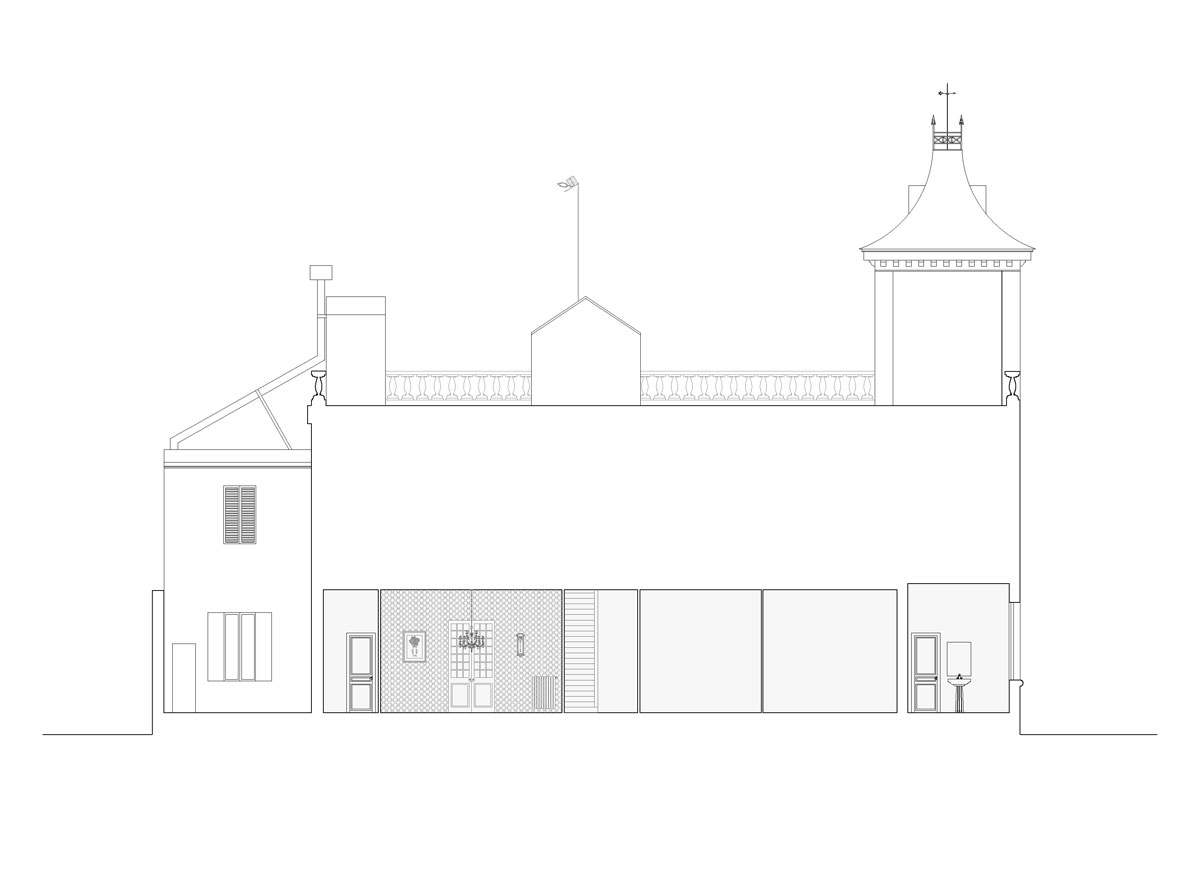
In the Gràcia district, a few hidden gems still remain. These are houses surrounded by gardens that preserve the spirit of a bygone era, when well-to-do families sought refuge outside the city to breathe fresh air. This is the case of Casa Plató. Its origins date back to the late 19th century. Mr. XXX, after making his fortune in Cuba with sugar cane, returned to the city and acquired an old farmhouse in Gràcia. To adapt it to his new social status, he expanded it with a small tower and galleries, and adorned it with moldings and balustrades, transforming an austere building into a stately home. This new appearance turned what had until then been one of the earliest constructions in the neighborhood —with extensive land around it but without embellishment— into a house of notable presence.
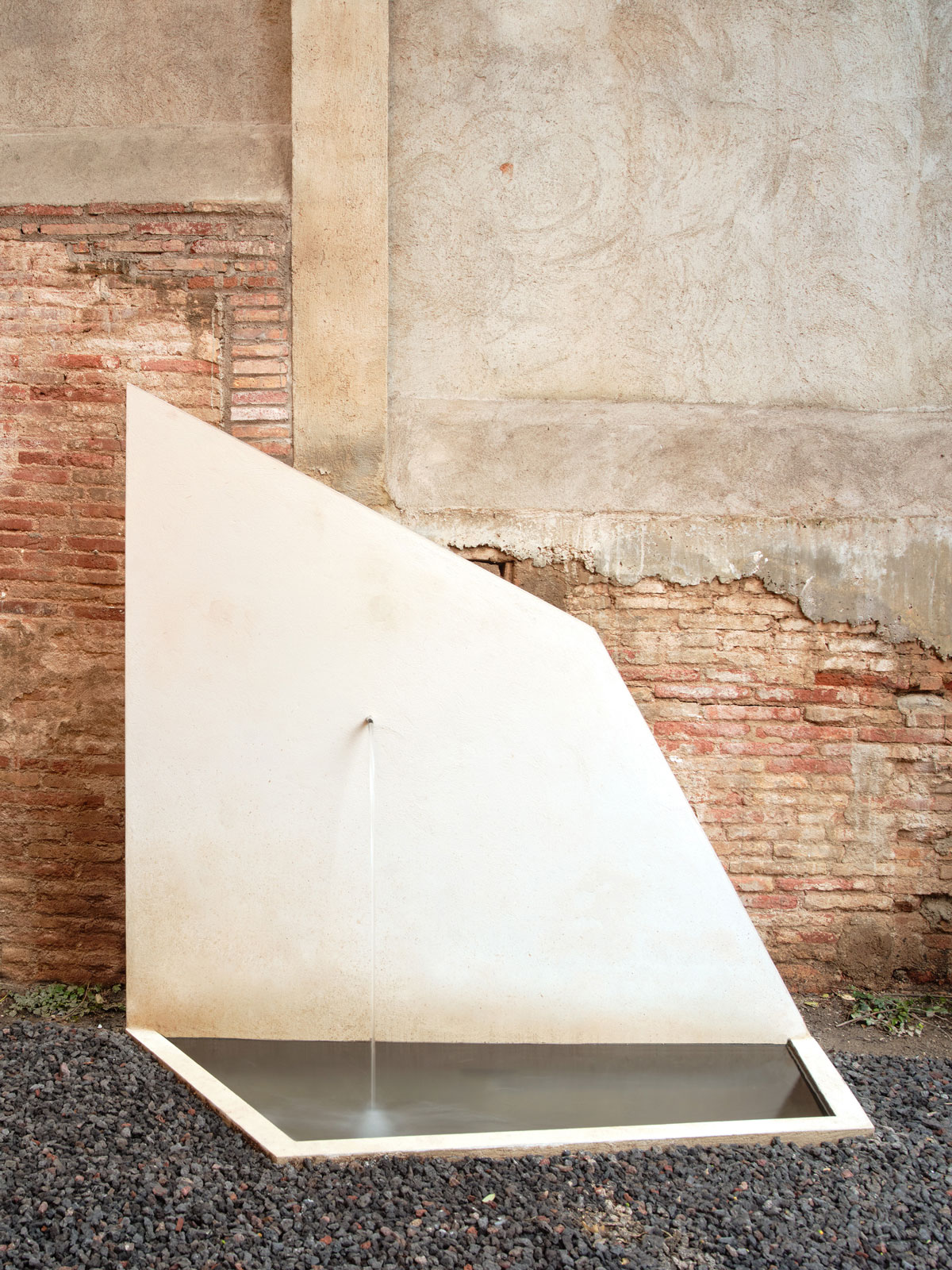
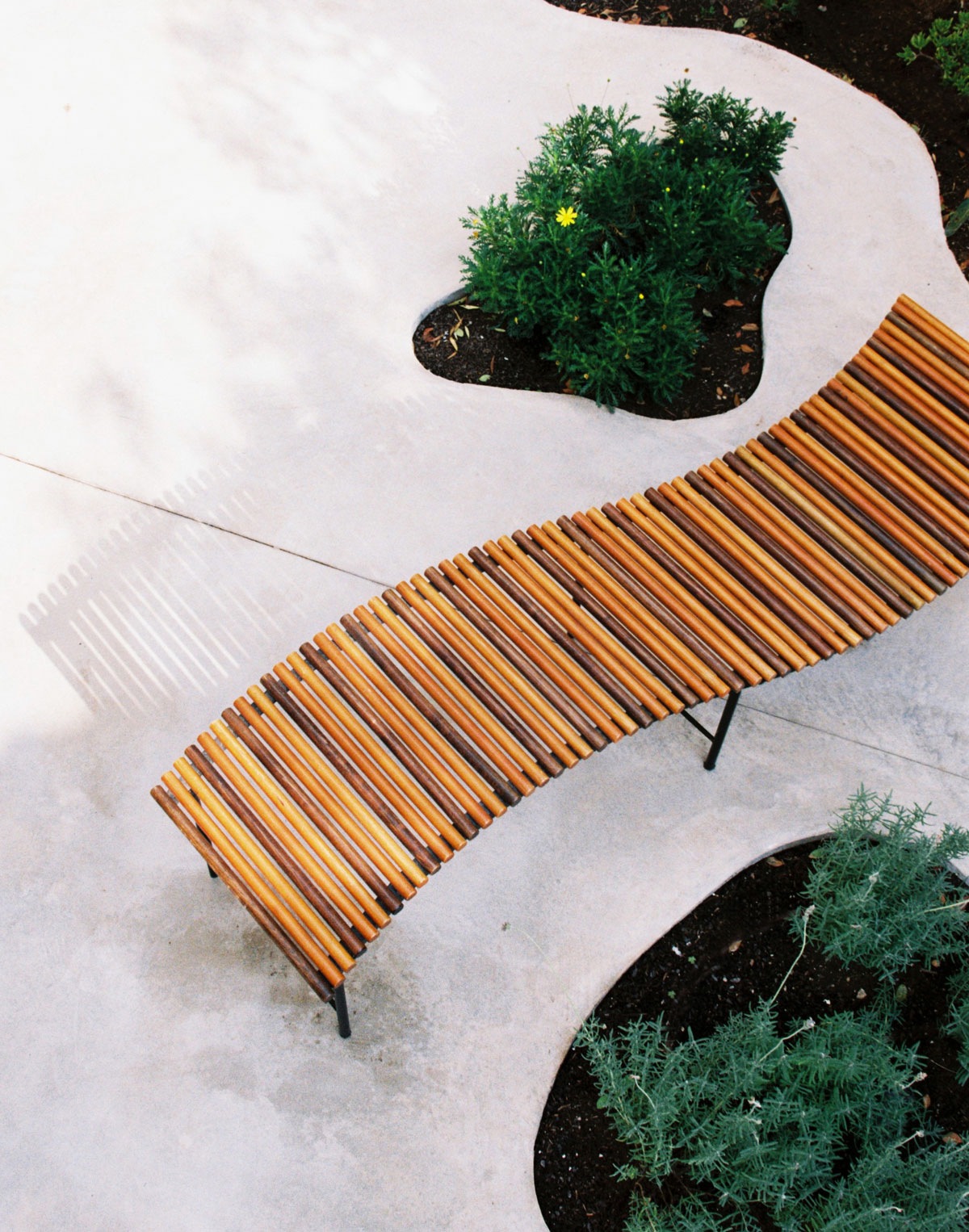
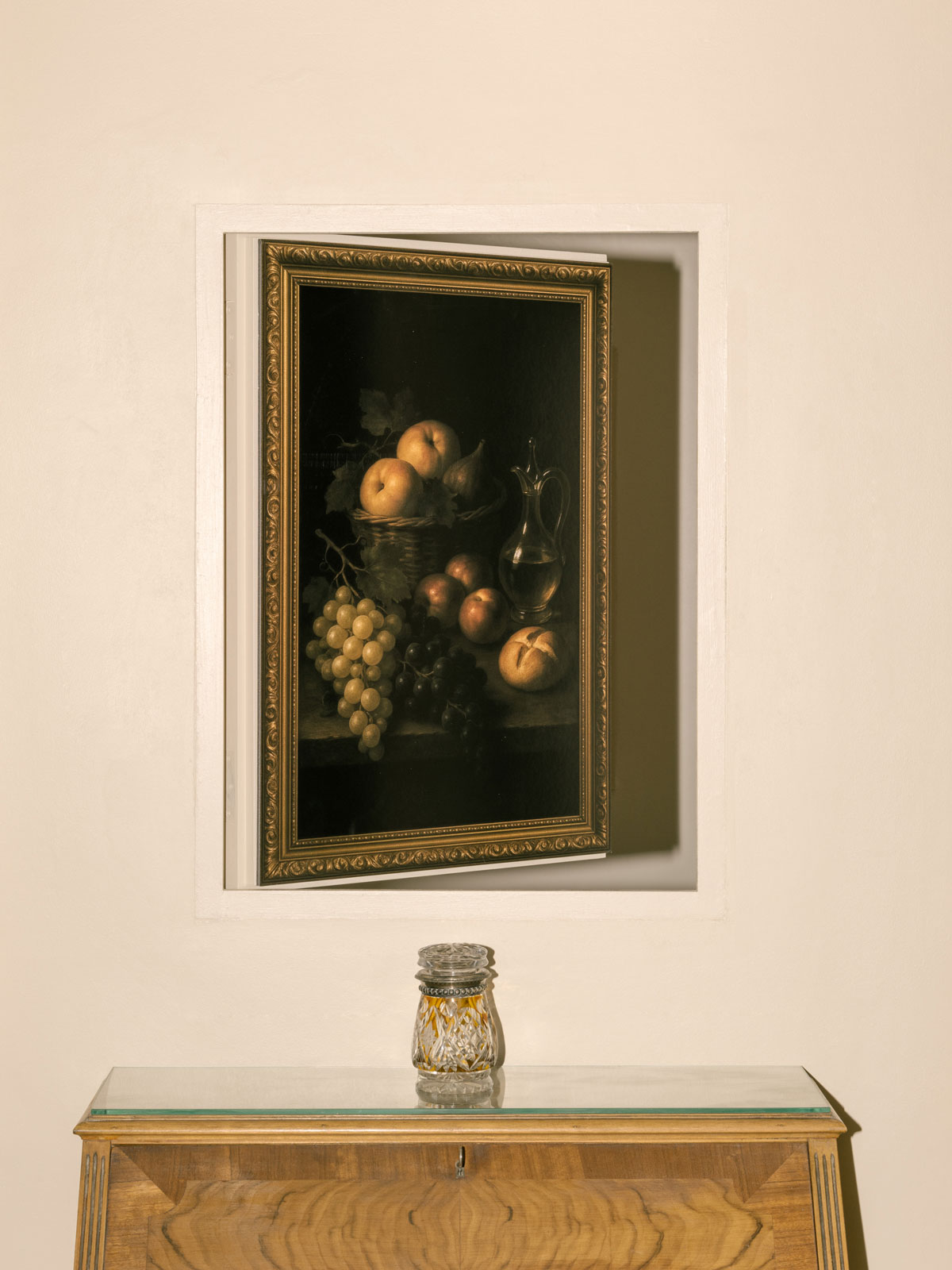
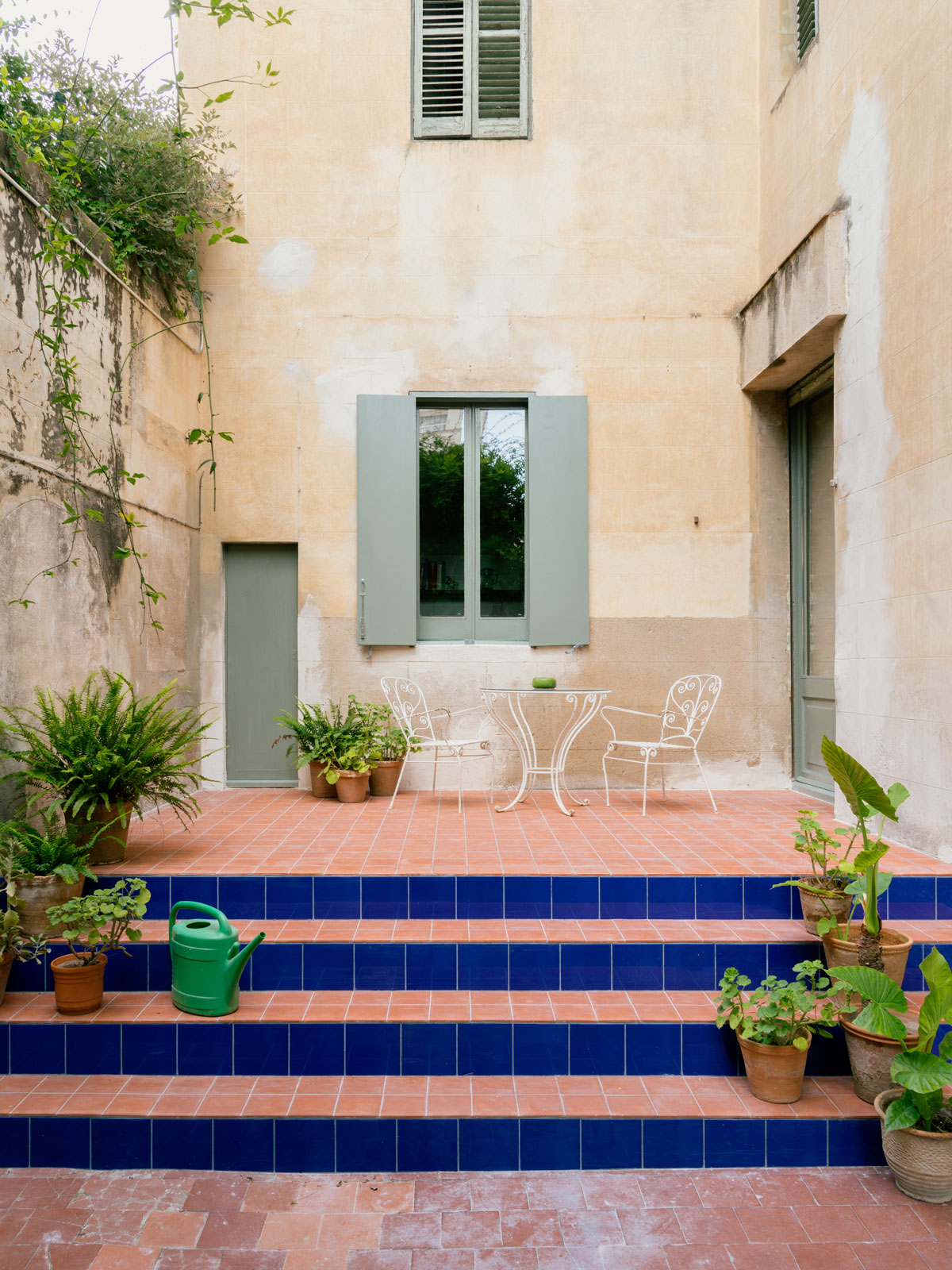
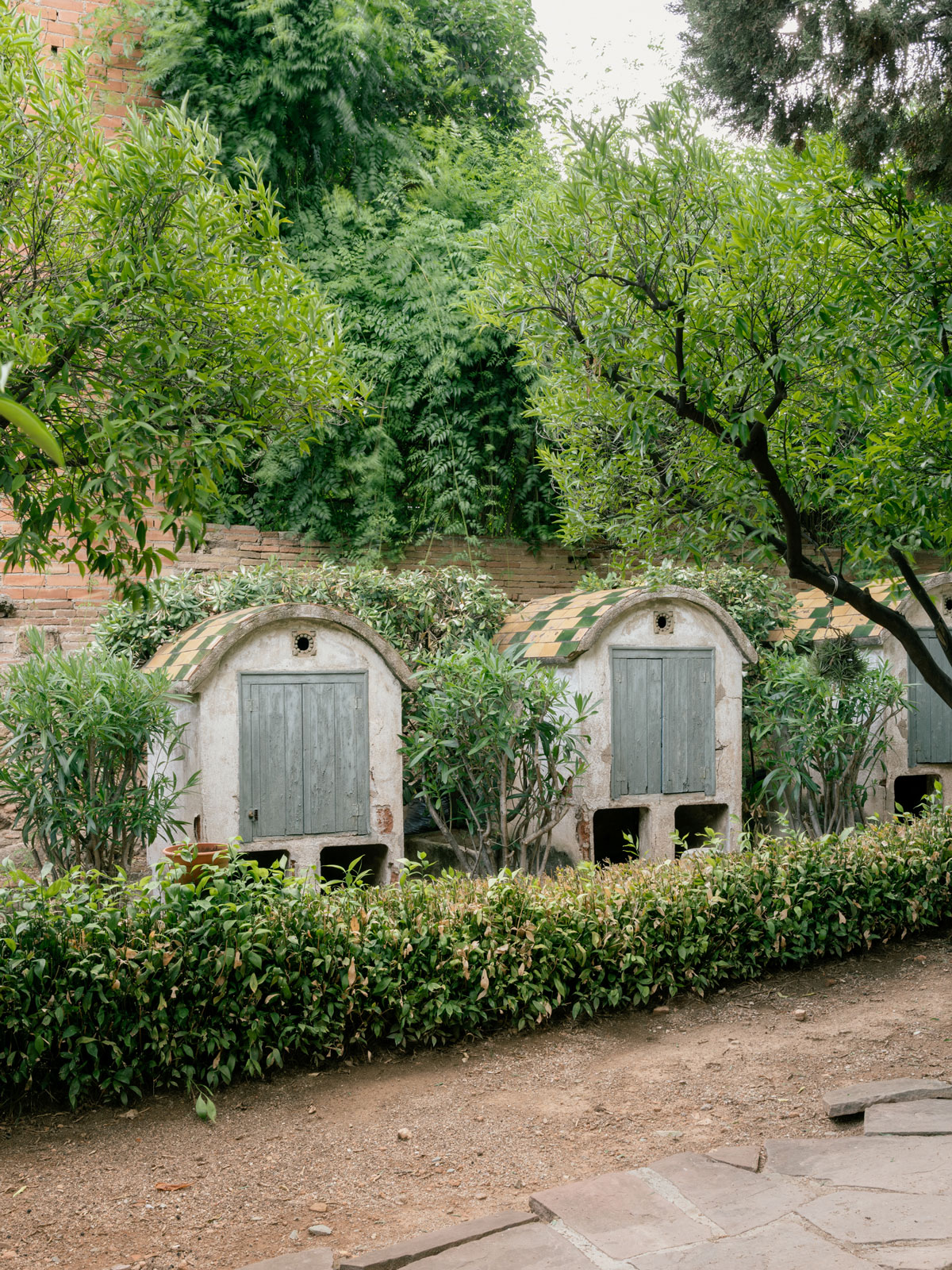
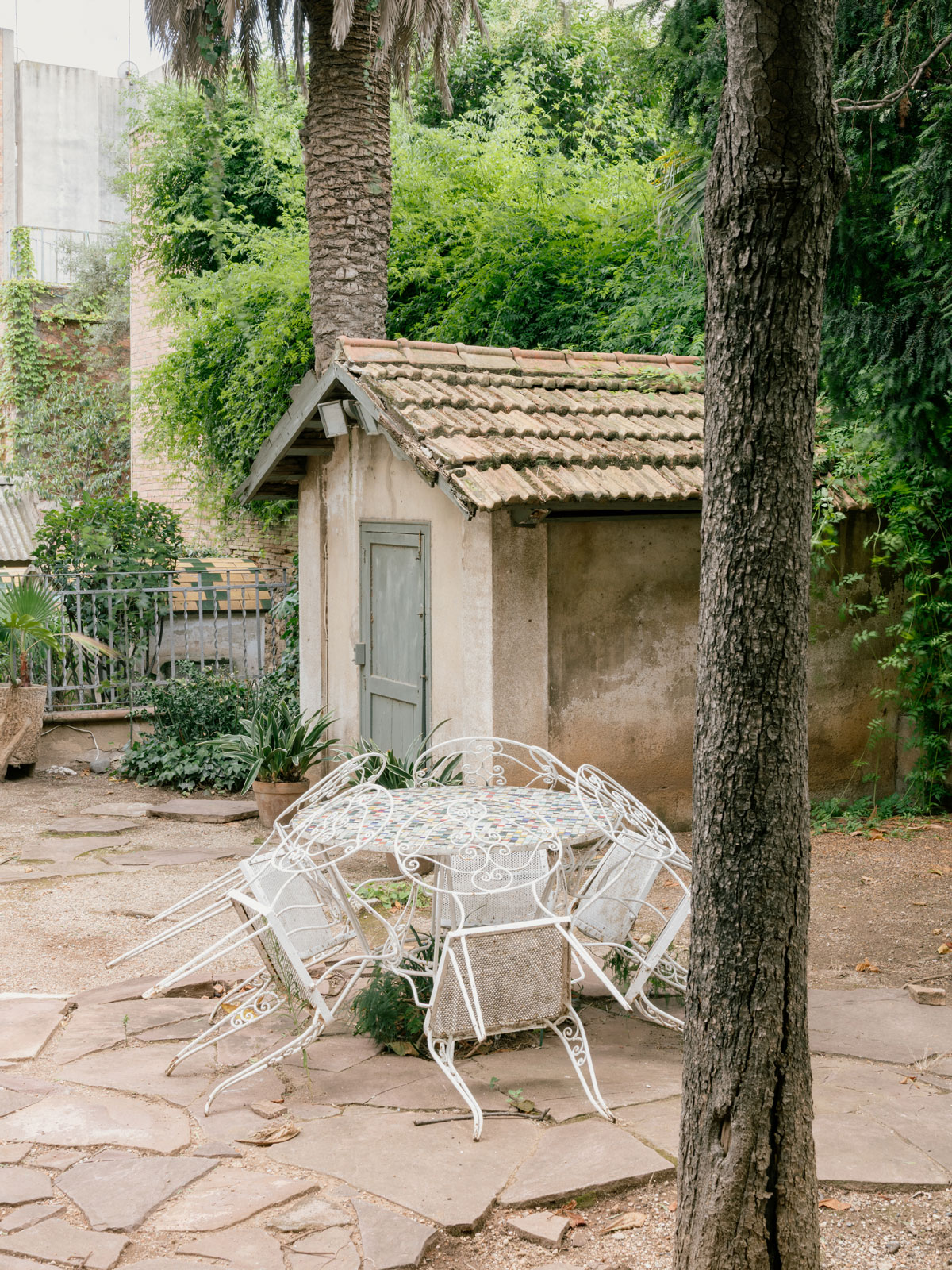
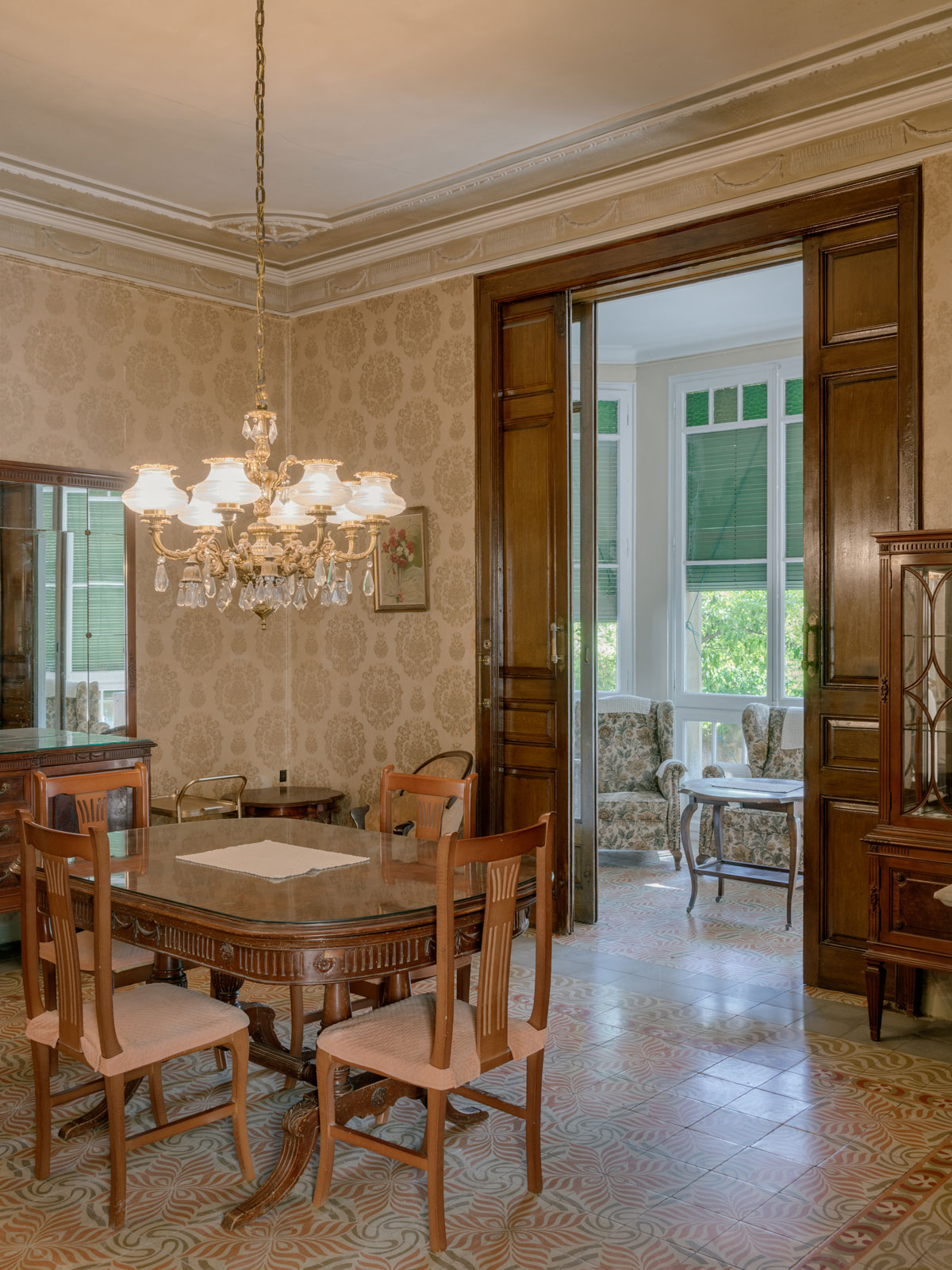
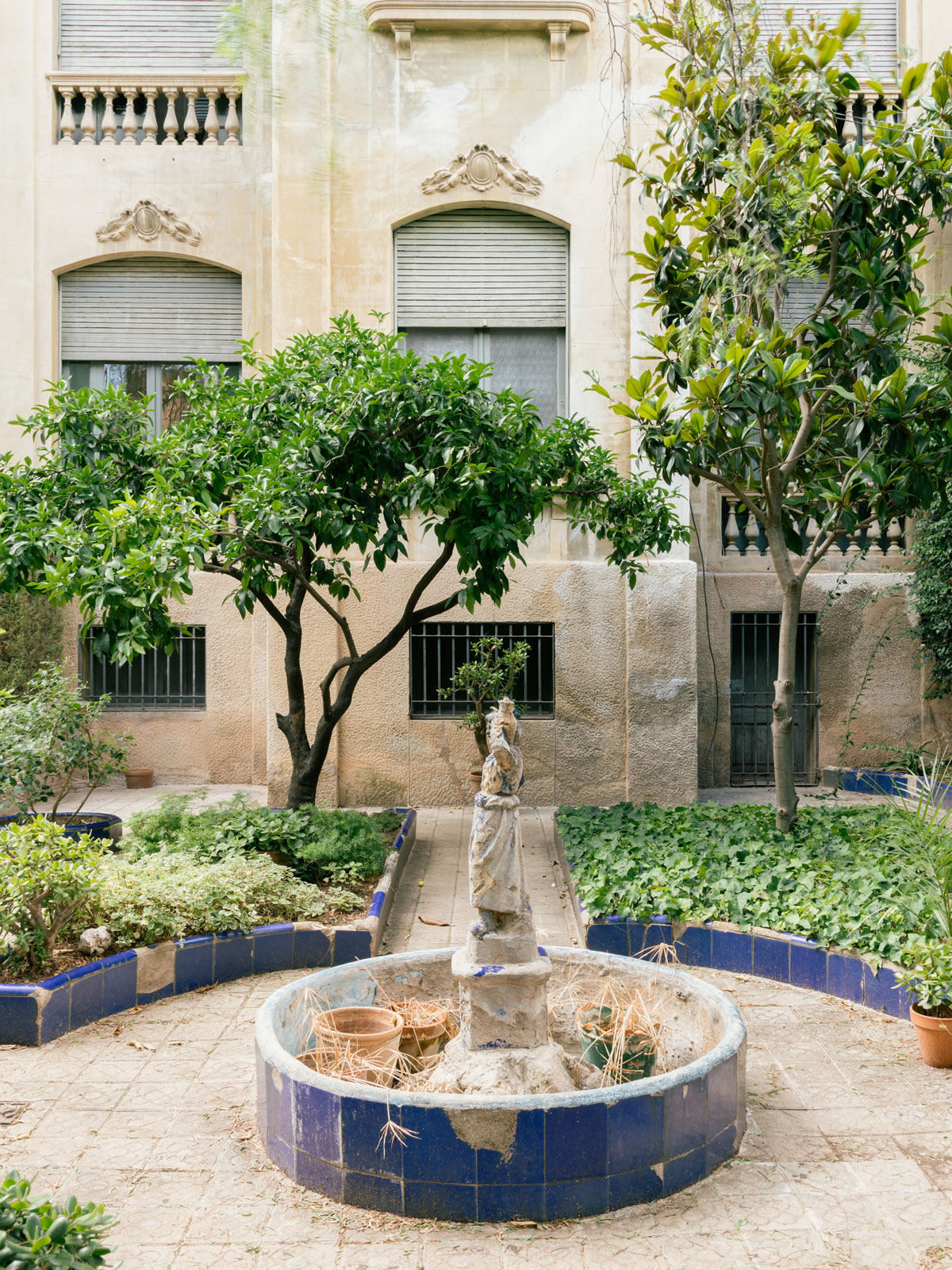
Time went by, and the lands that once formed the gardens of the large houses in the neighborhood were gradually sold, subdivided, and built upon. However, Casa Plató retained an unusually lush garden, which could be considered one of the last green lungs of the neighborhood. If you walk through Gracia, you would never imagine what lies behind the stone wall and the iron gate: a garden with little goose houses, blue ceramic hoops, and a fountain with grotesque features; and among the trees, this preserved architecture appears, surrounded by greenery, like a box containing a family’s memories. Inside, everything remains intact: furniture, carpets, lamps, and mirrors. As if time had stood still there.
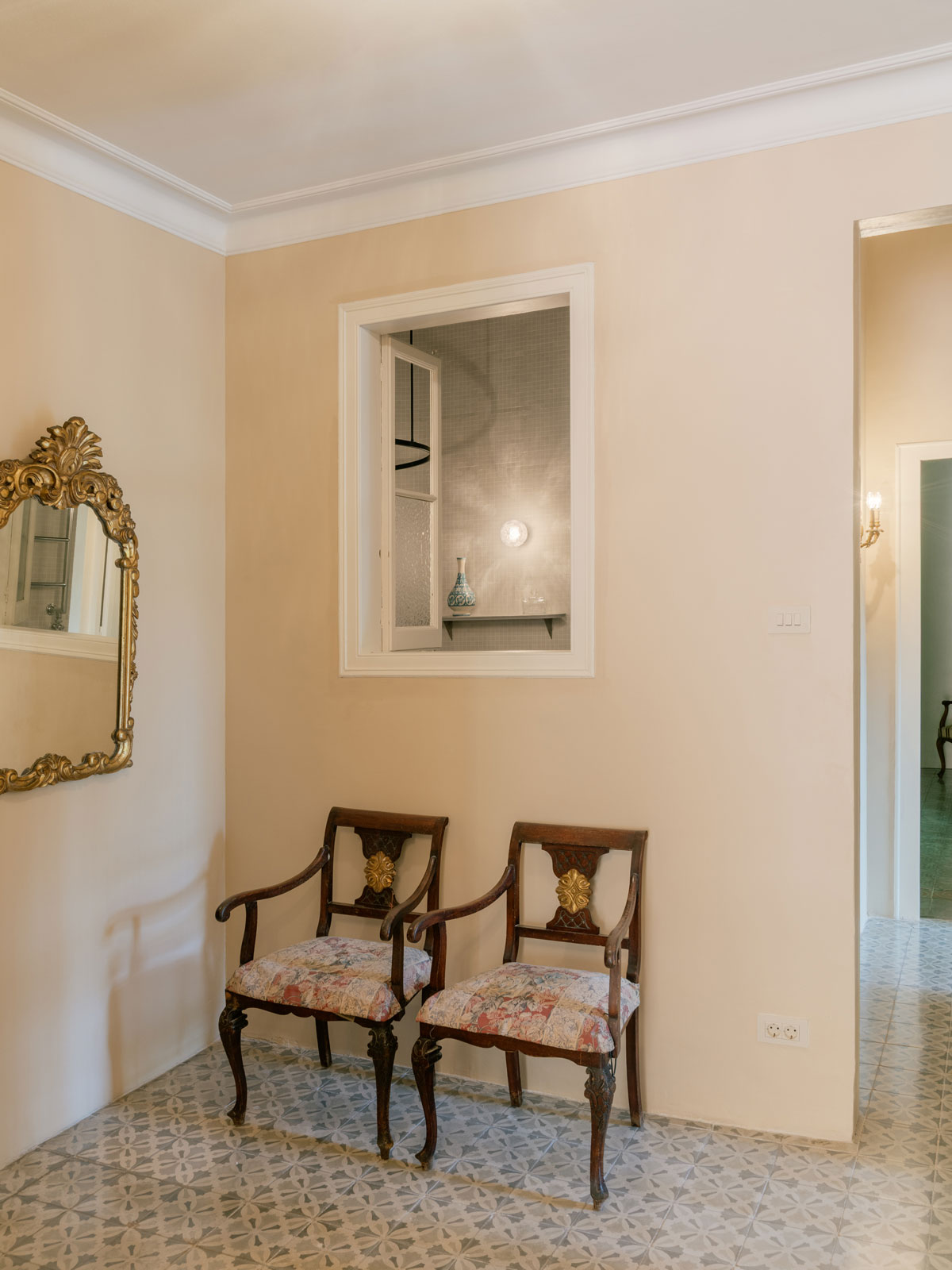
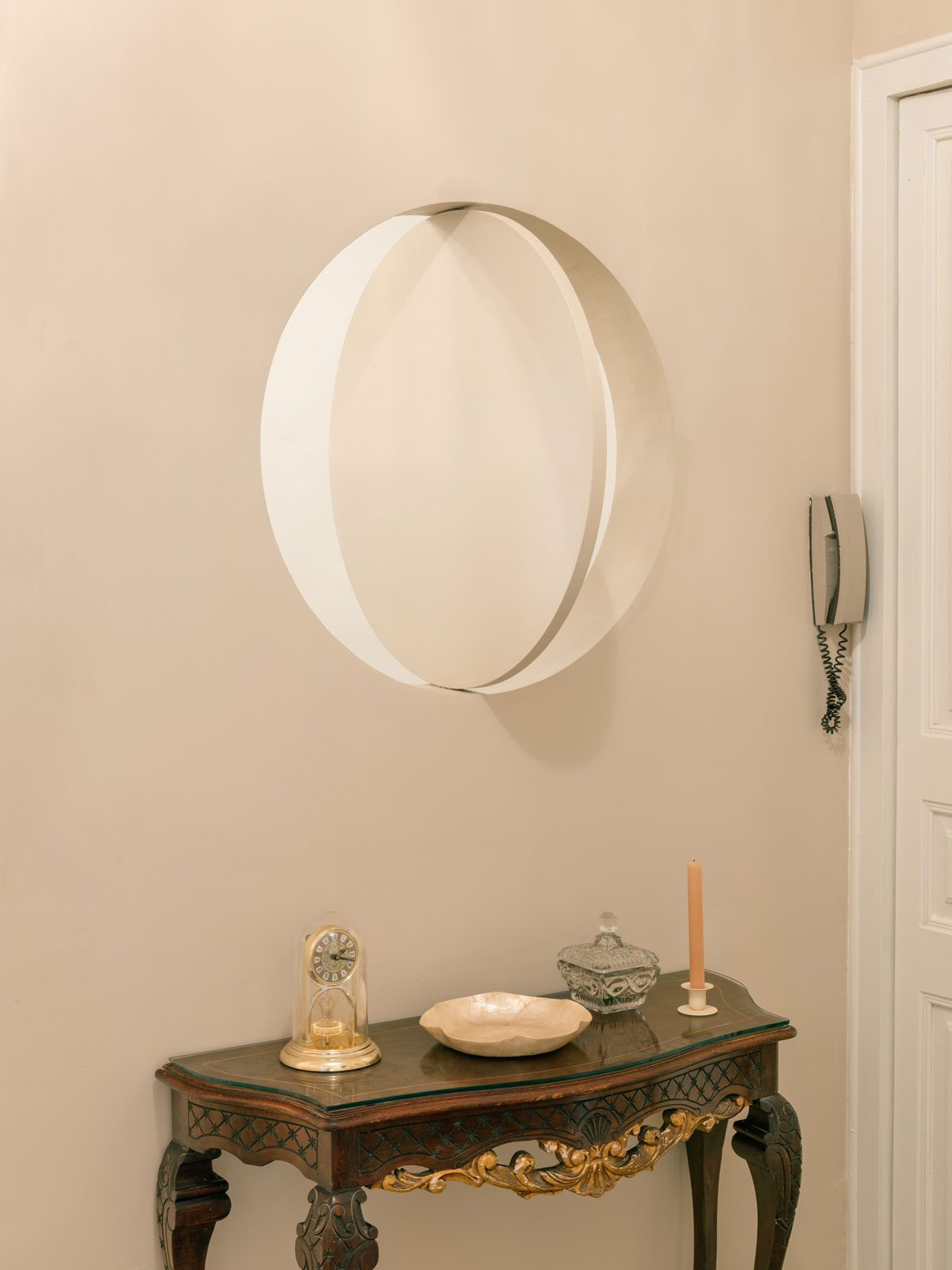
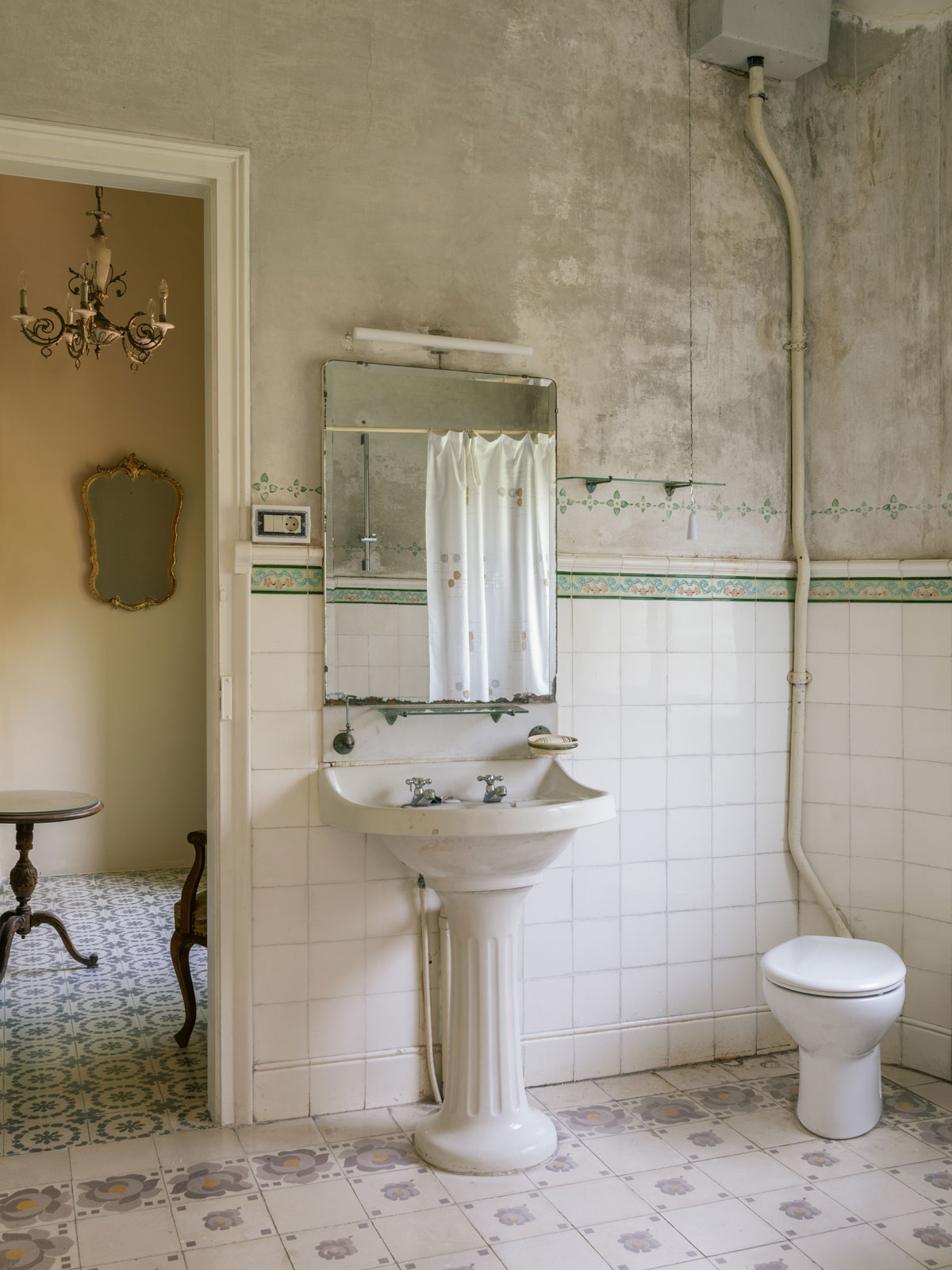
Precisely for that reason, over the years its garden, interior, and twilight-like light have served as the setting for various film shoots. From Carla Simón to Ángela Molina, the interpretations the house has inspired are as diverse as its corners. And it is here, with the passing from one generation to the next, that the commission arises: to update the house to make it livable today, while preserving the character that makes it unique for filming. The project is built upon this tension between preservation and transformation. Original finishes, moldings, and details are conserved with an almost archaeological gaze, while new elements —such as a renewed kitchen and bathroom— are introduced with great care: contemporary pieces inserted as if they had always been there, respecting the original traces while being entirely new.
The name Casa Plató encapsulates this dual condition: it is both a set and a home. A house that keeps a story alive, yet also allows fiction. A house that embraces what it has been and what it could become in other cinematic realities.
Description of the intervention
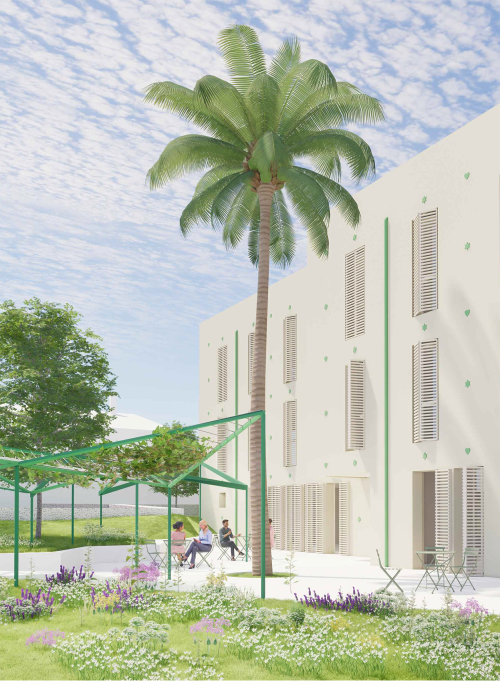
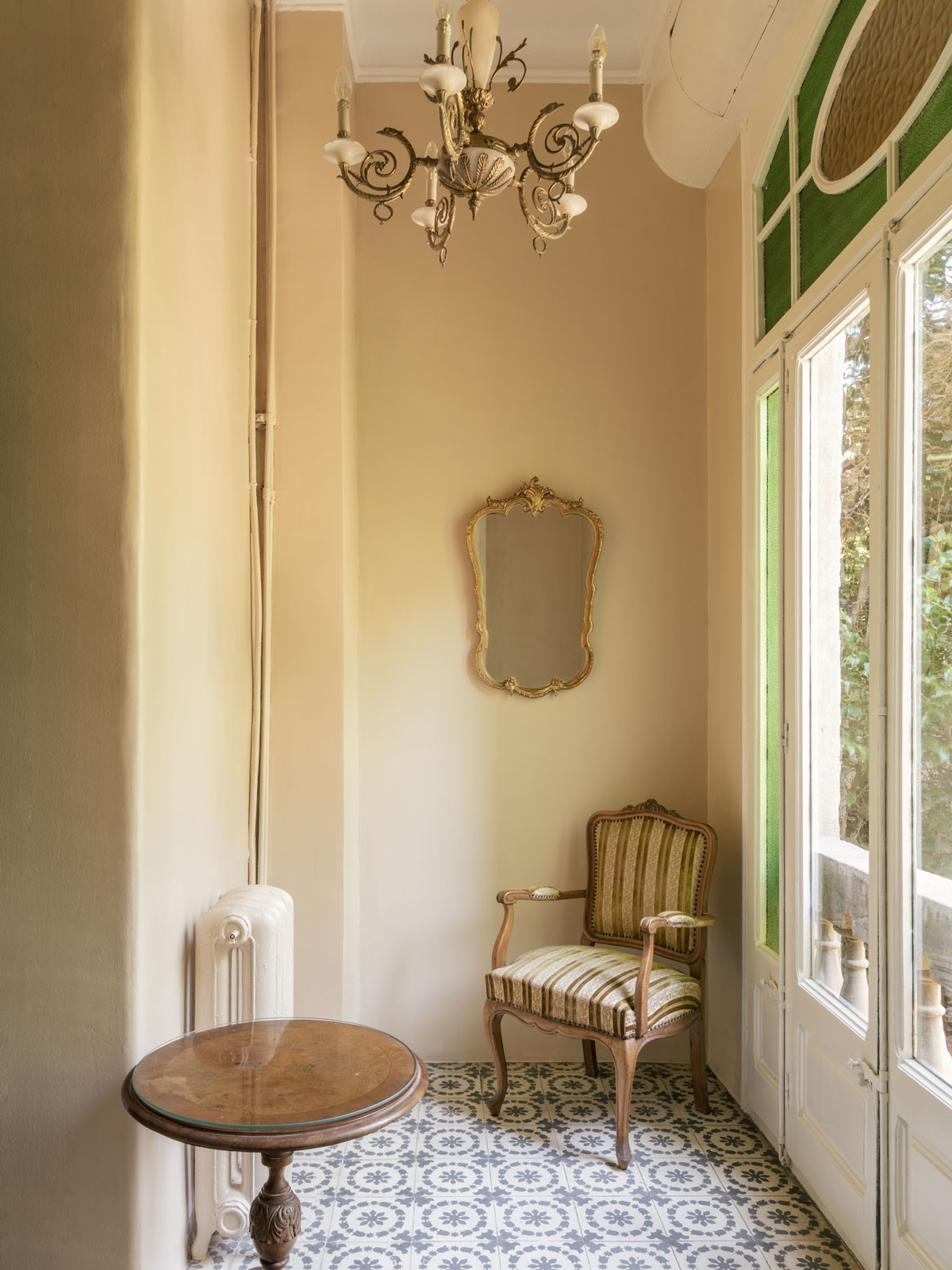
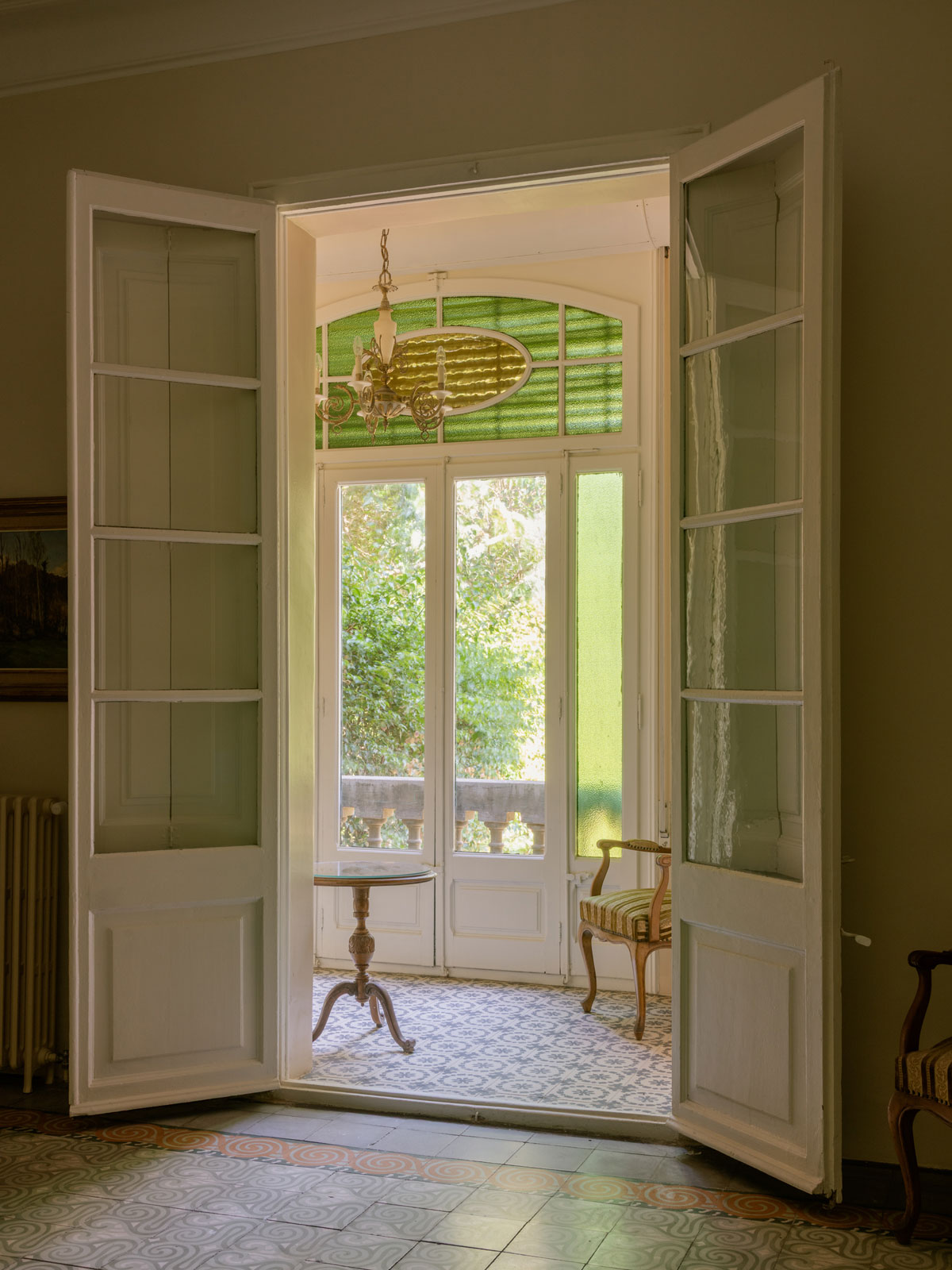
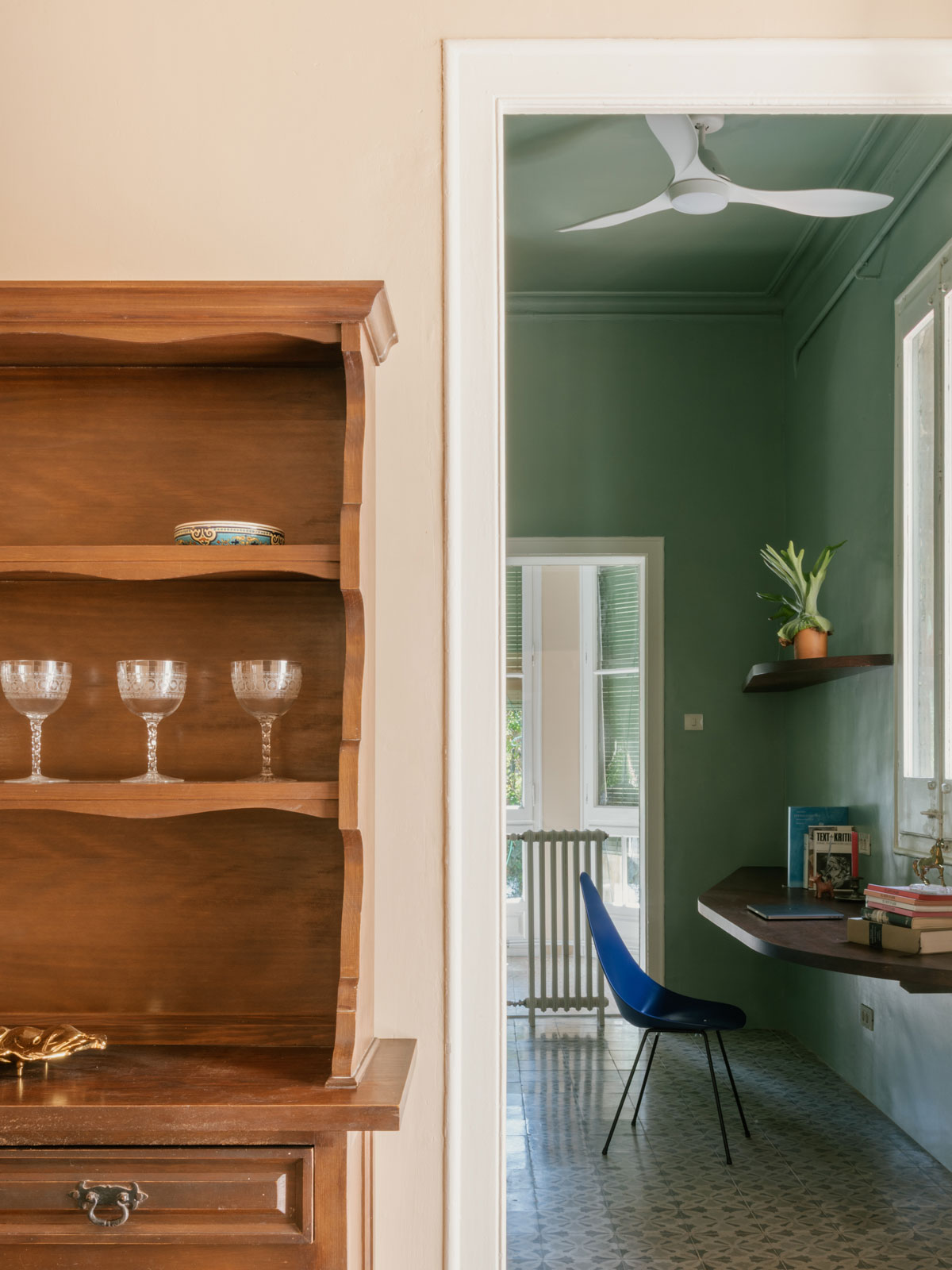
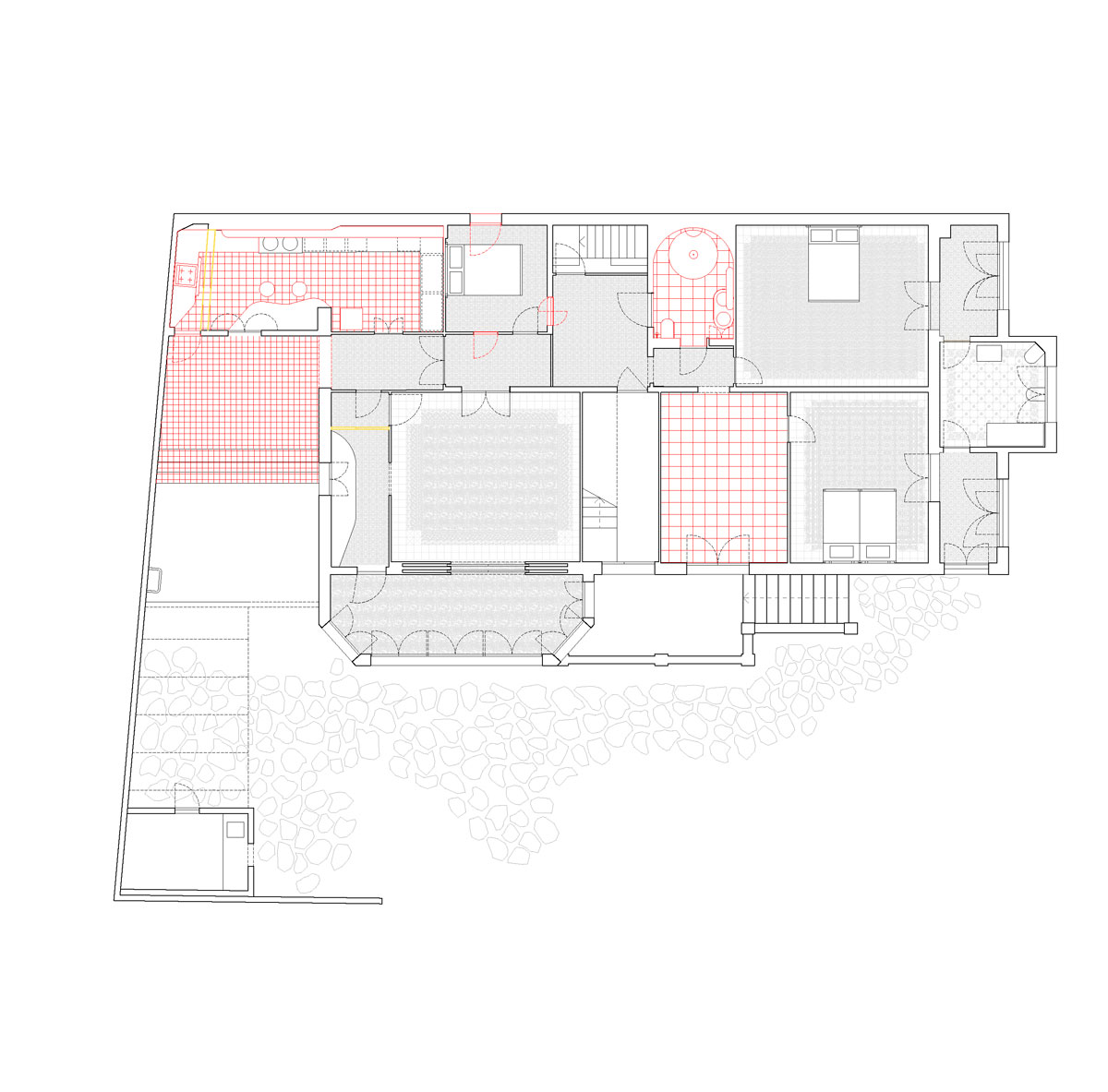
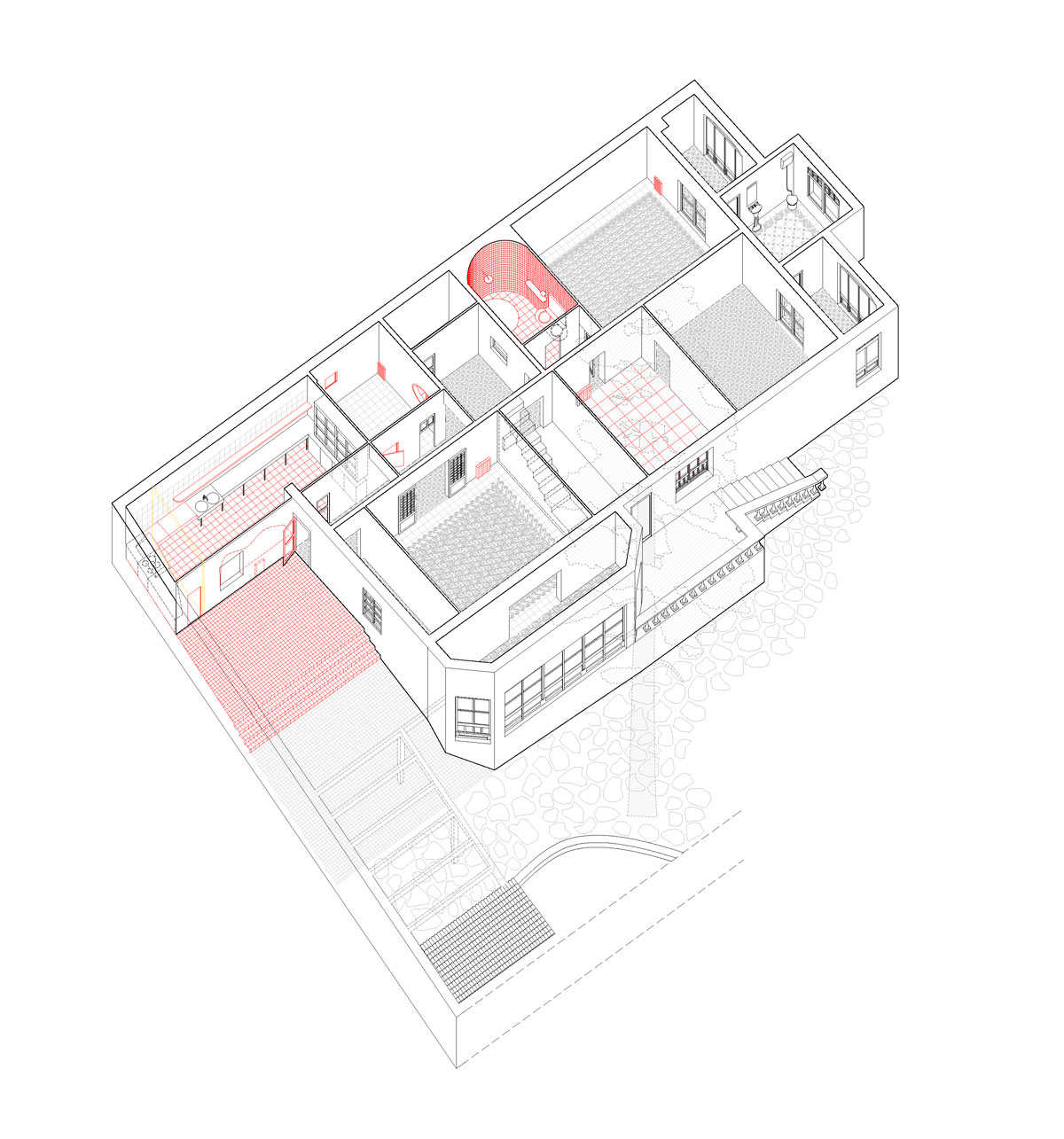
The intervention in Casa Plató focuses on three main axes: the expansion of the kitchen, the creation of a new bathroom, and the incorporation of new openings that allow light to reach the heart of the house. A terrace is also added to enhance the connection with the garden, visually blending into the ensemble thanks to the continuity of the blue tiles characteristic of the patio. In parallel, a careful restoration of the existing heritage elements is carried out: hydraulic floor tiles, antique radiators, moldings, and original colours, all preserved as an essential part of the home’s identity.
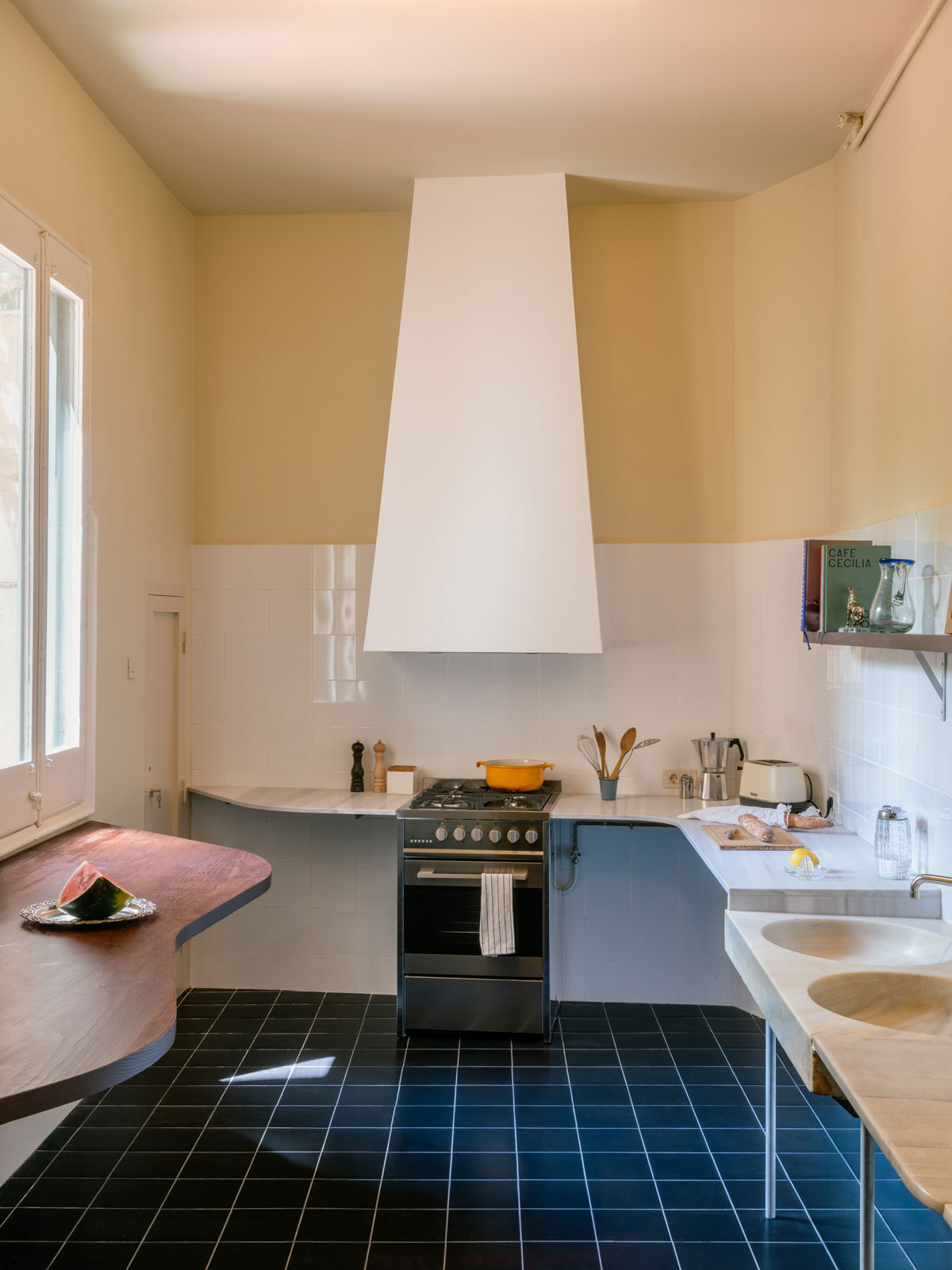
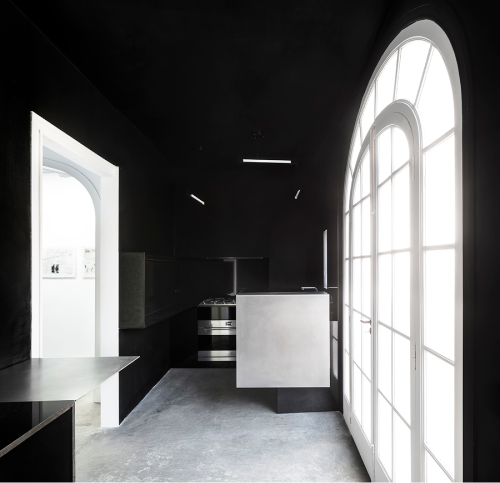
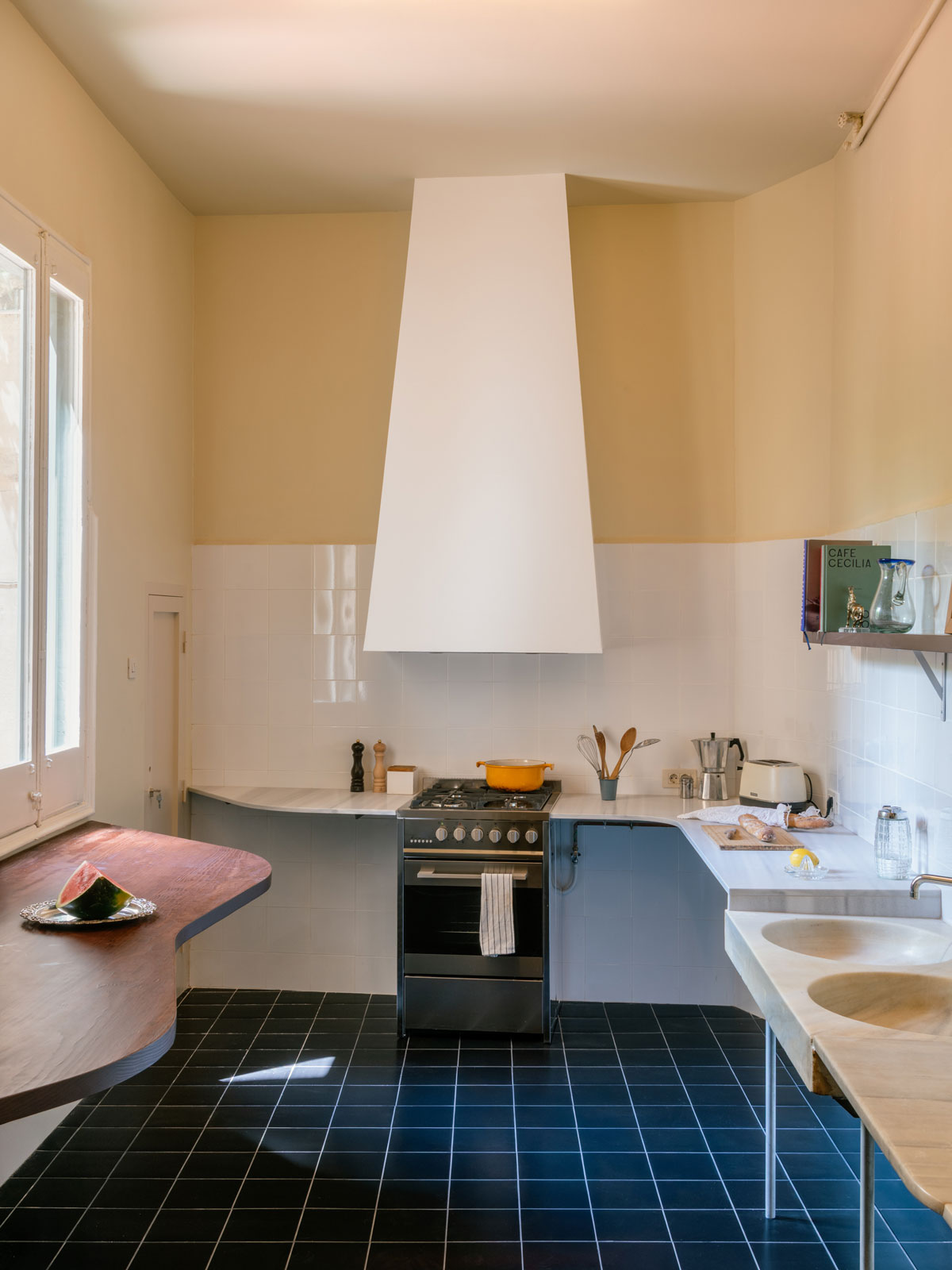
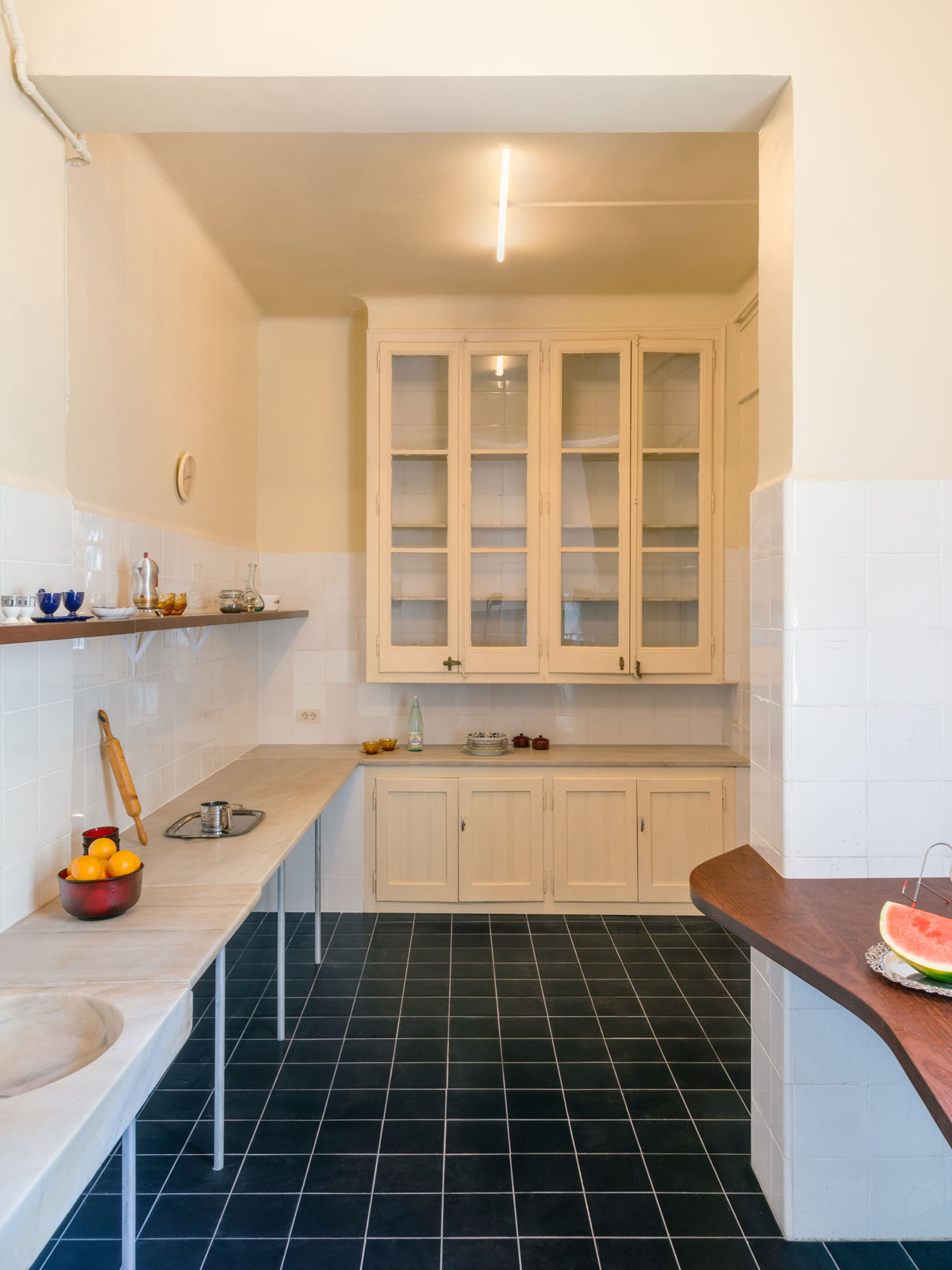
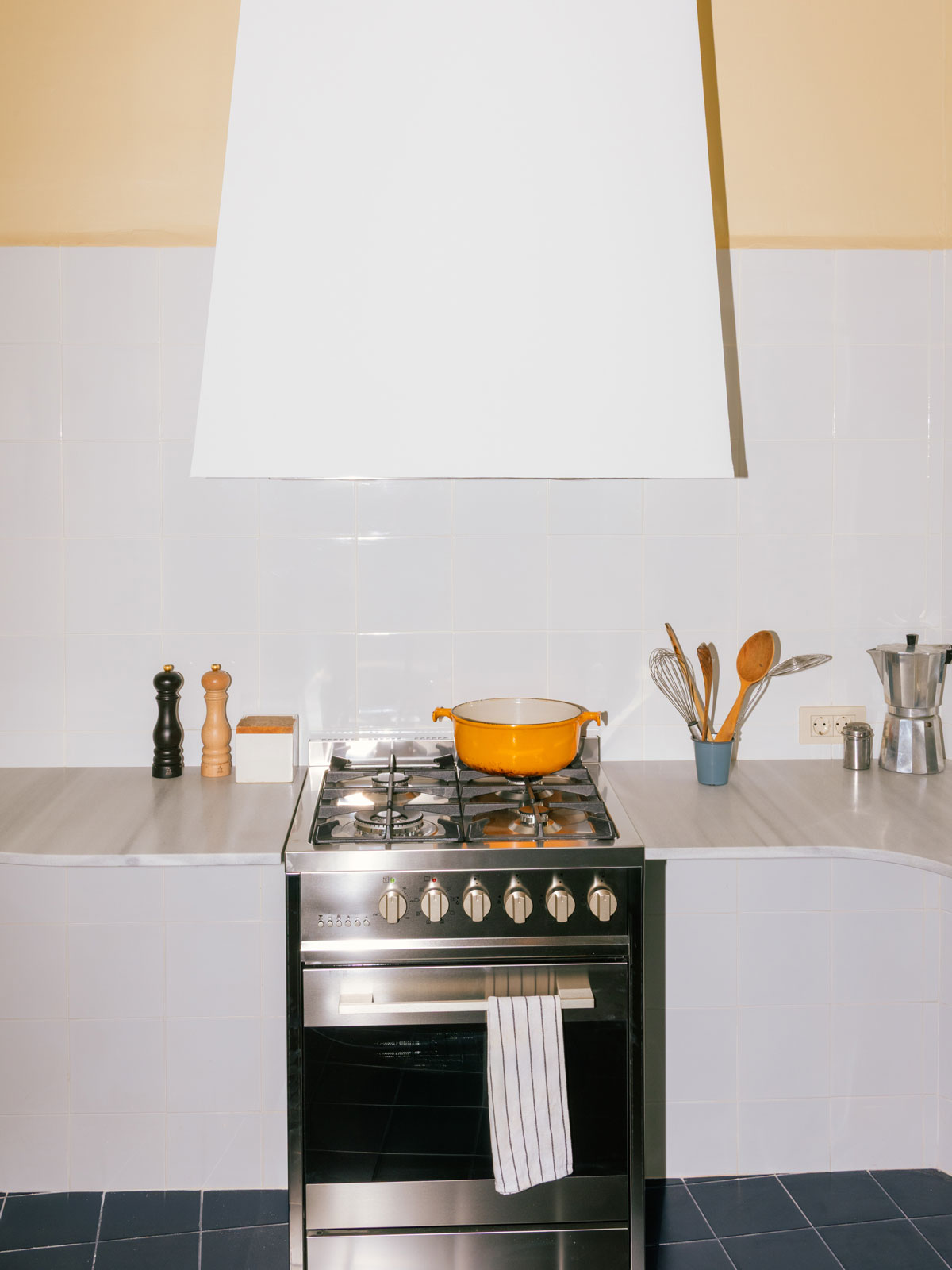
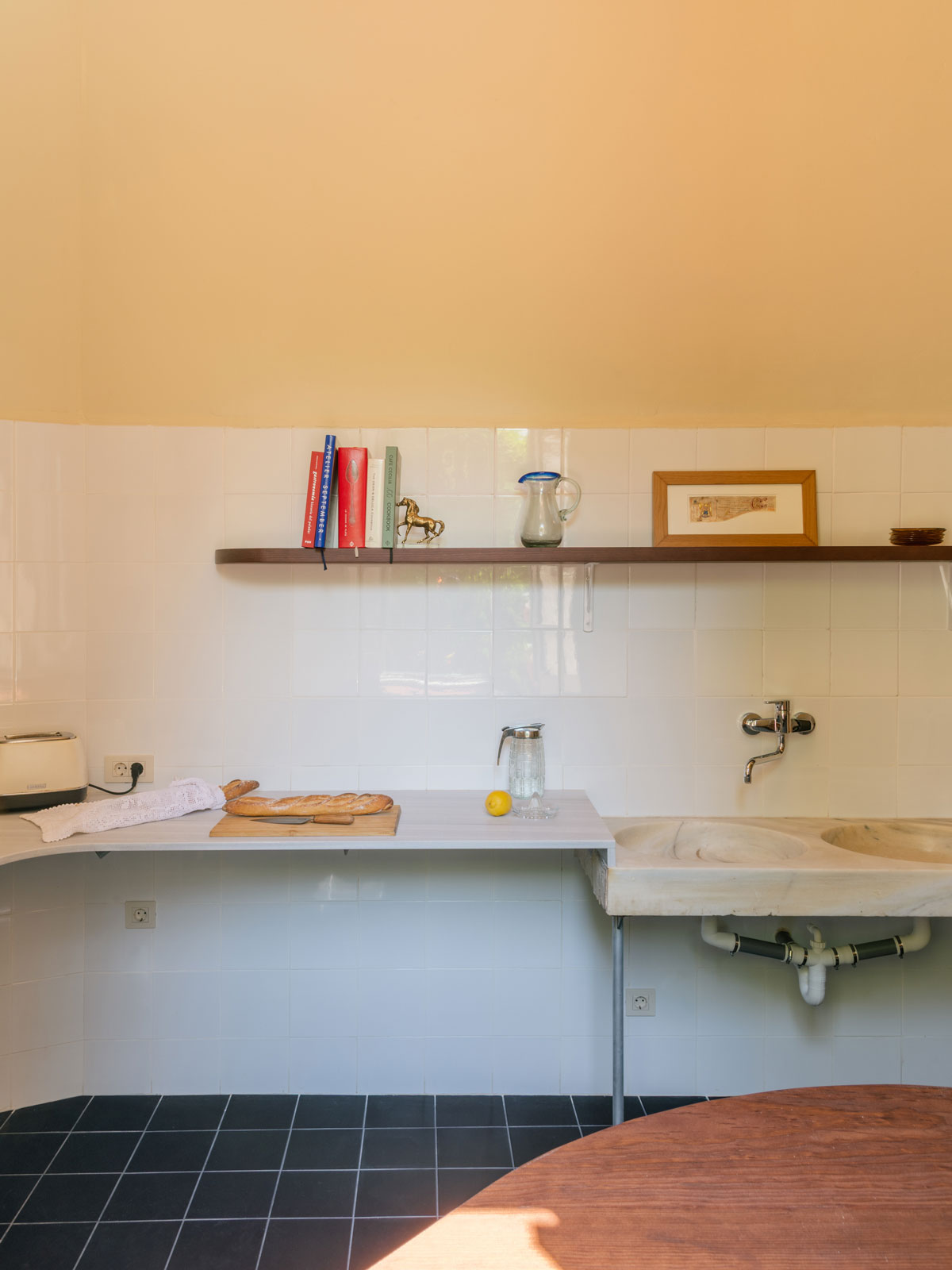
The original kitchen remains almost intact, with its painted wooden cabinets and the original marble sink —witnesses of the house’s origins. The intervention approaches the space with almost surgical precision, expanding it and updating its essential elements without altering its spirit. The dark flooring is reproduced with new pieces in the same tone, and a white geometrically shaped hood, a wooden shelf, and an integrated wooden table are incorporated, adding warmth and functionality. The tiled walls and original furniture coexist with these contemporary gestures, creating a renewed domestic space that remains faithful to its memory.
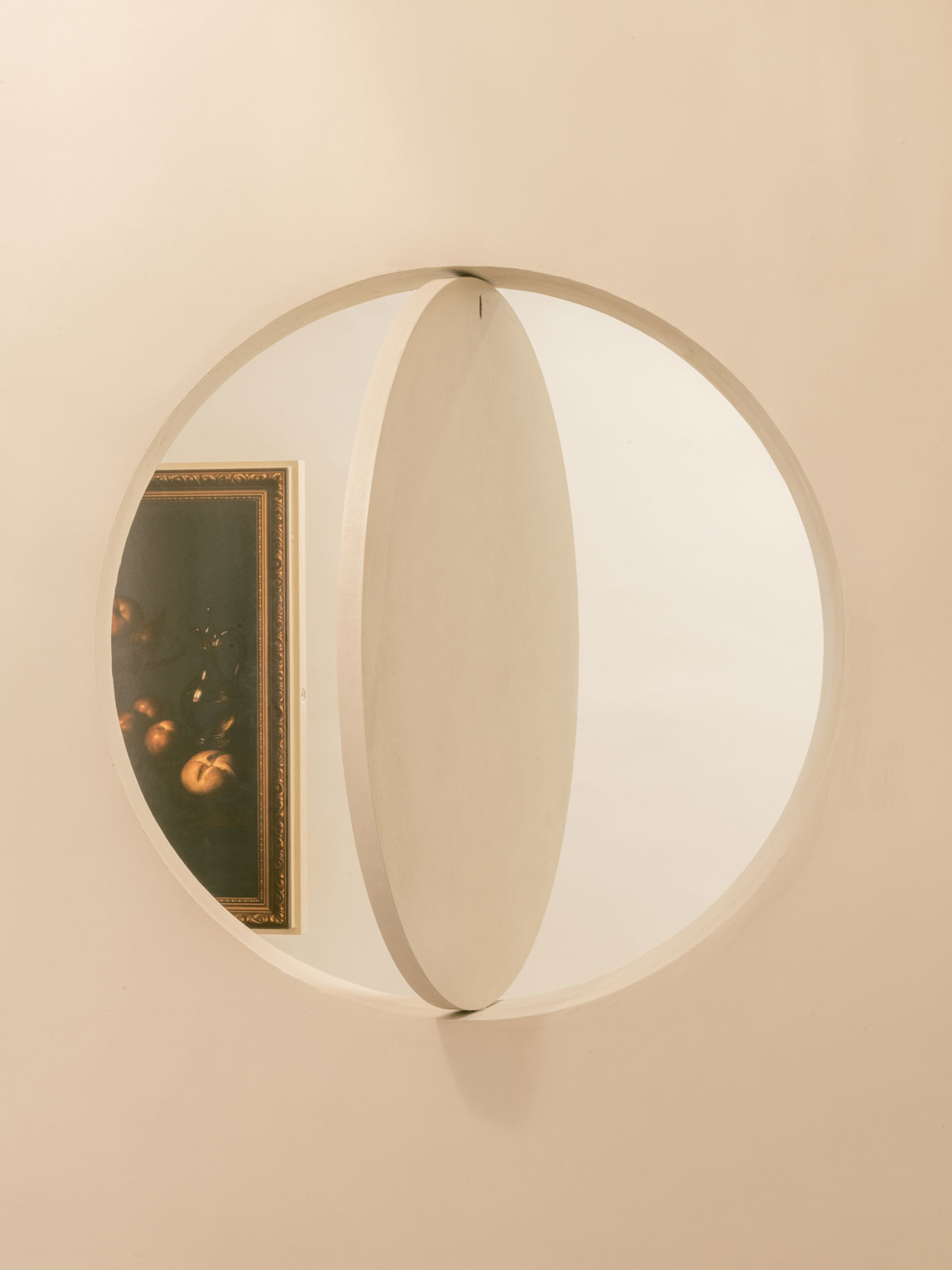
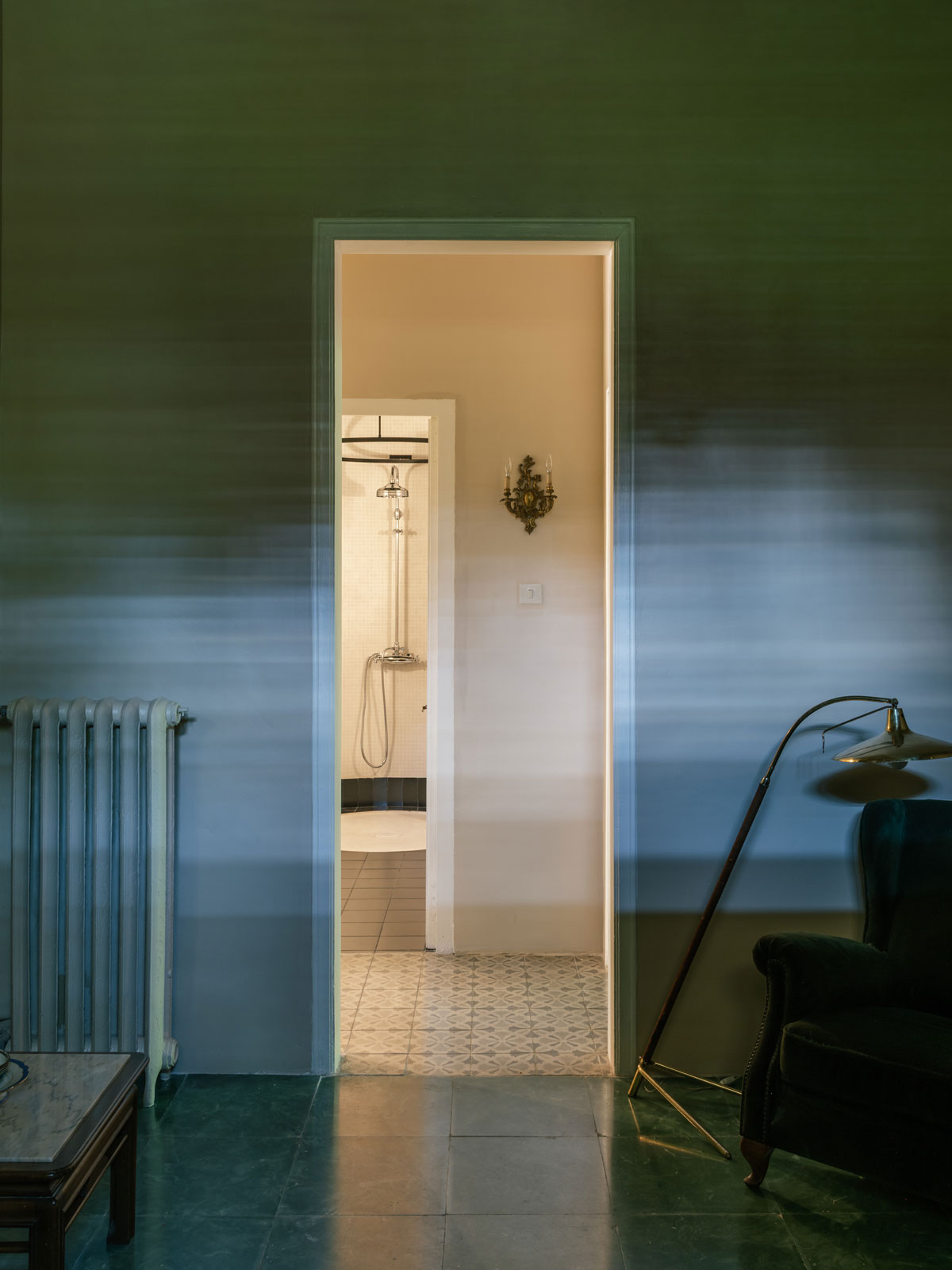
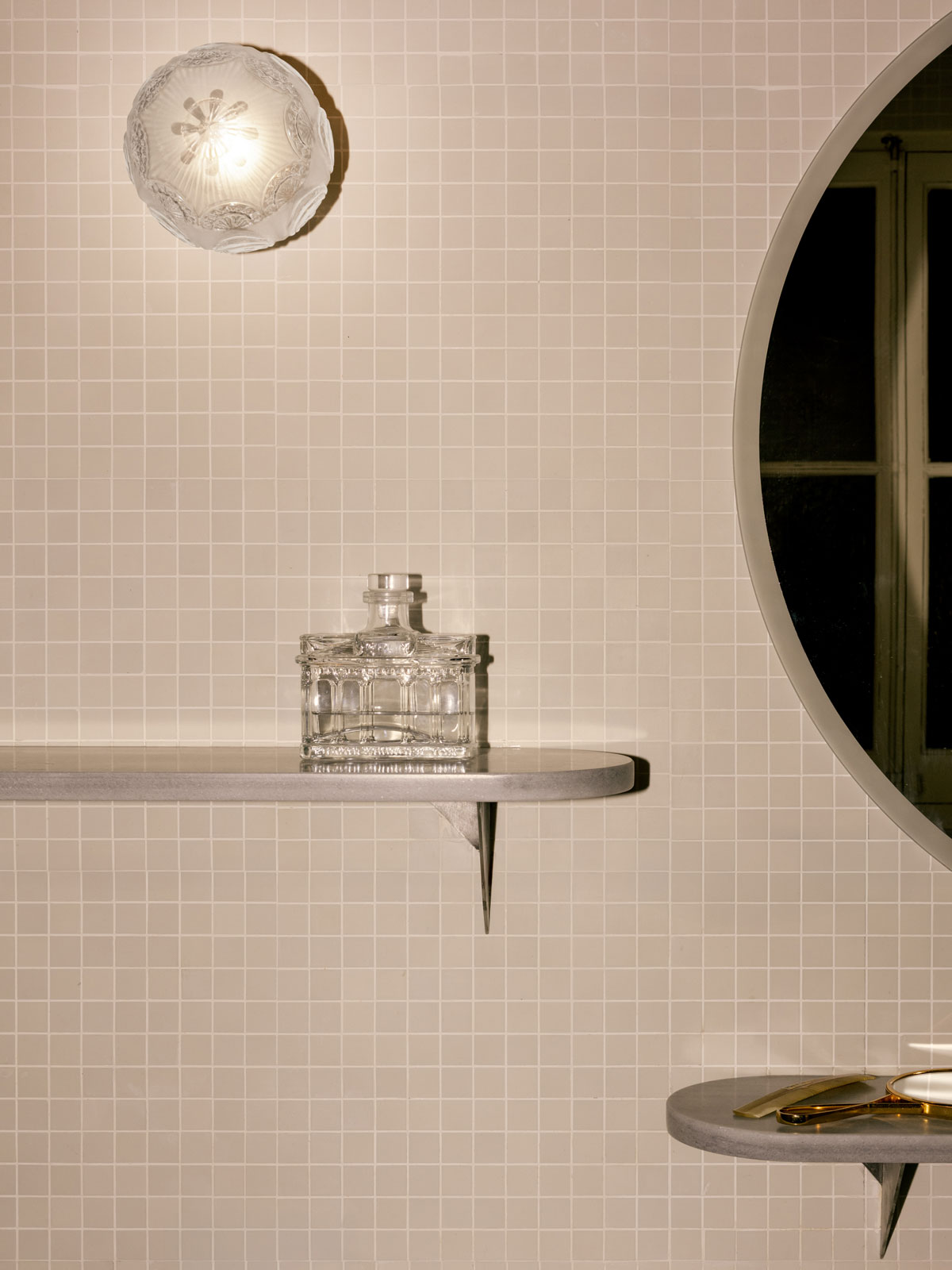
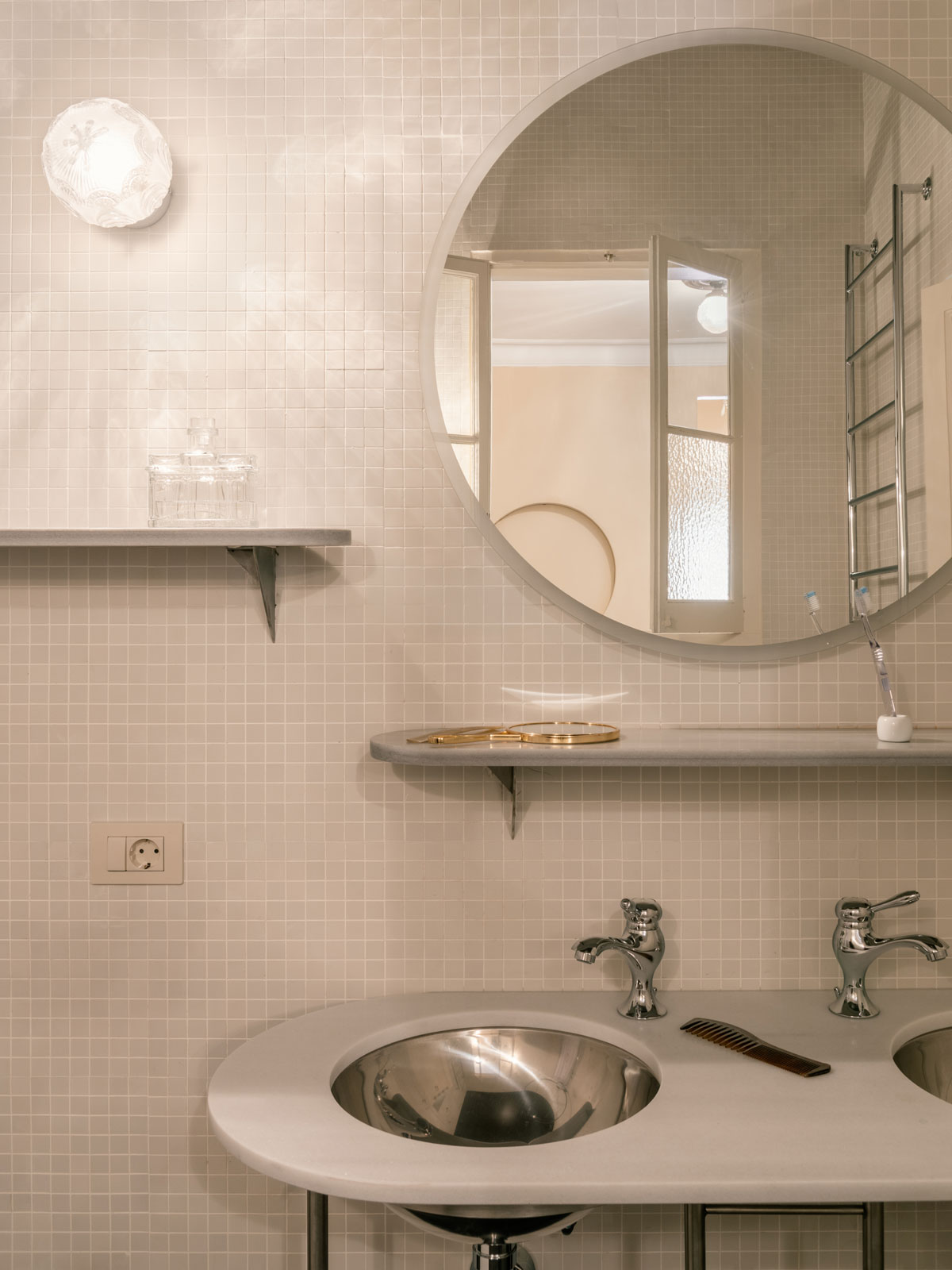
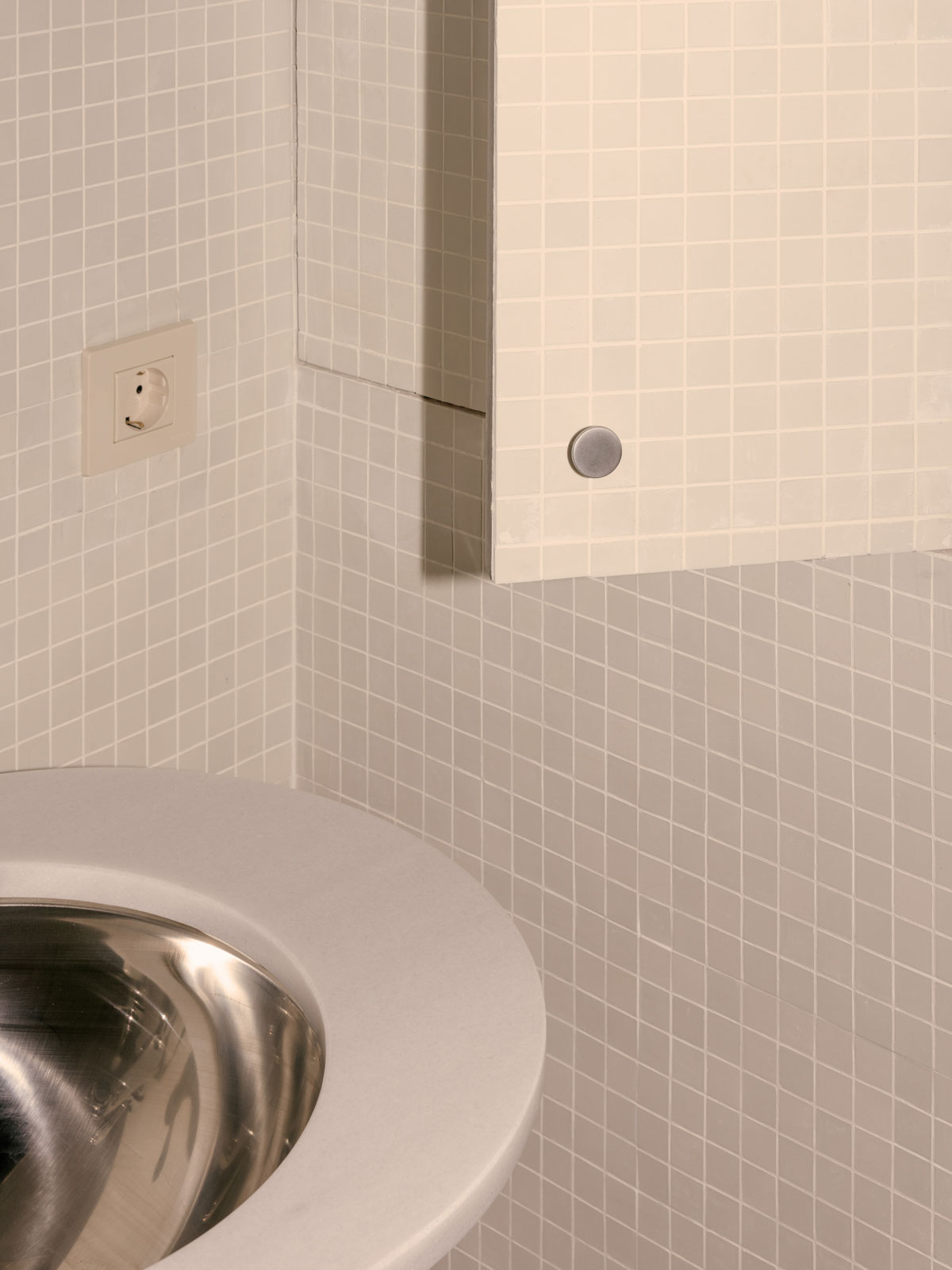
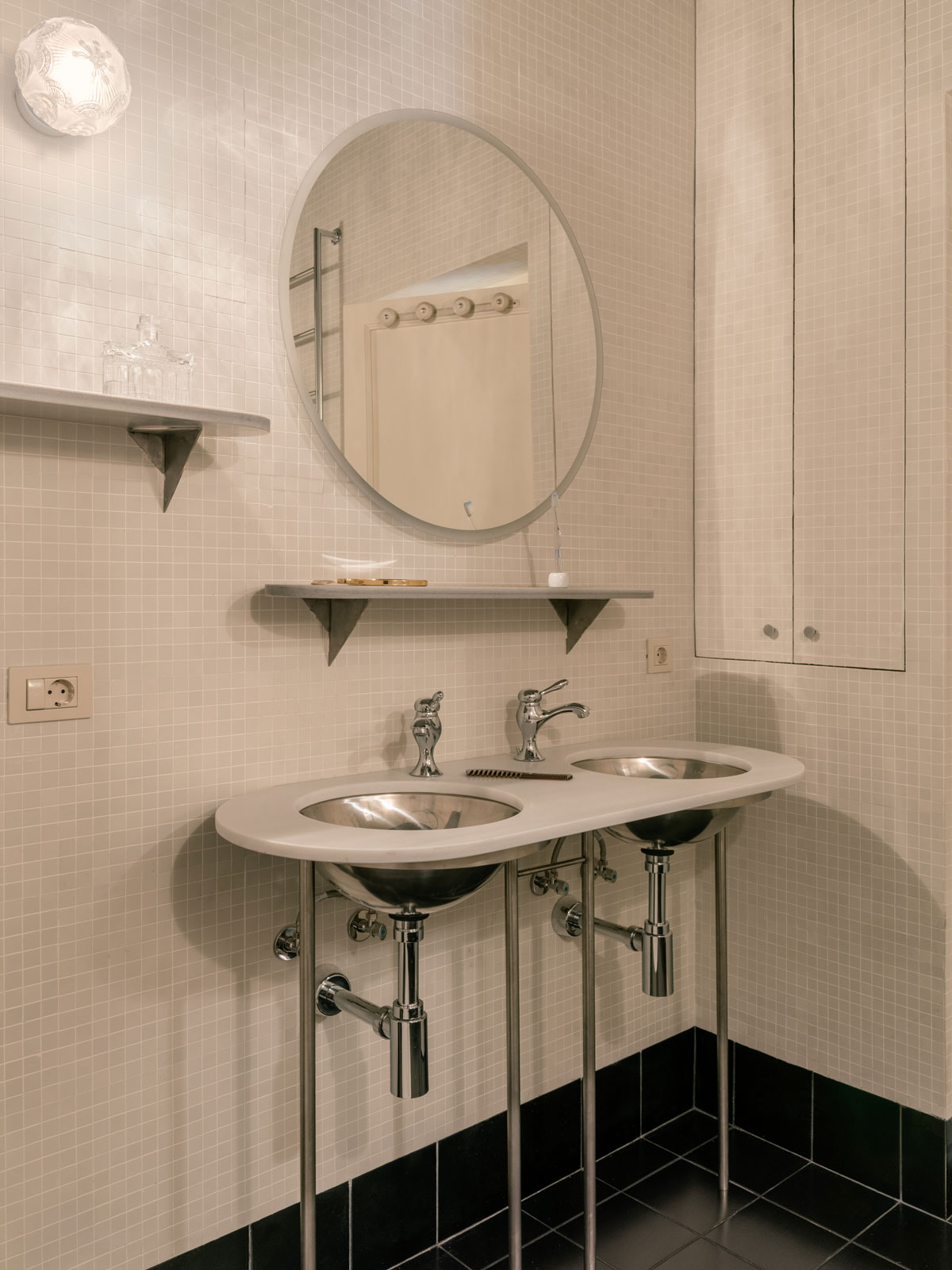
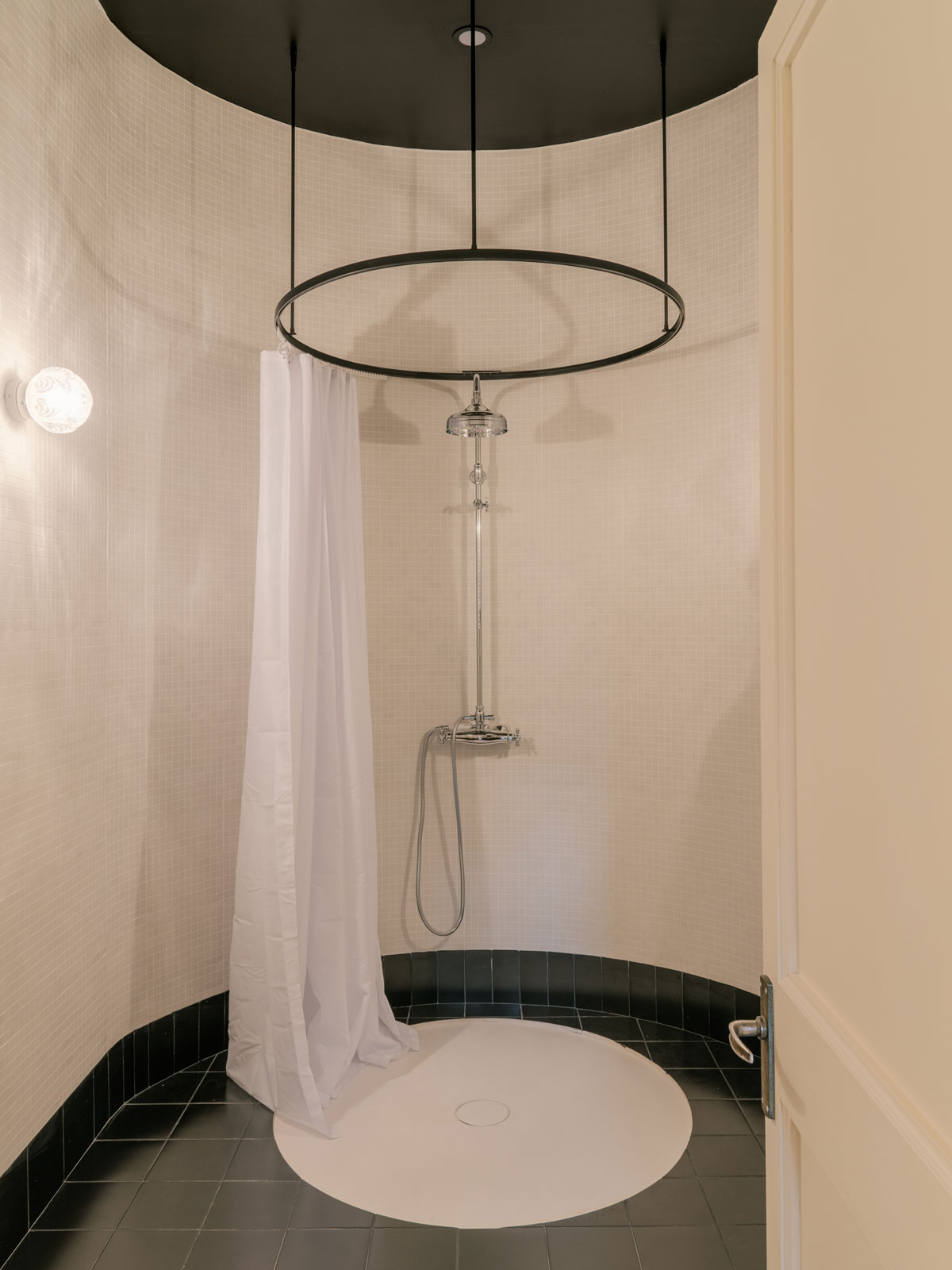
The new bathroom draws inspiration from domestic bathrooms of the 1930s, connected to the early Modern Movement and its hygienist and functional imagination. The space is defined by white mosaic-tiled walls, dark flooring, and a stainless steel and marble washbasin with undulating forms. The central feature is a circular shower, surrounded by a perimeter curtain, transforming the everyday act of showering into an almost theatrical scene. The space is completed with circular mirrors, curved tap fittings, and period lamps, which reinforce the room’s timeless and cinematic character.