Villa parque
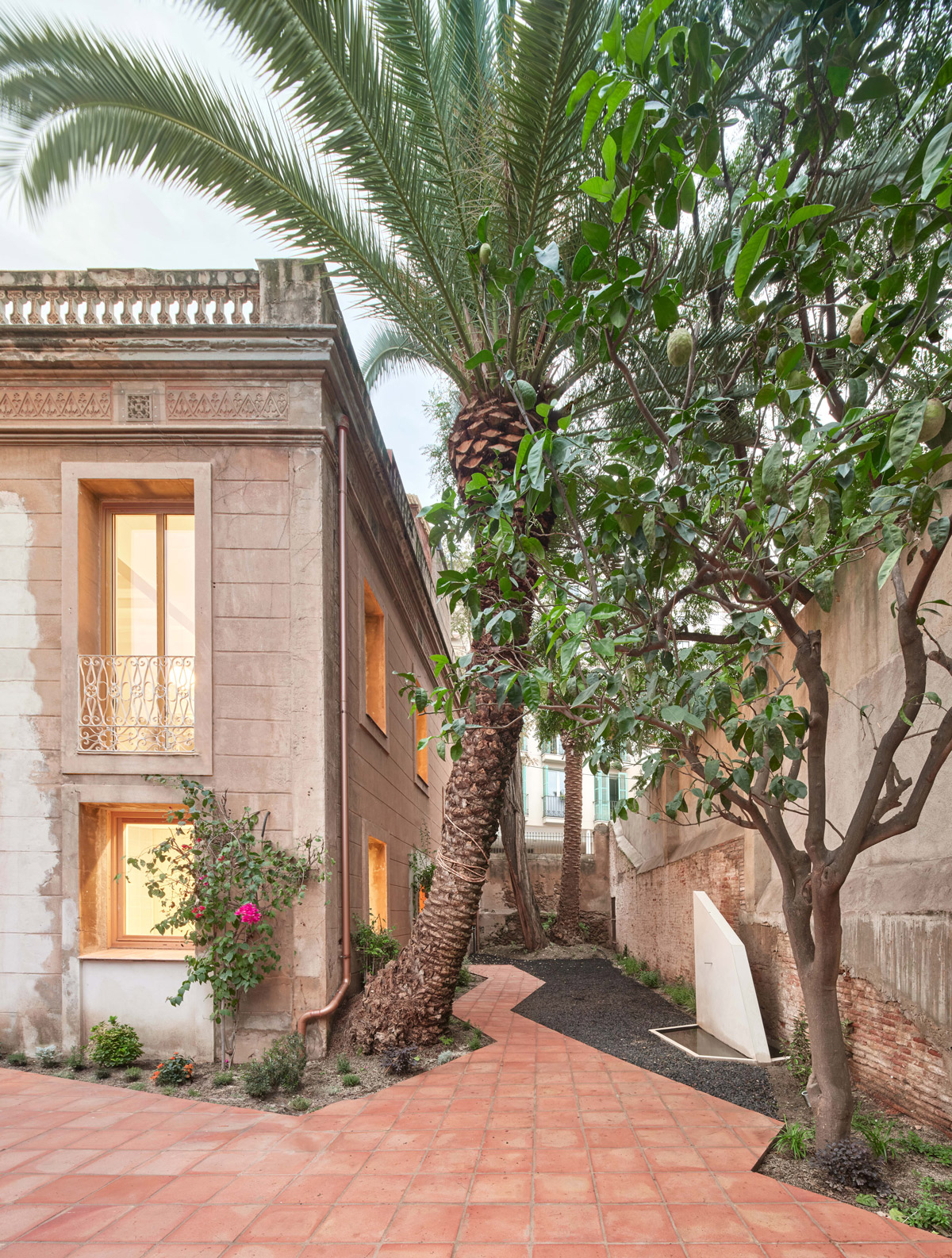
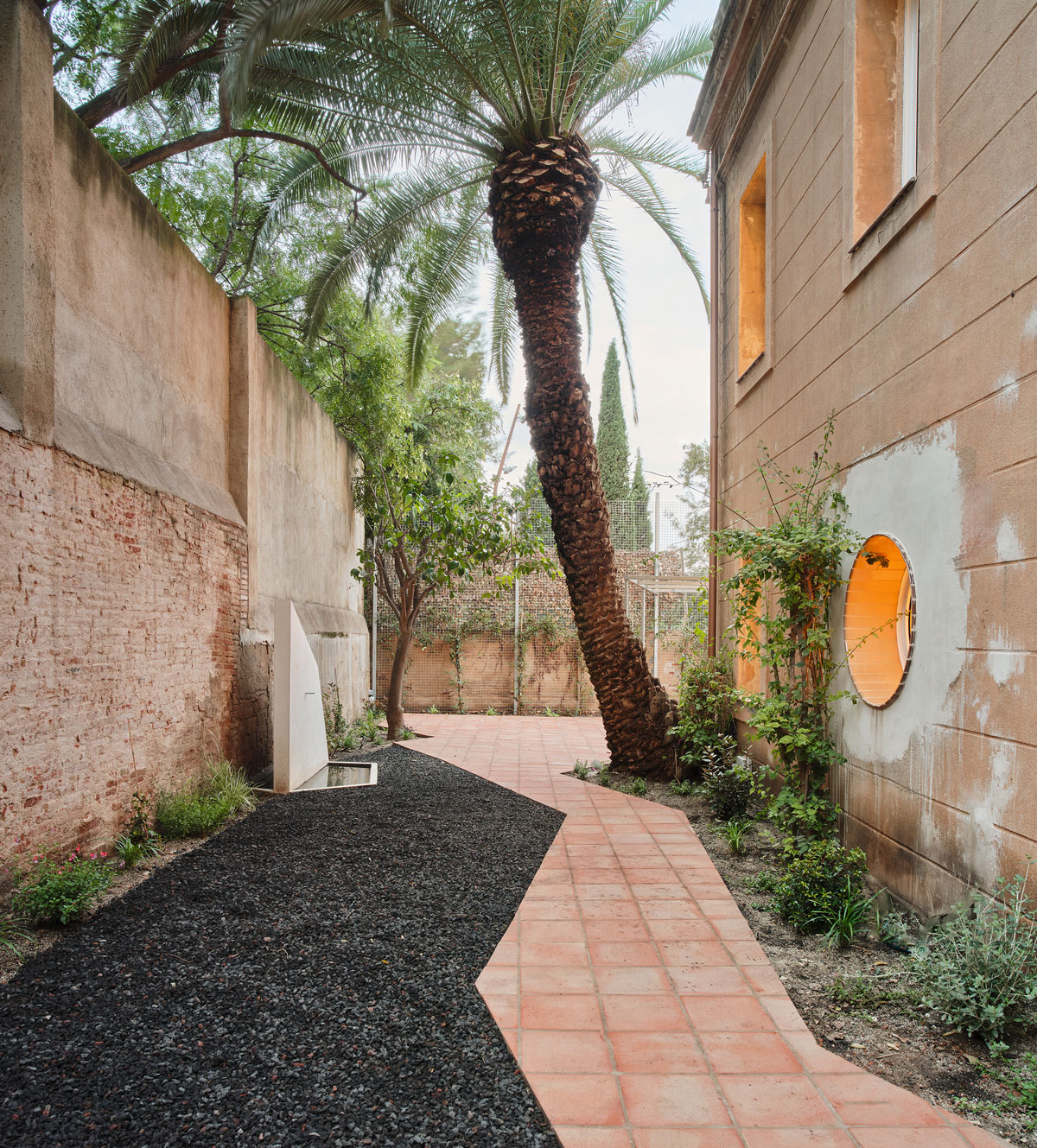
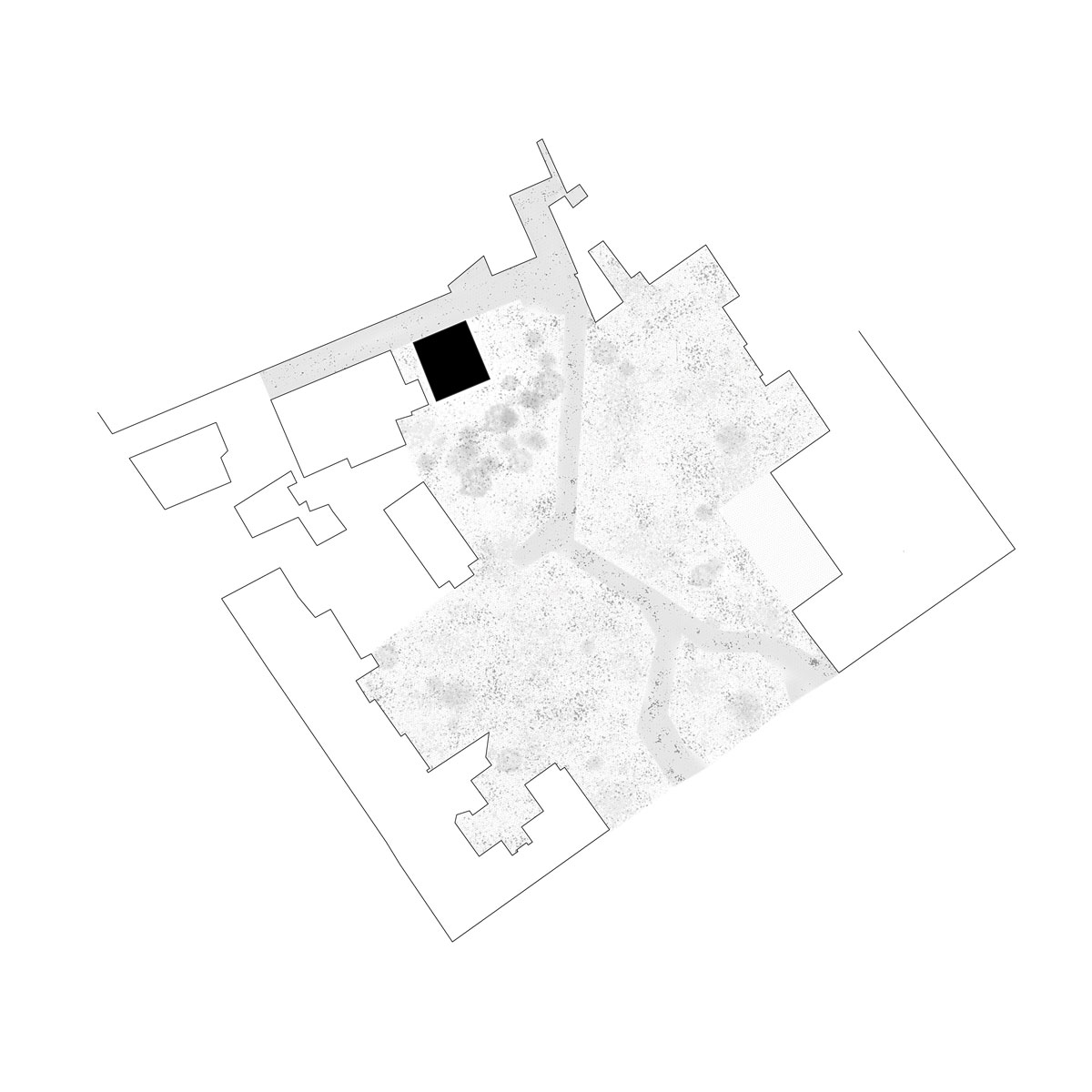
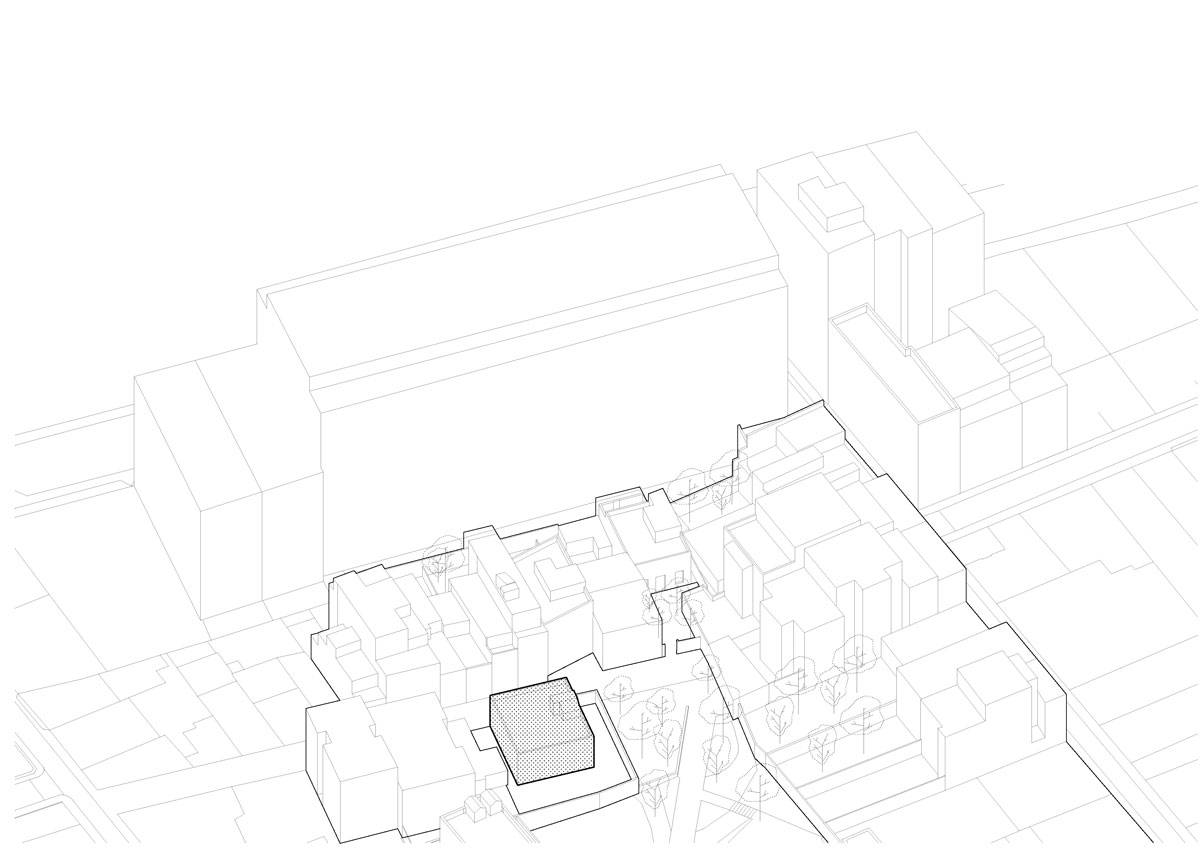
Villa Parque is the renovation of a detached single-family house located in the Gràcia neighborhood, originally built at the end of the 19th century. It is a singular dwelling, surrounded by vegetation, with a dense and silent rear garden that articulates the experience of the house and functions as a natural extension of an adjacent urban park.
The project originates from a personal story: that of someone who, after many years living abroad, decides to return to their roots and settle once again in the neighborhood where they grew up. This return is not only physical, but also emotional and familial. The client’s son lives, together with his partner and their newborn daughter, on the same street. Thus, the renovation represents a double return: to the neighborhood and to the family. The project becomes an opportunity to weave connections again, to inhabit proximity, and to recreate a village-like way of life (the whole family on the same street) within the city.
Concept
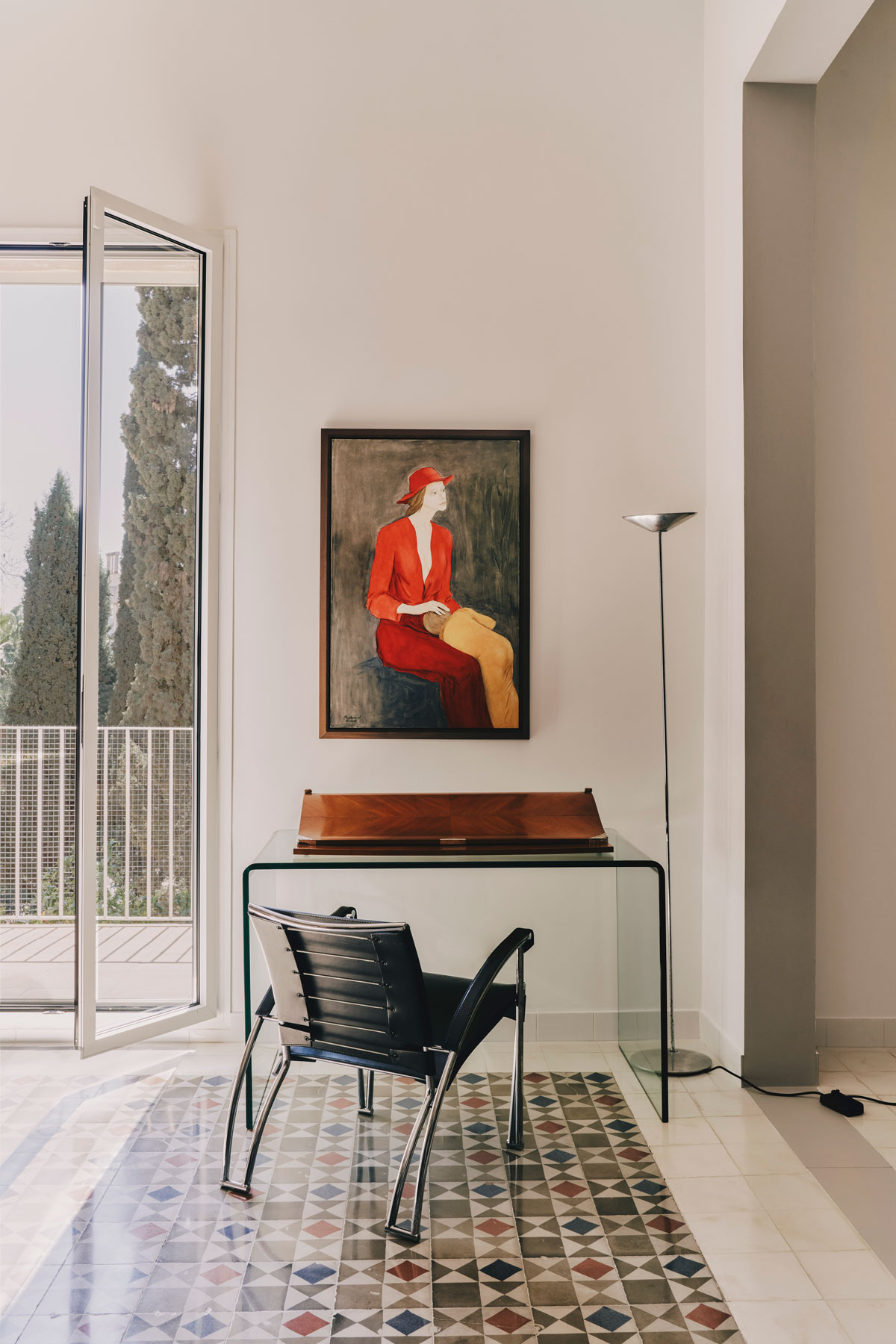
Villa Parque begins with a simple idea: to make the garden the true domestic heart of the house. The intervention establishes an intimate and porous relationship between interior and exterior. Built as a four-sided detached house, the dwelling held a latent potential to open itself much more to greenery, light, and air.
From this premise, the project seeks to oxygenate the house — making it more open-plan, more connected to its surroundings, and more pleasant to inhabit. Circulations are redefined, large openings are introduced, walls are reconfigured, and spatial proportions are adjusted to generate a more open and permeable home.
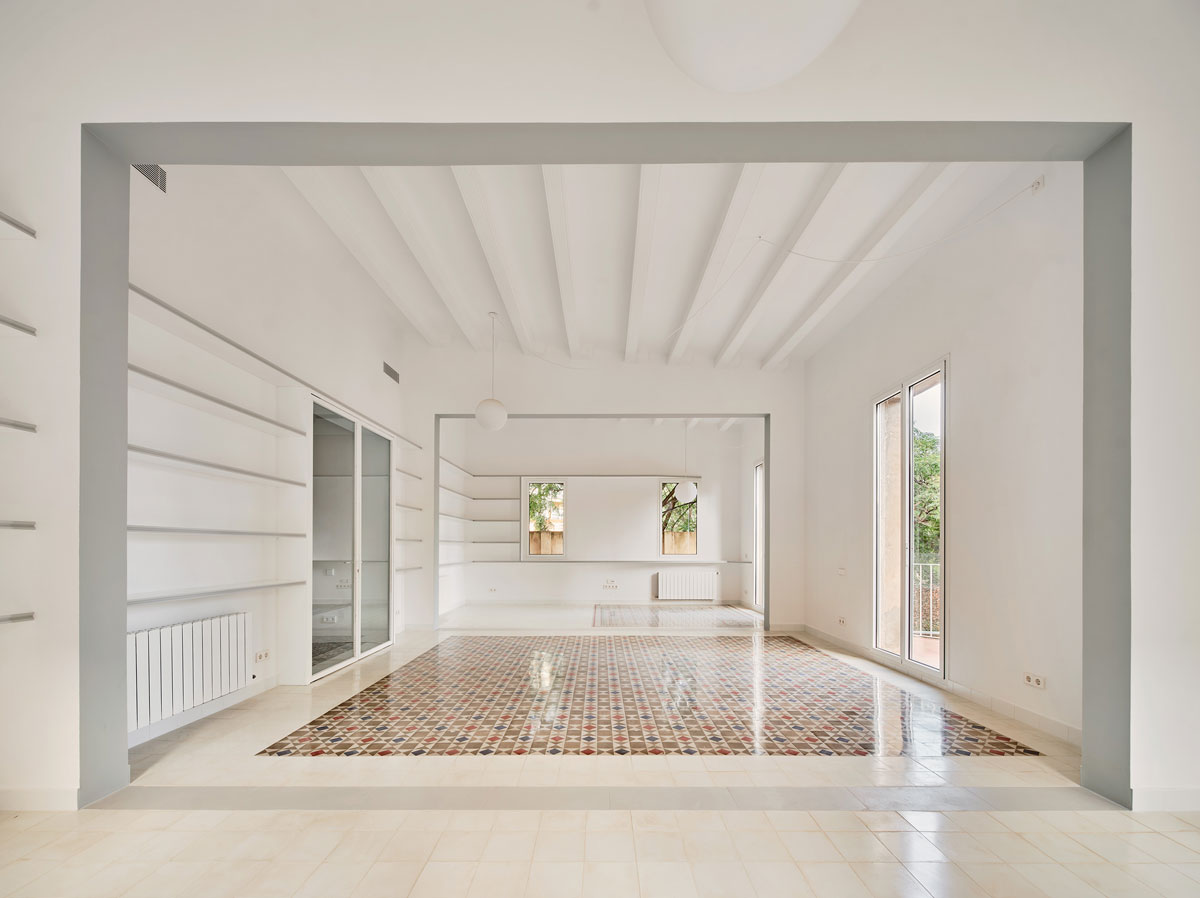
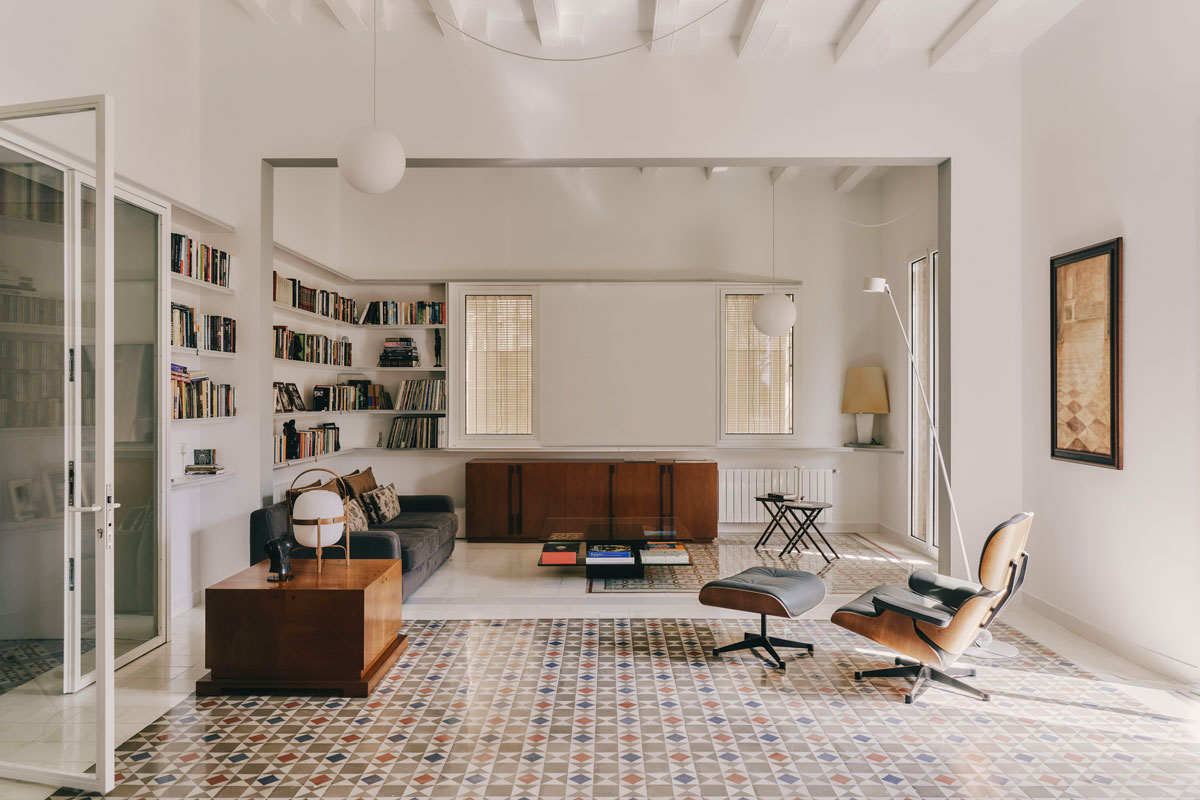
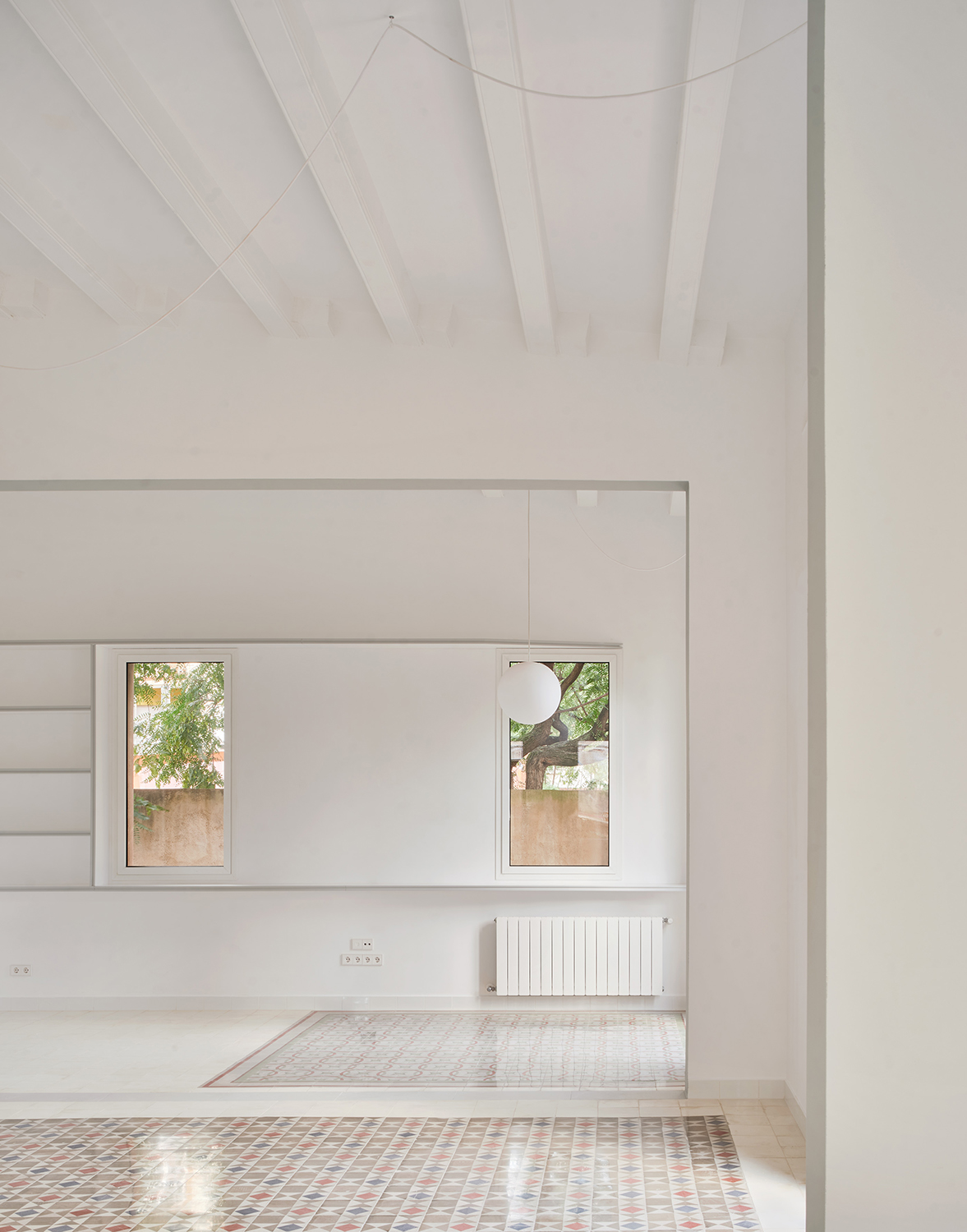
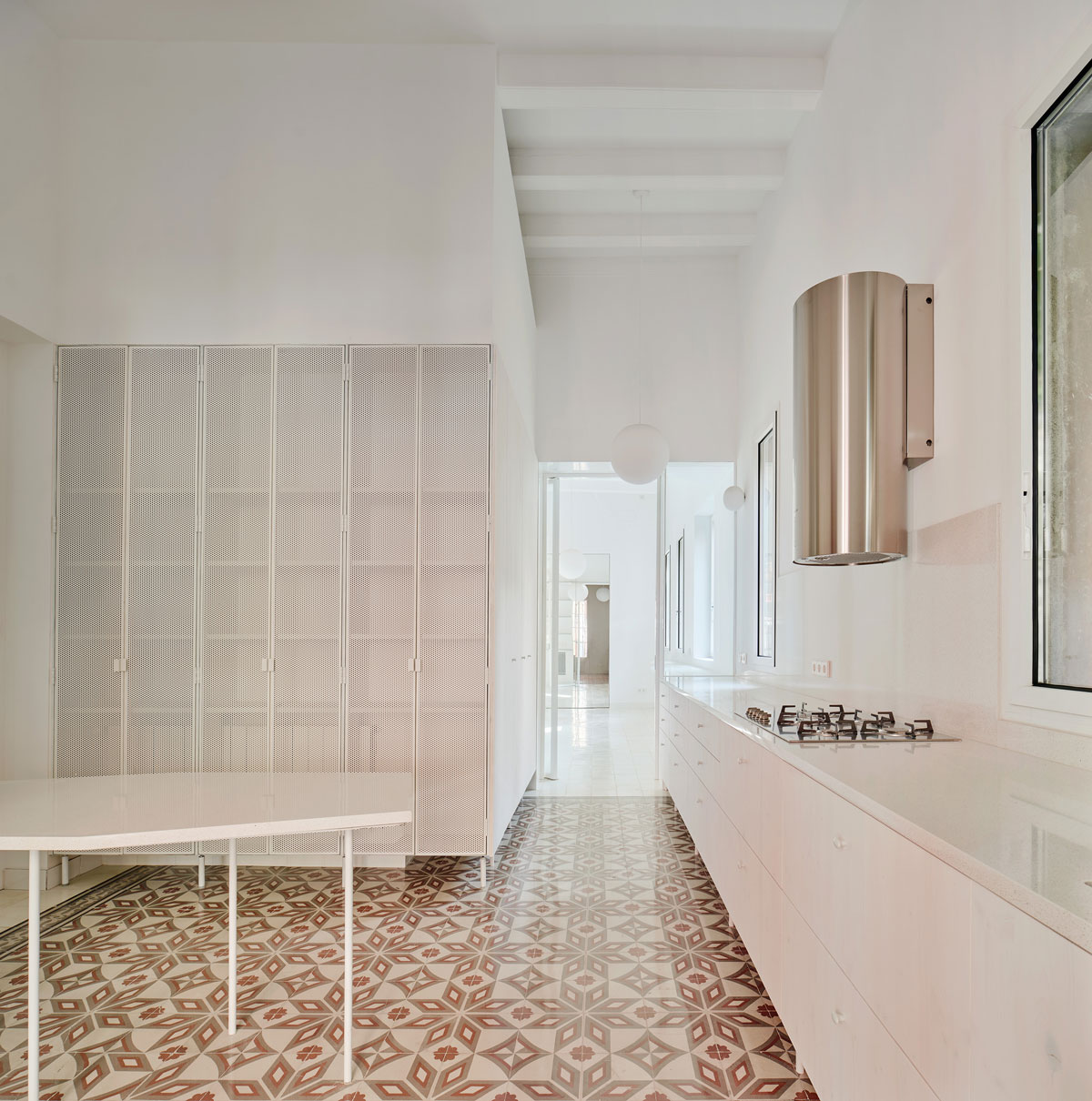
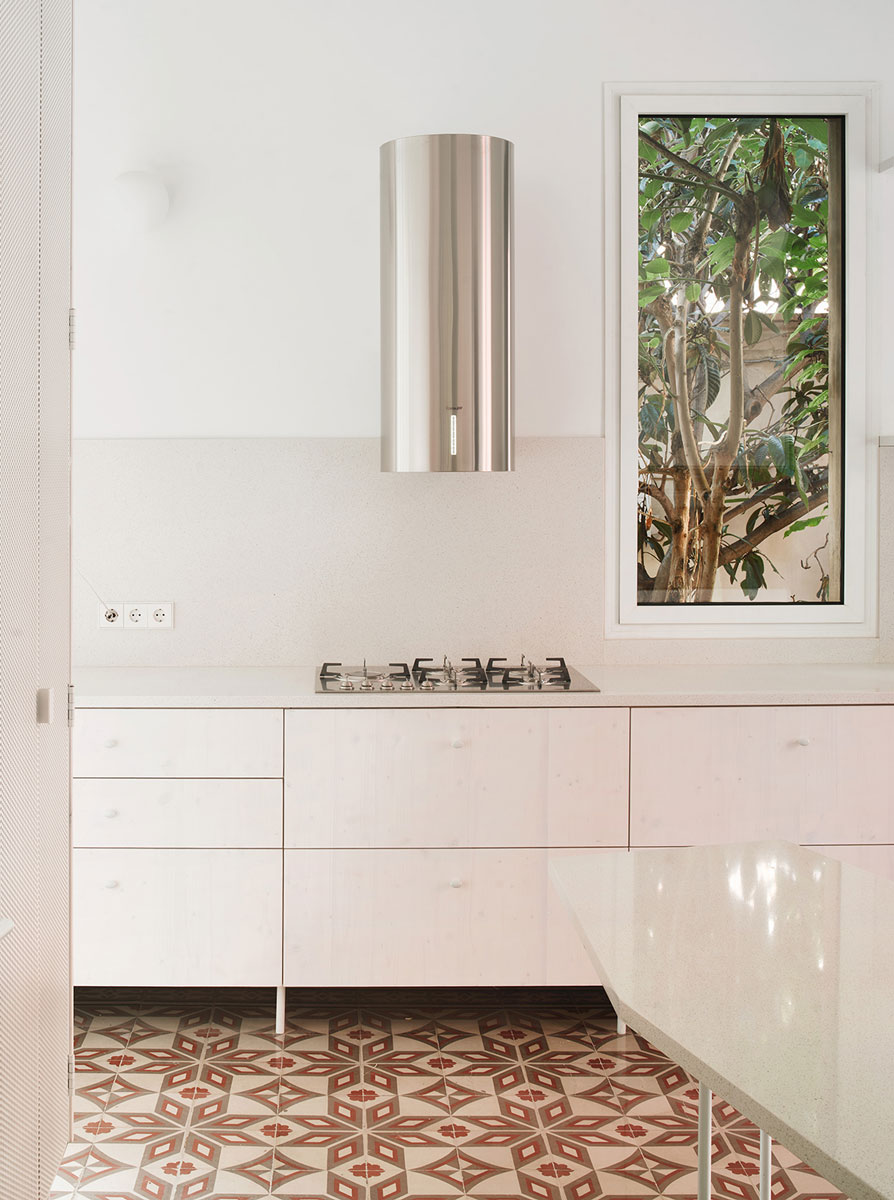
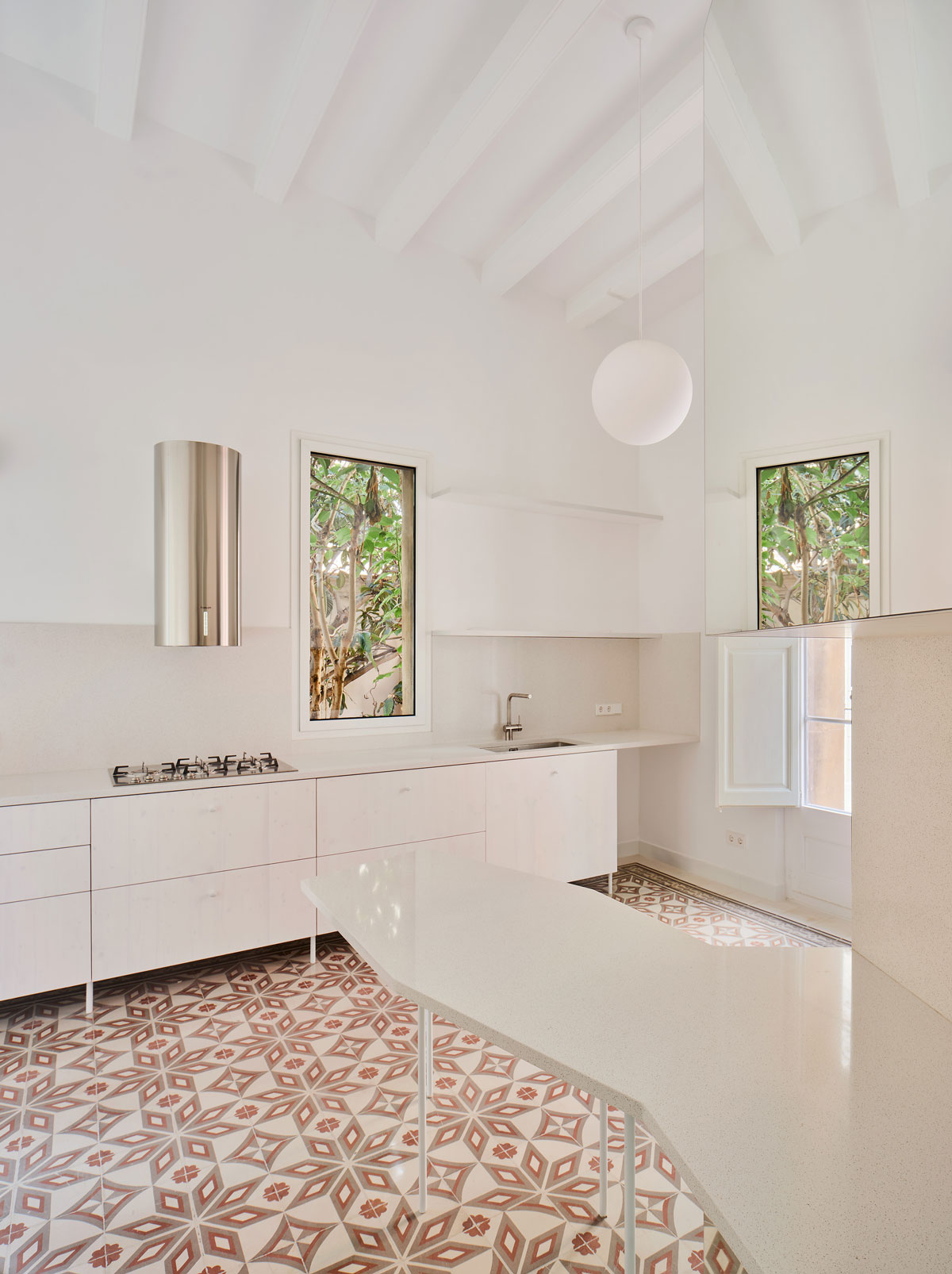
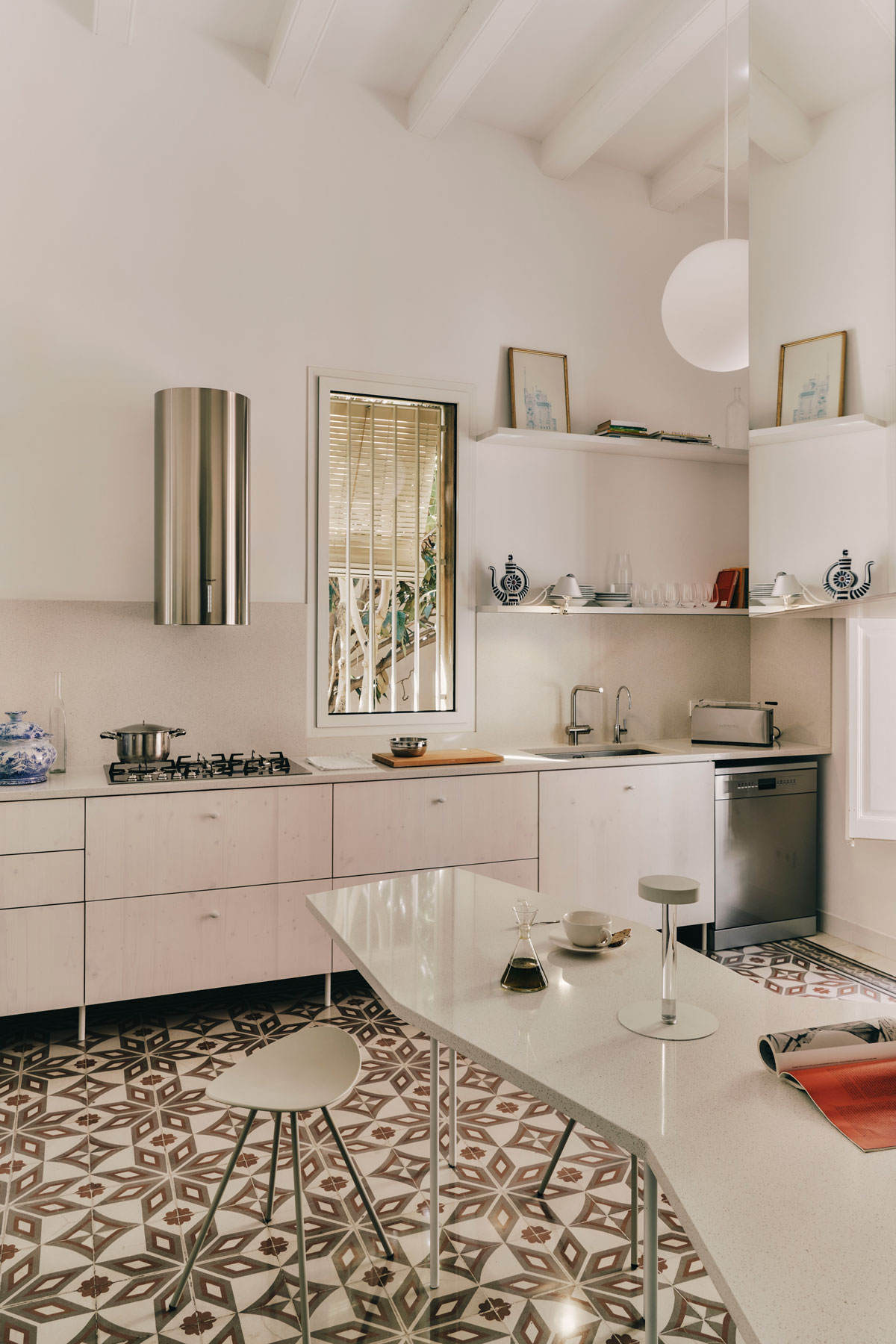
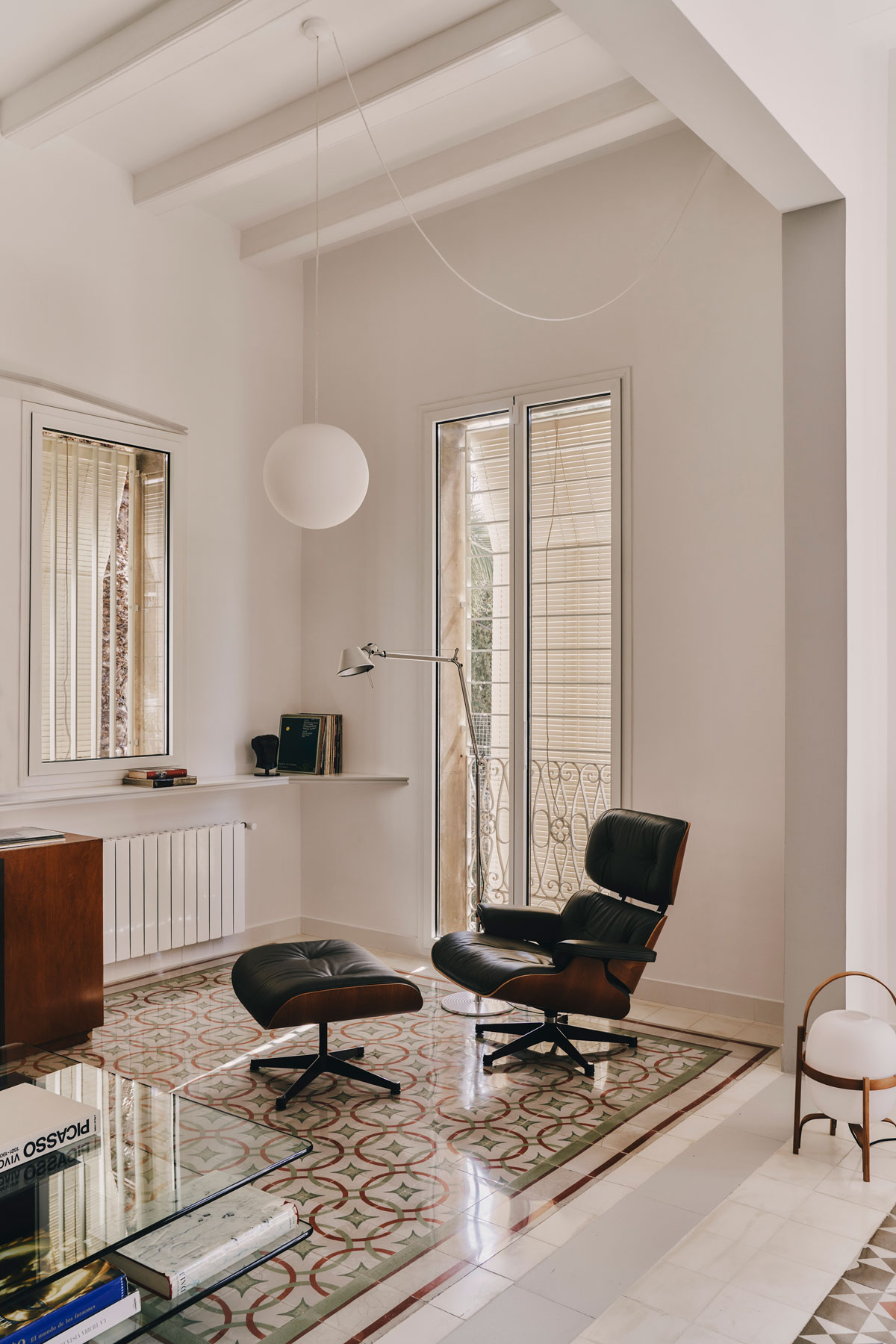
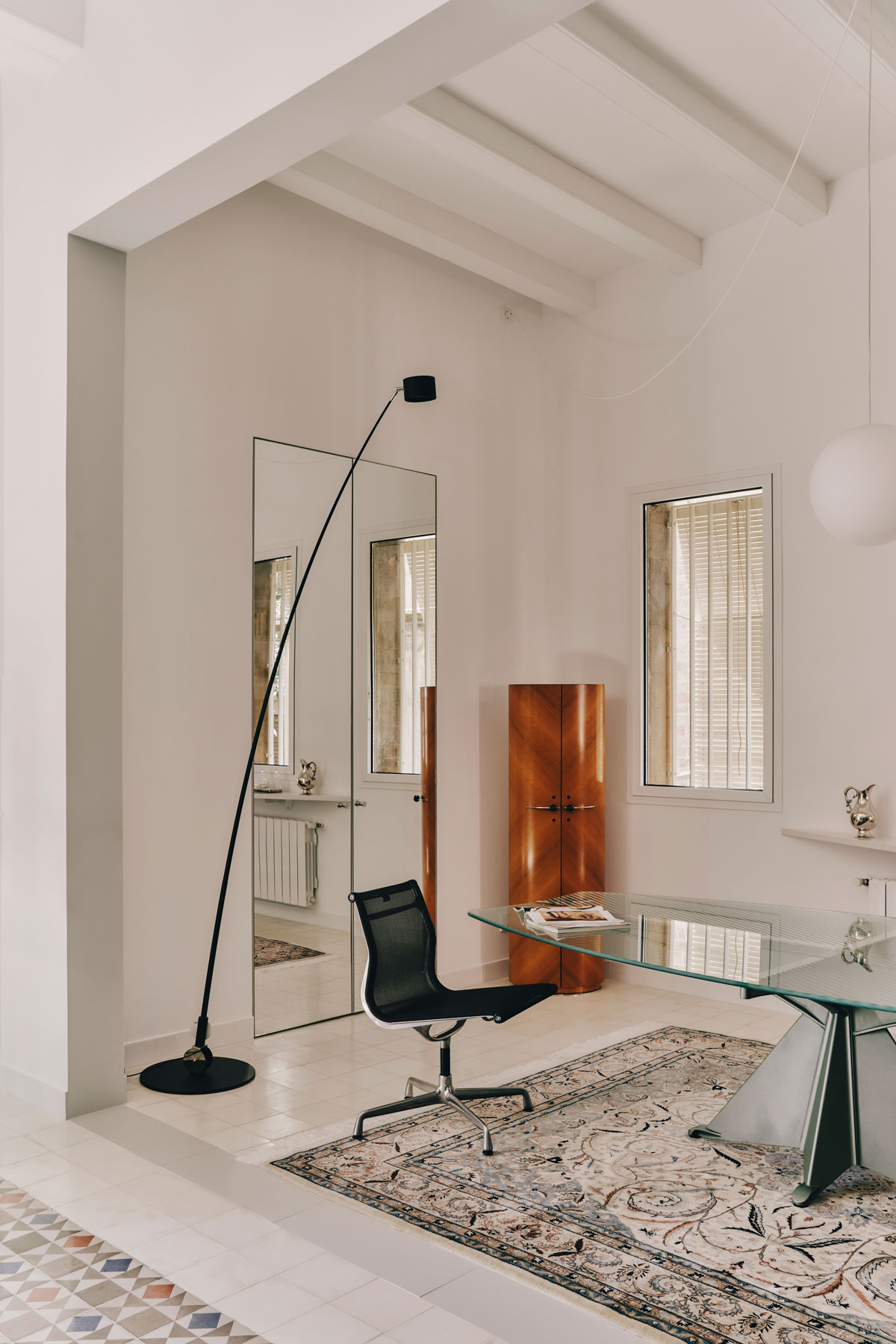
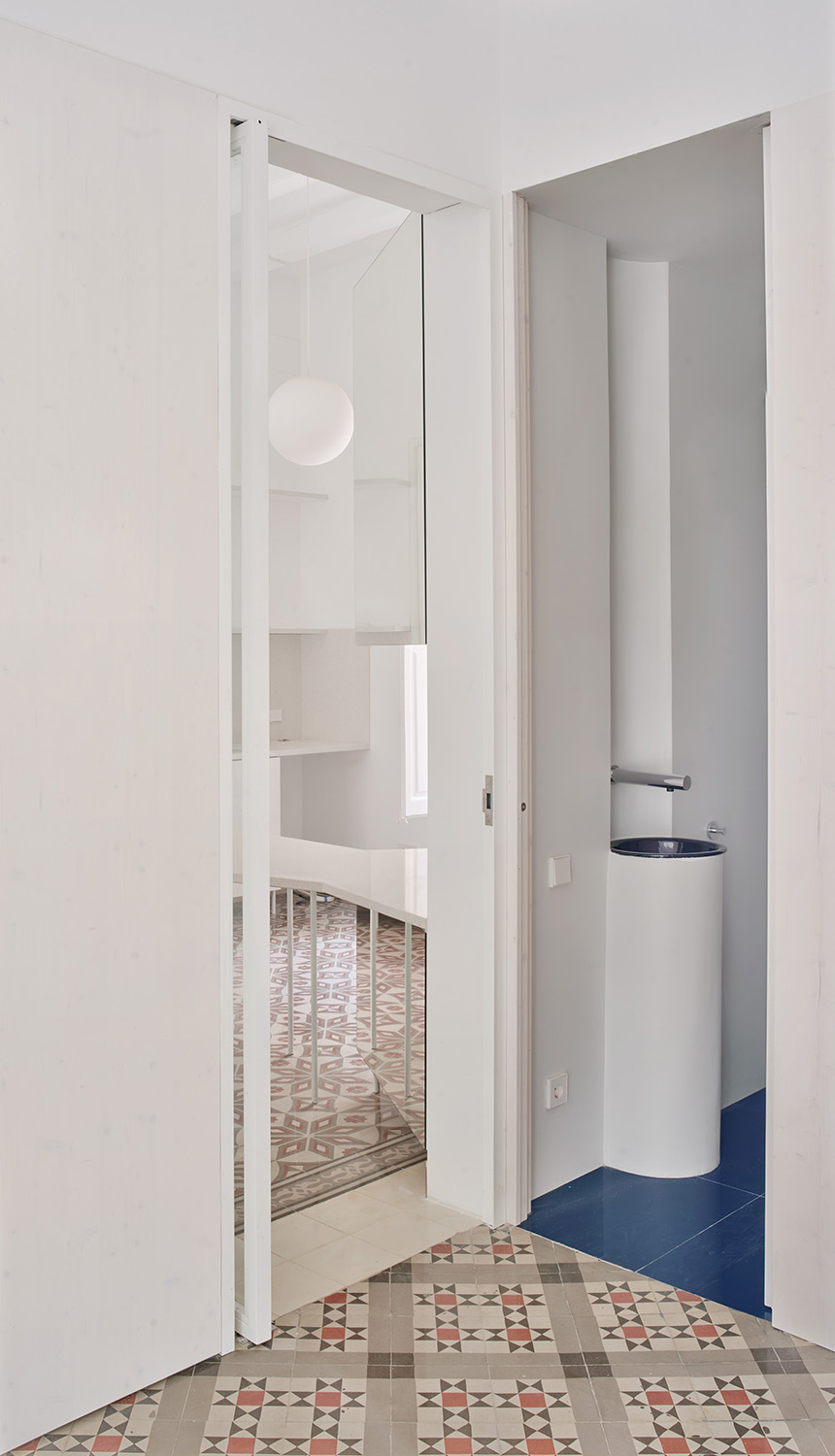
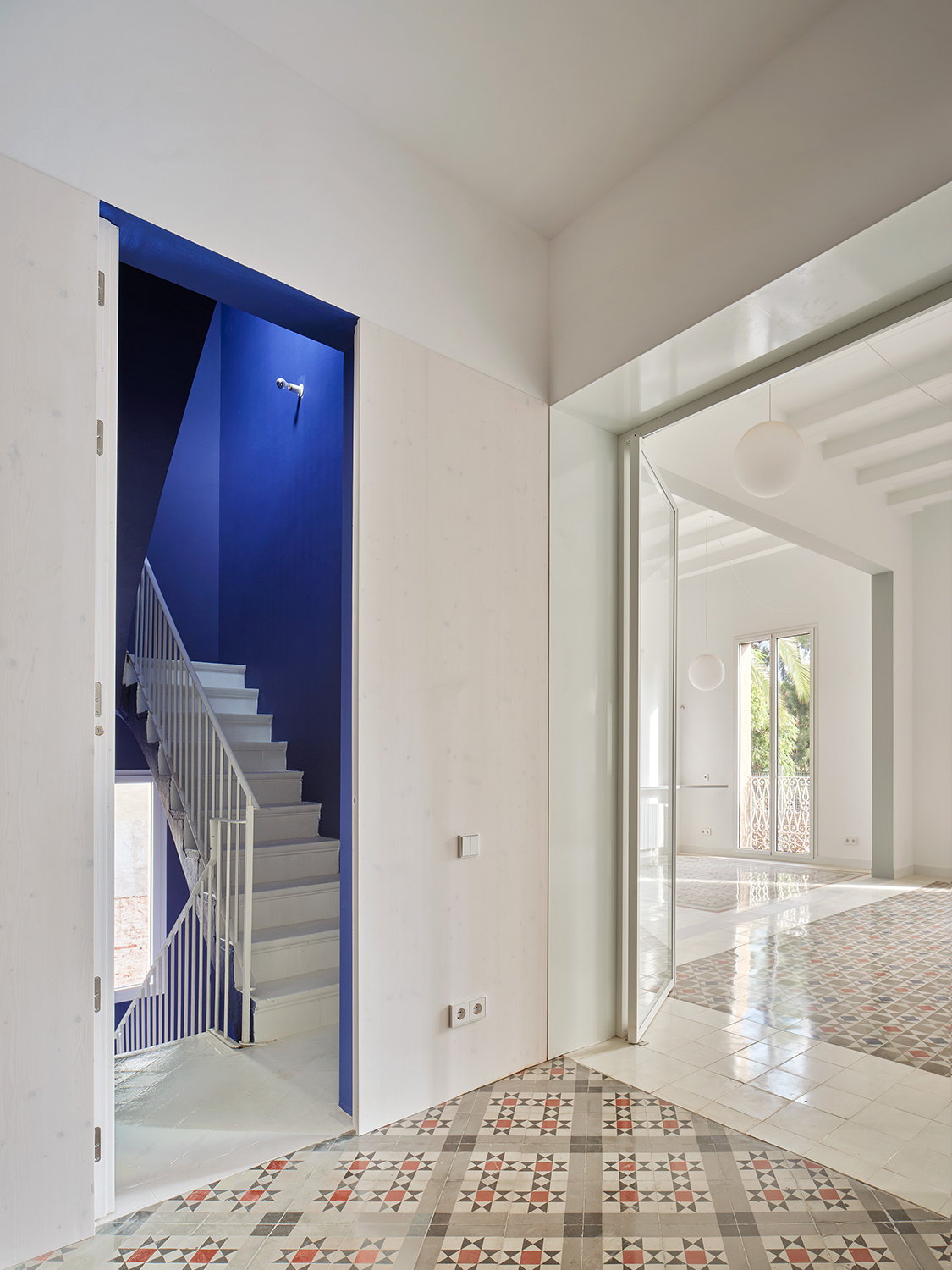
Yet this “opening” does not mean erasing memory. The project preserves and enhances original elements such as the hydraulic mosaic floors, now arranged like rugs that mark the areas where former compartmentalized rooms once stood, revealing the traces of another way of living. This selective conservation establishes a dialogue between past and present that structures the entire intervention.
In addition, the project incorporates a significant energy upgrade: the interior envelope is insulated with a 10 cm lining system, improving thermal comfort and reducing energy consumption.
Ultimately, Villa Parque is a precise surgical operation, working carefully to preserve the soul of the original house while offering it a new life that is more open, luminous, and sustainable. A house that, like its inhabitant, returns to its origins with a renewed gaze.
Layout and Spatial Sequence
Villa Parque is a four-sided detached house that, over time, underwent multiple renovations that fragmented its space and disrupted its fluidity. The project responds to this divided past with a clear gesture: reconnect, open, and release.
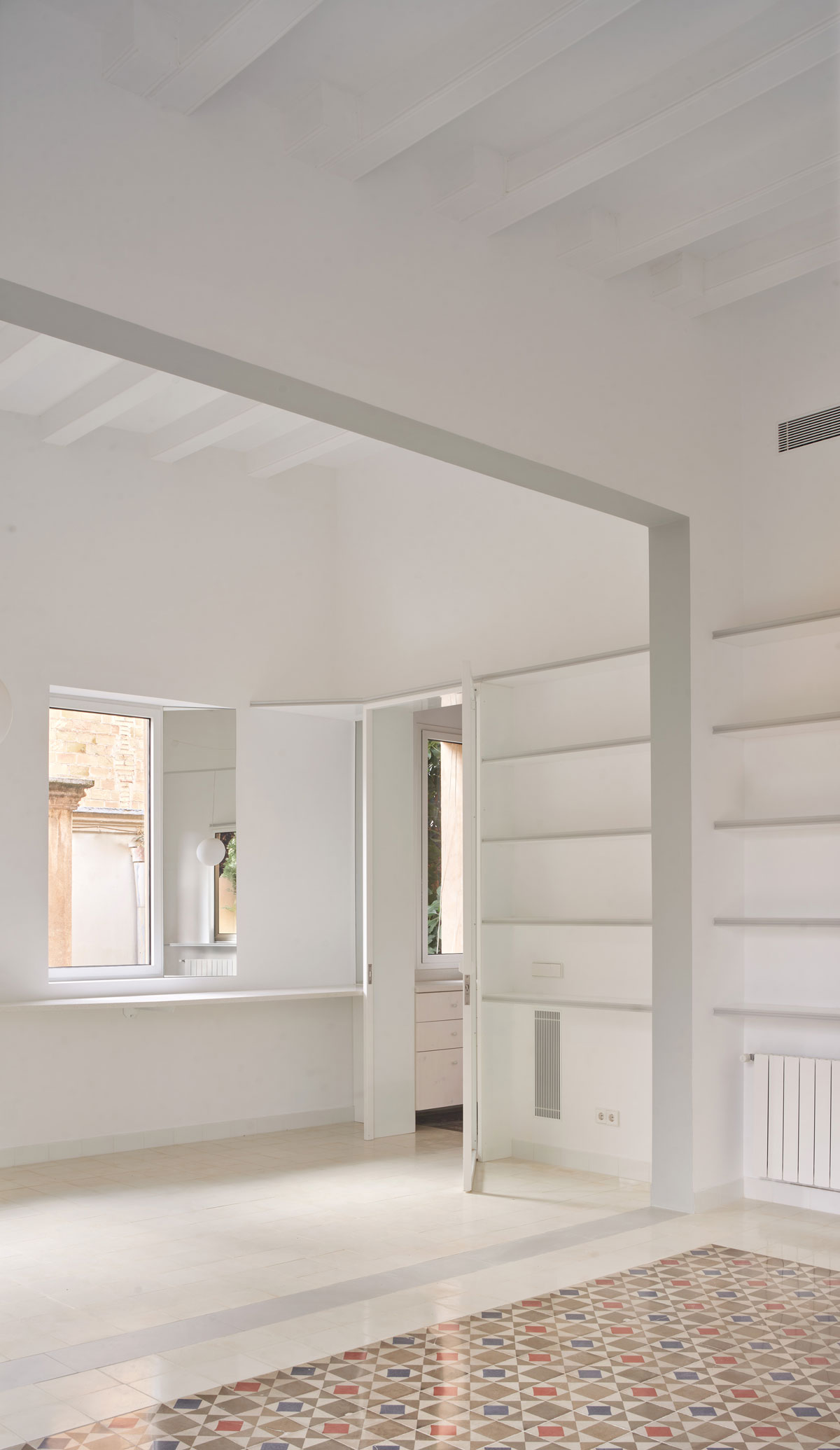
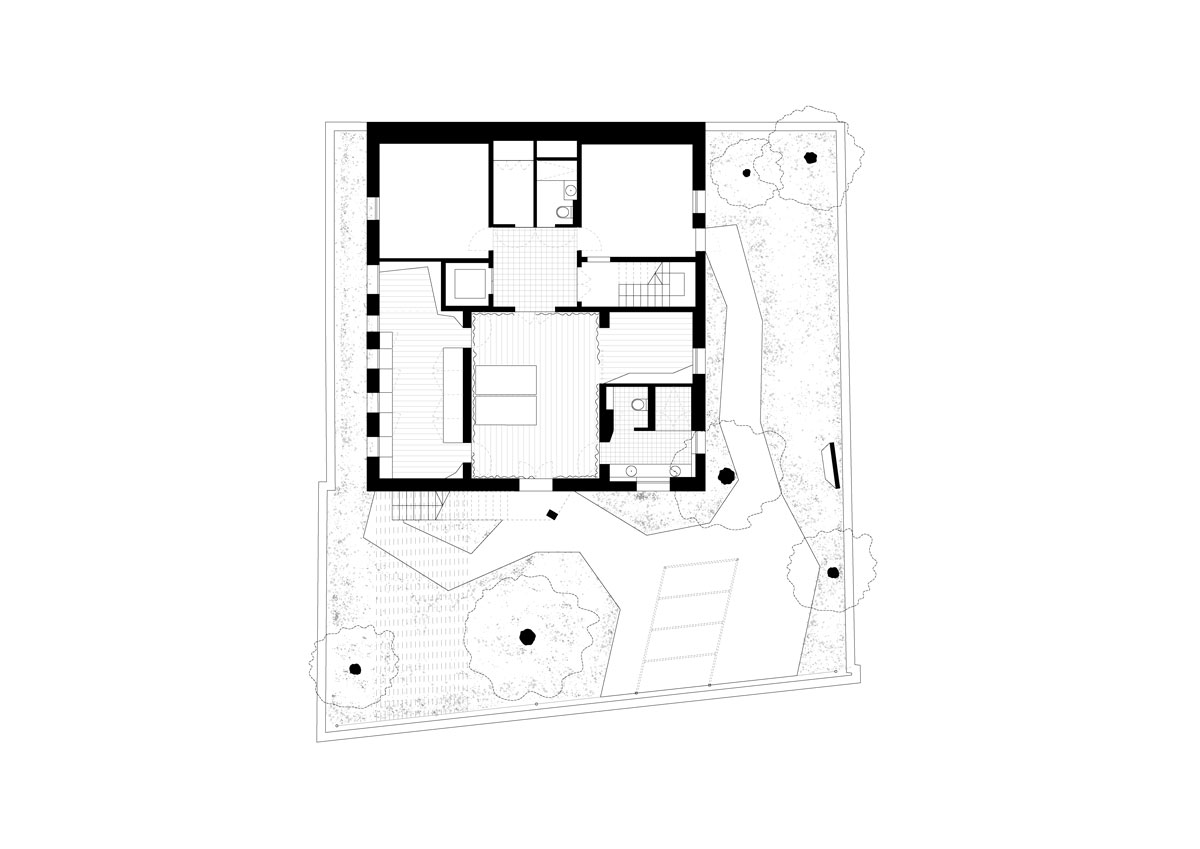
The spatial strategy seeks to maximize openness and establish frank relationships between rooms, both physically and visually. Corridors and dead ends are eliminated, resulting in a fluid floor plan where each space connects organically and intuitively to the next.
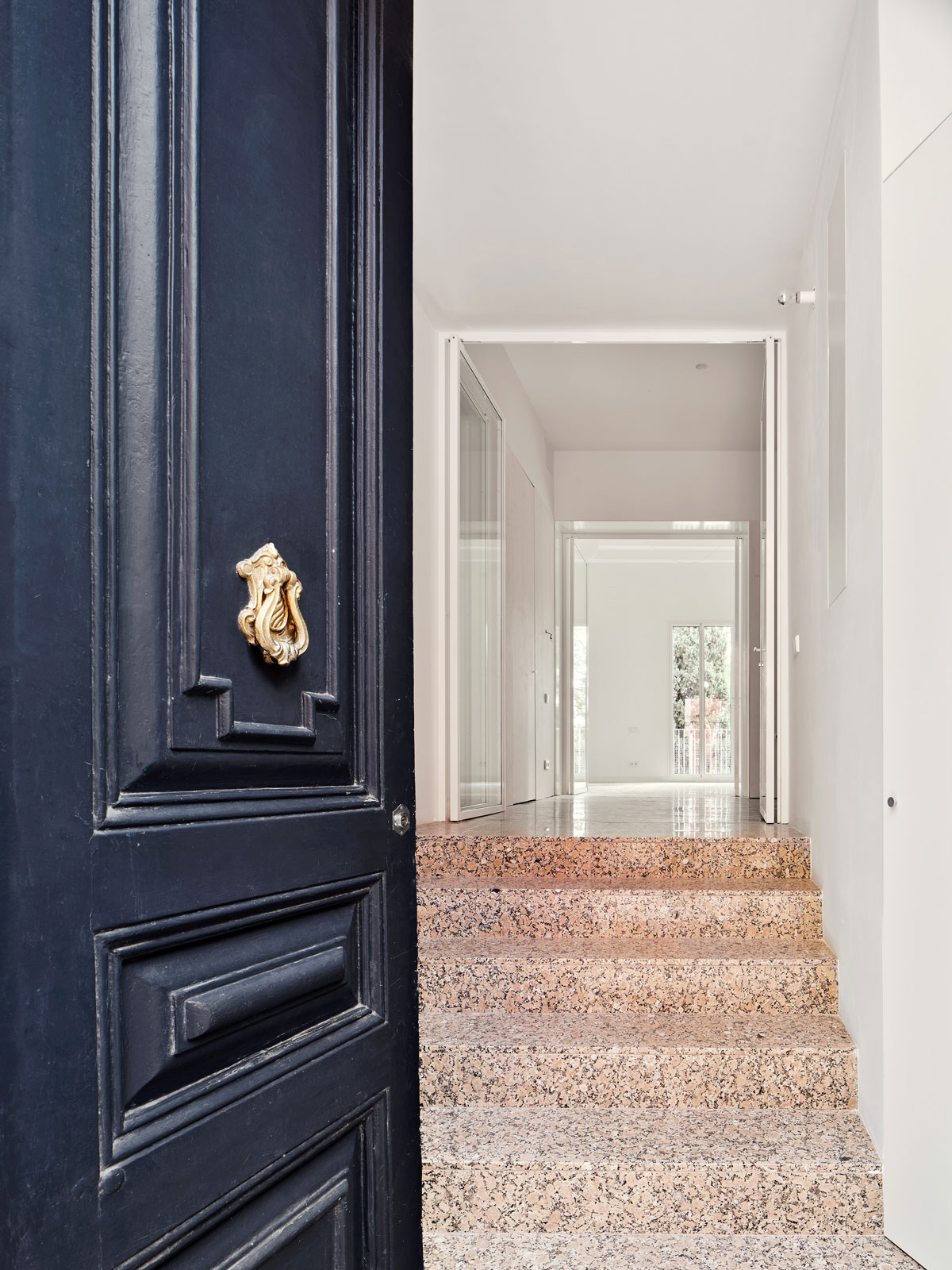
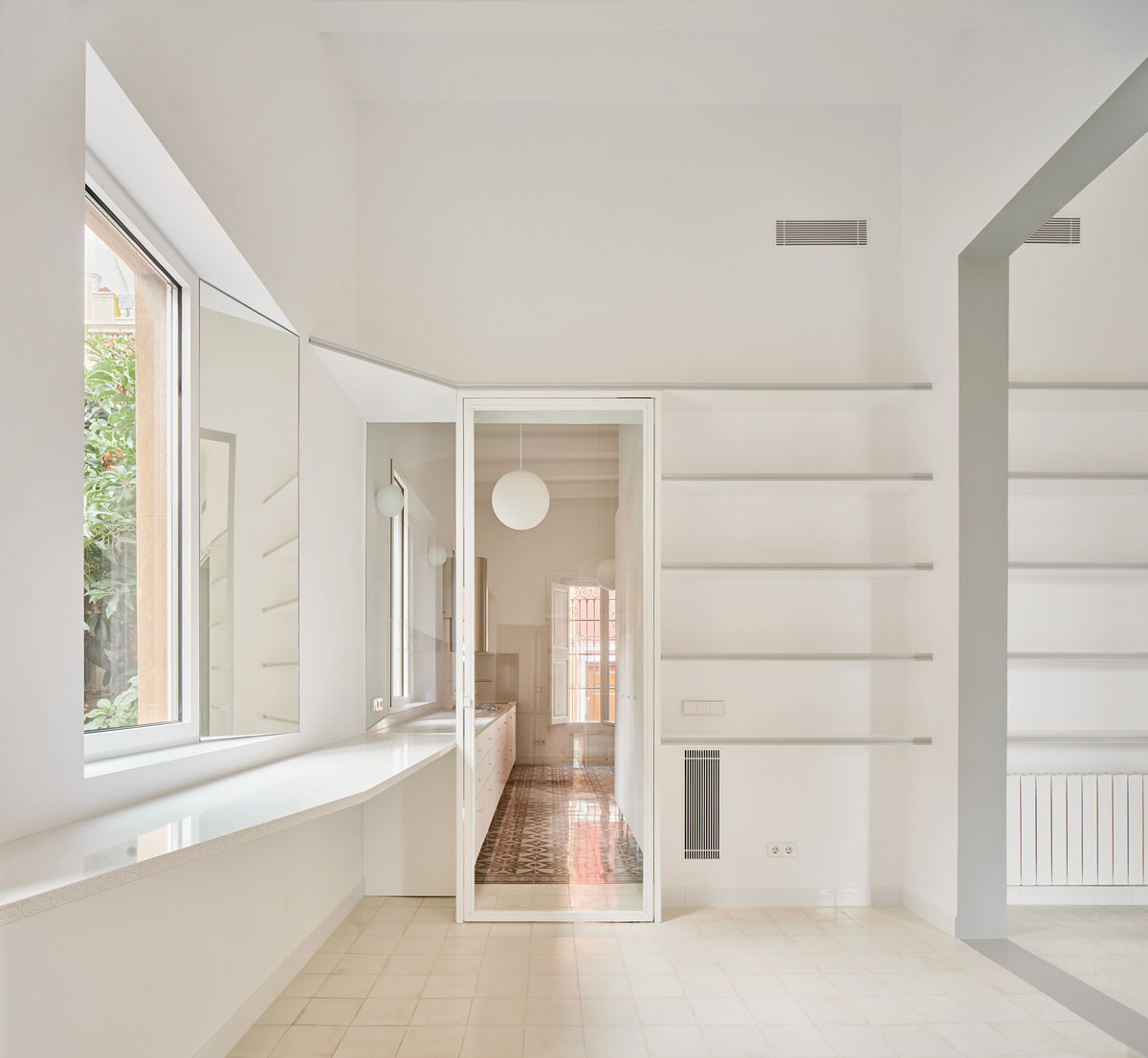
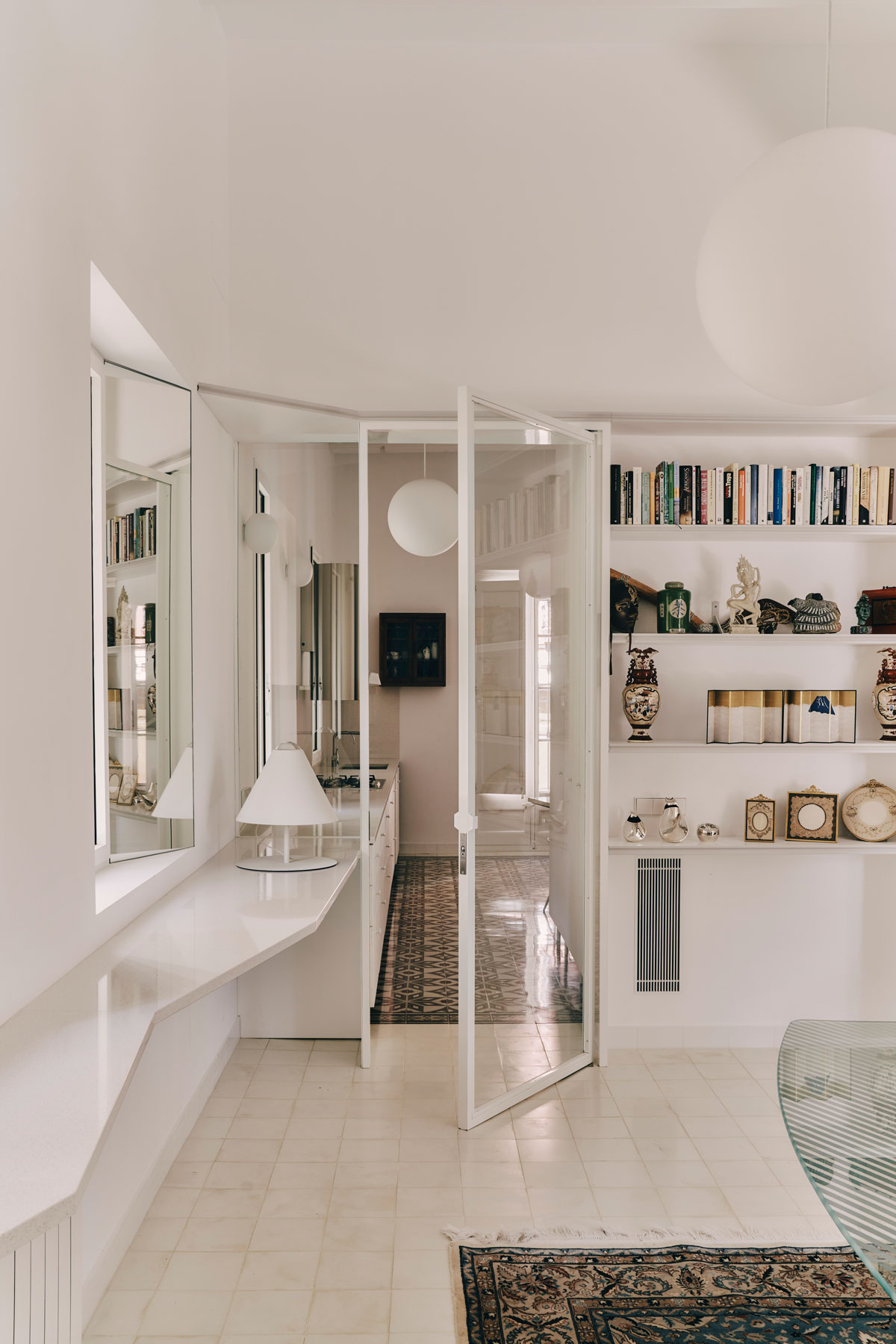
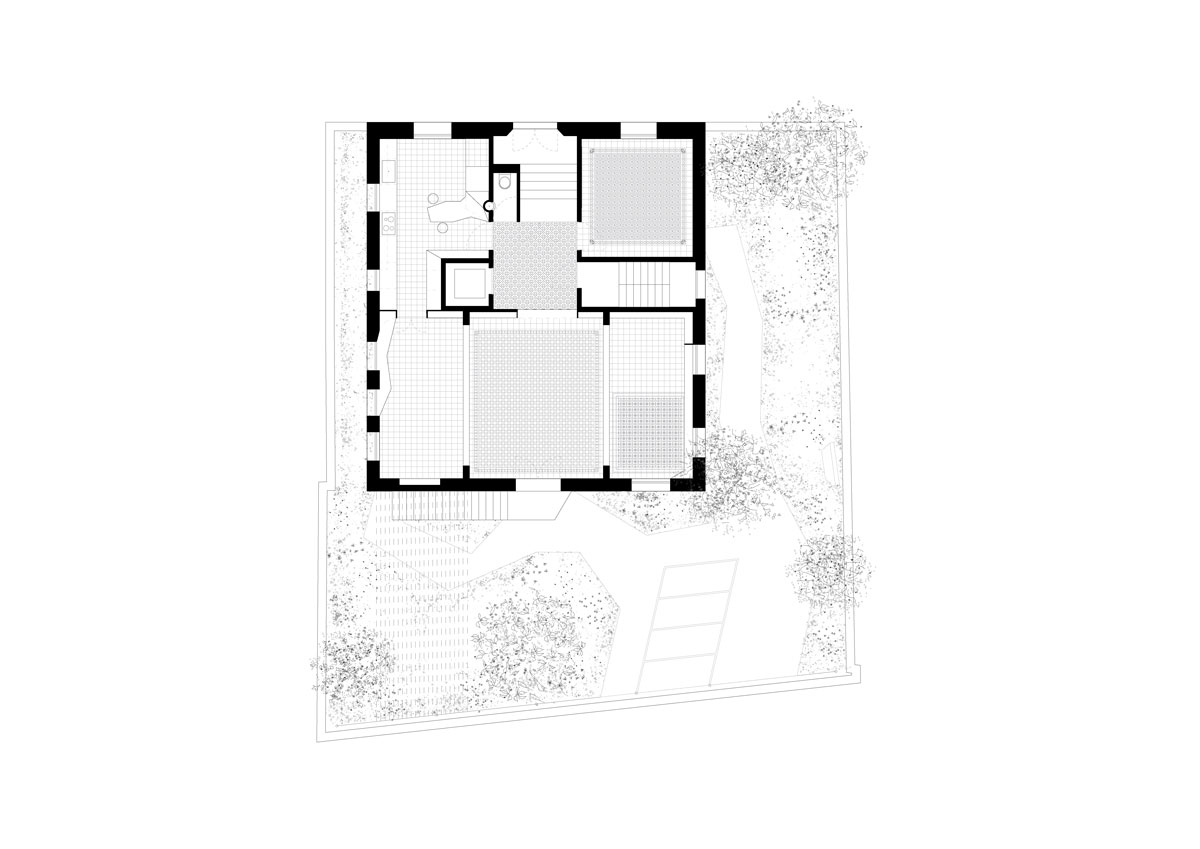
On the street-level floor, the space is conceived as one large continuous room where kitchen, dining area, and entrance hall intertwine in a free sequence that culminates in the façade opening onto the garden. Circulation is not merely functional movement, but a spatial sequence meant to be inhabited. To enhance transparency, large-format pivoting glass doors — light and translucent — are installed, allowing maximum visual continuity and dissolving boundaries between spaces.
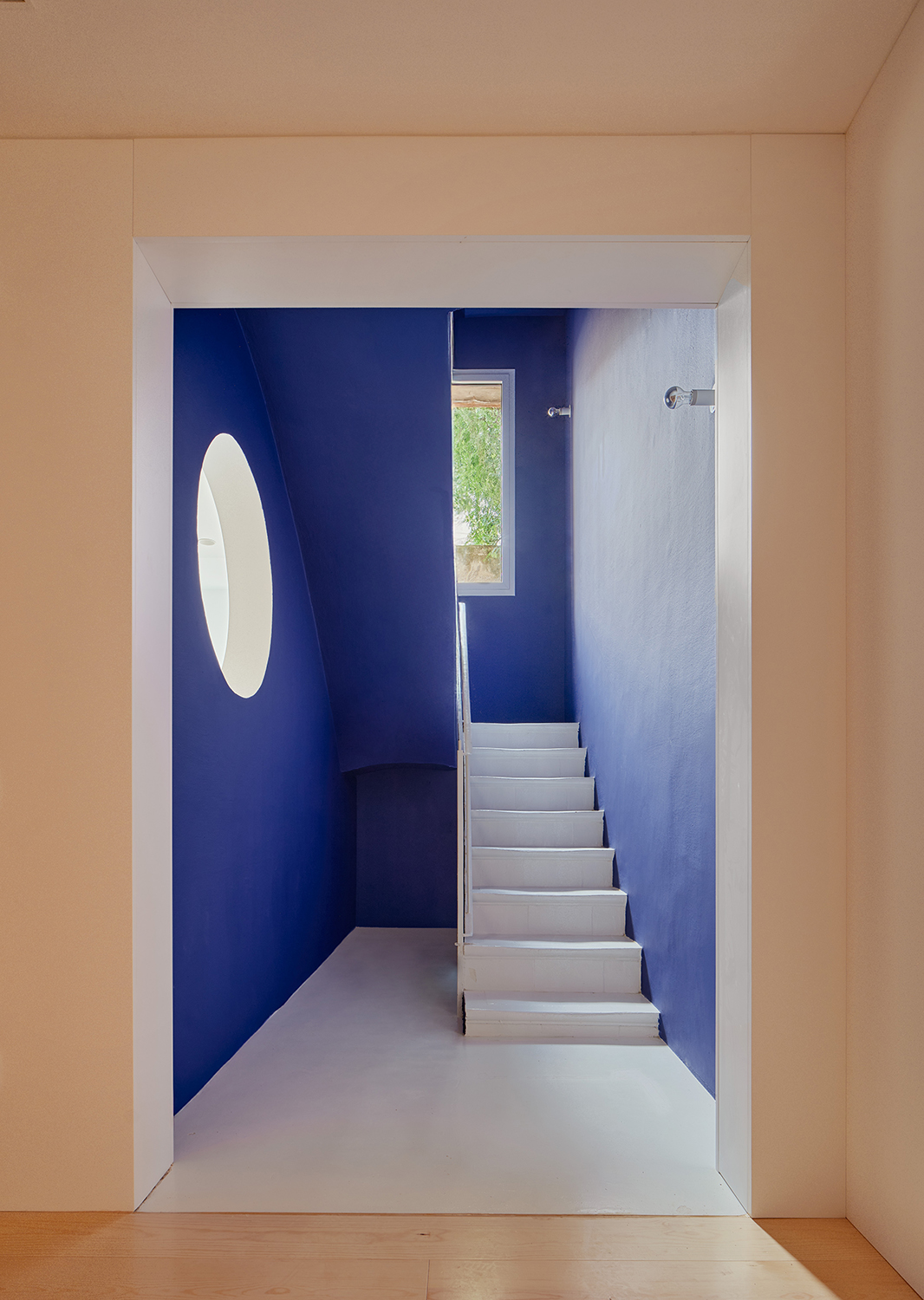
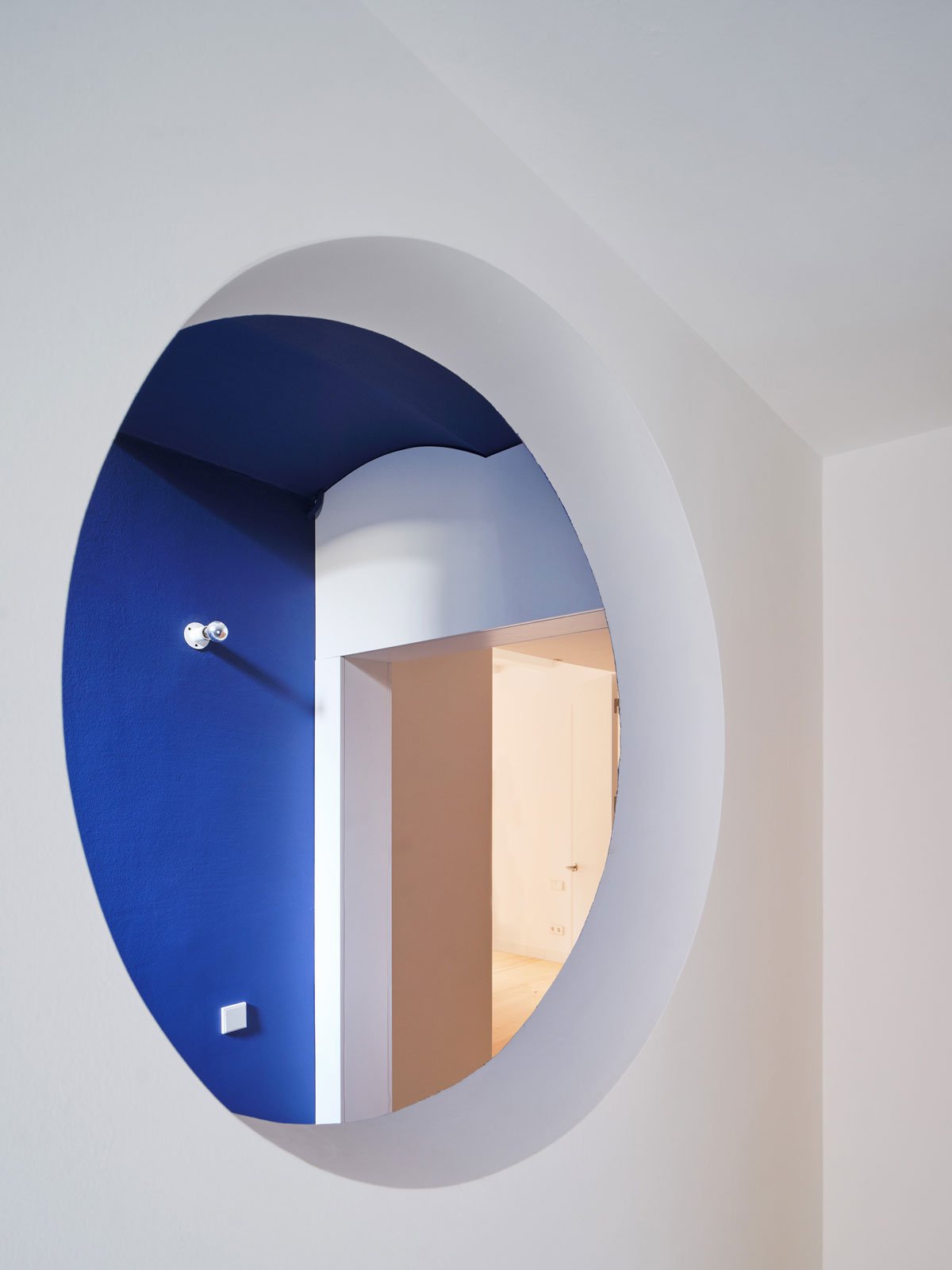
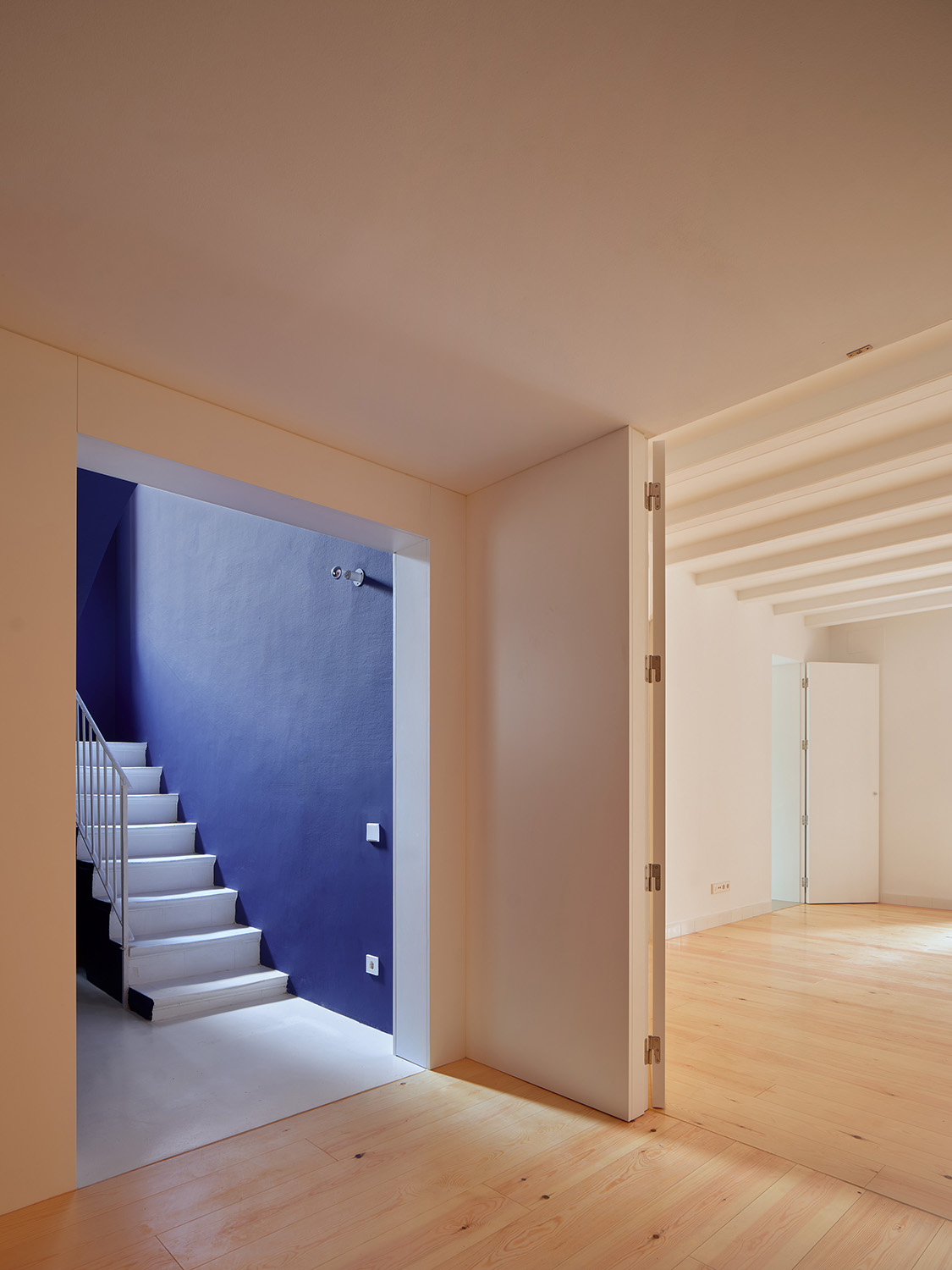
The original heritage staircase is preserved as the central element of vertical circulation, now painted in an intense Klein blue that dialogues with Mediterranean and Jujolian architectures. This chromatic gesture introduces an iconic pause within the spatial flow.
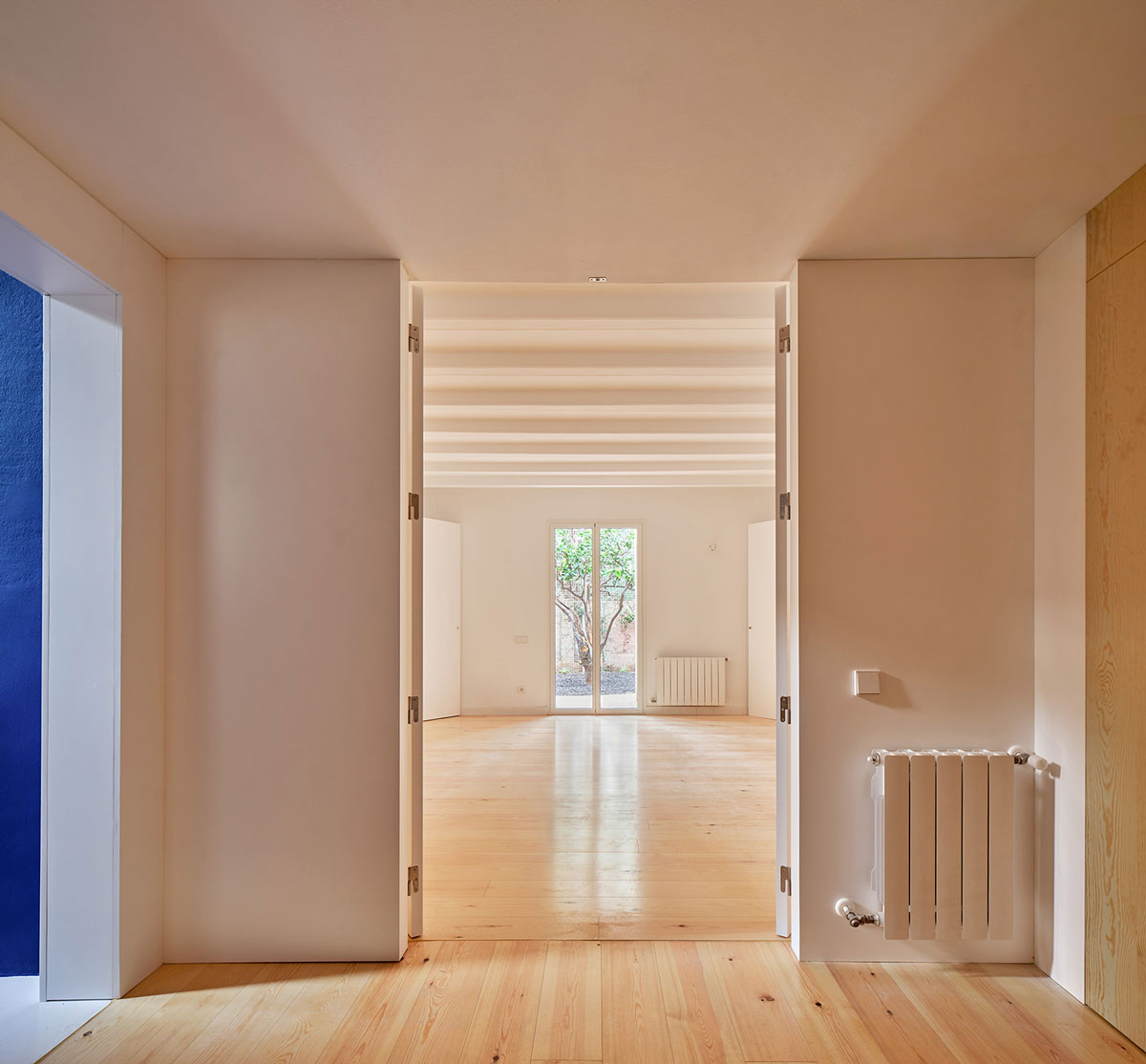
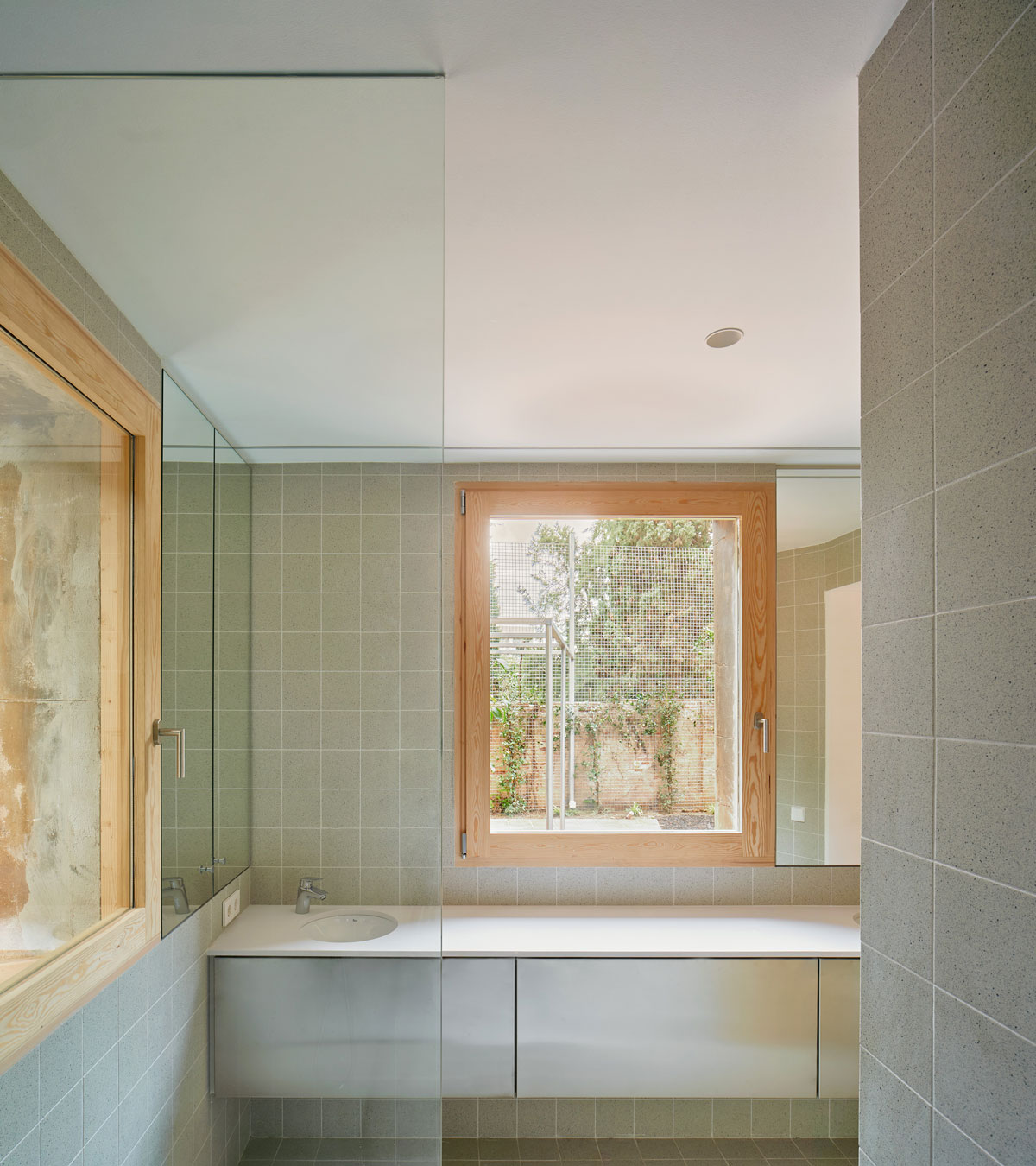
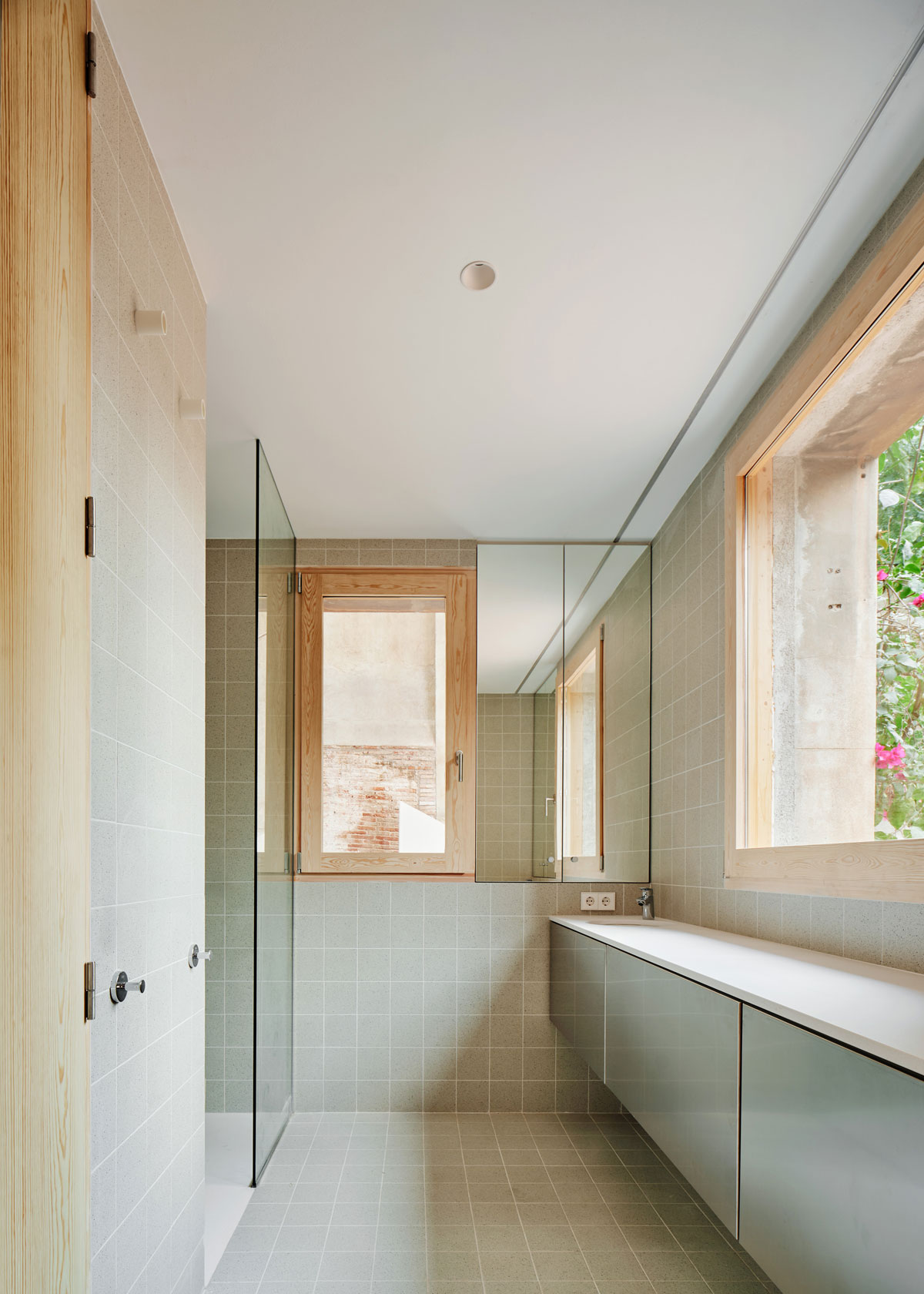
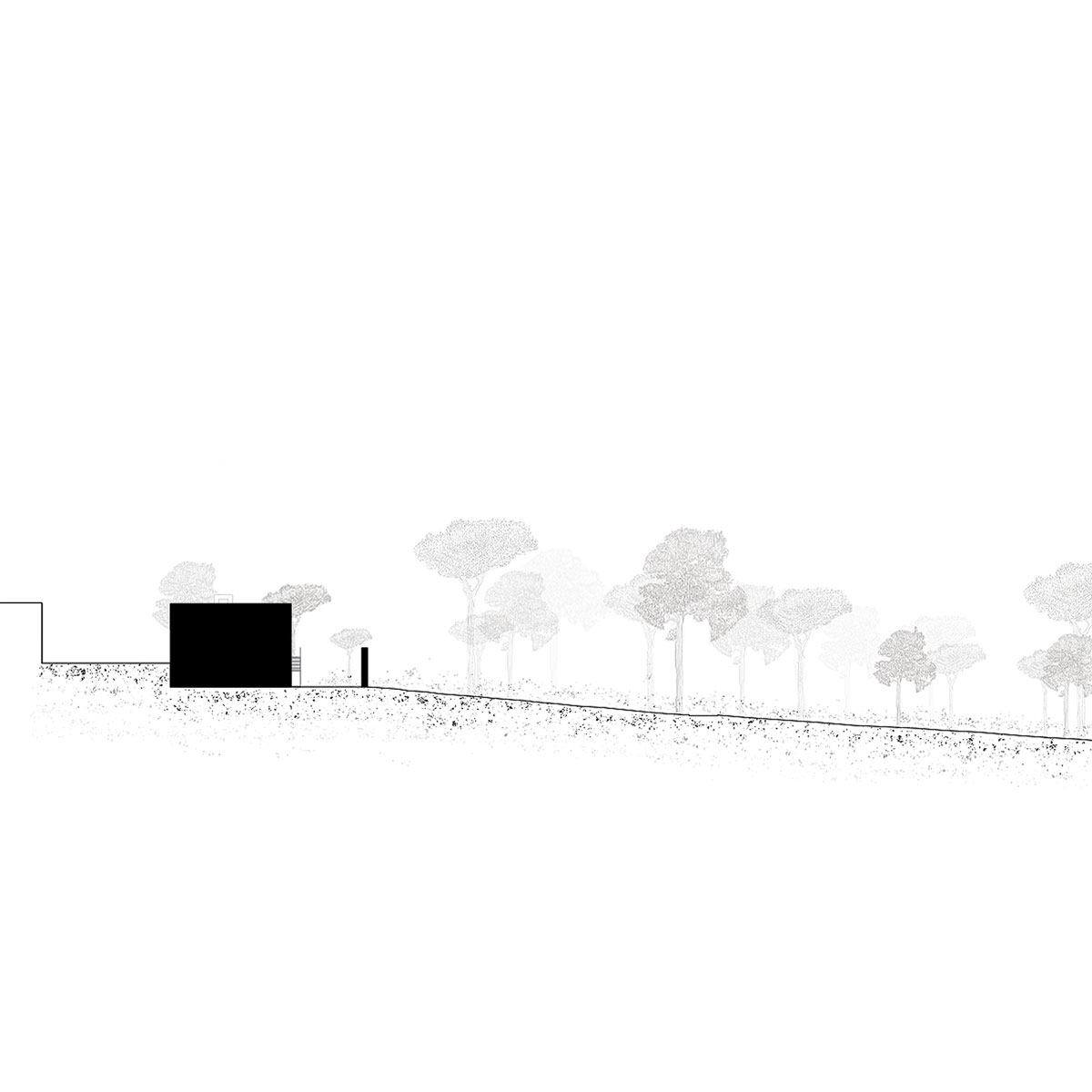
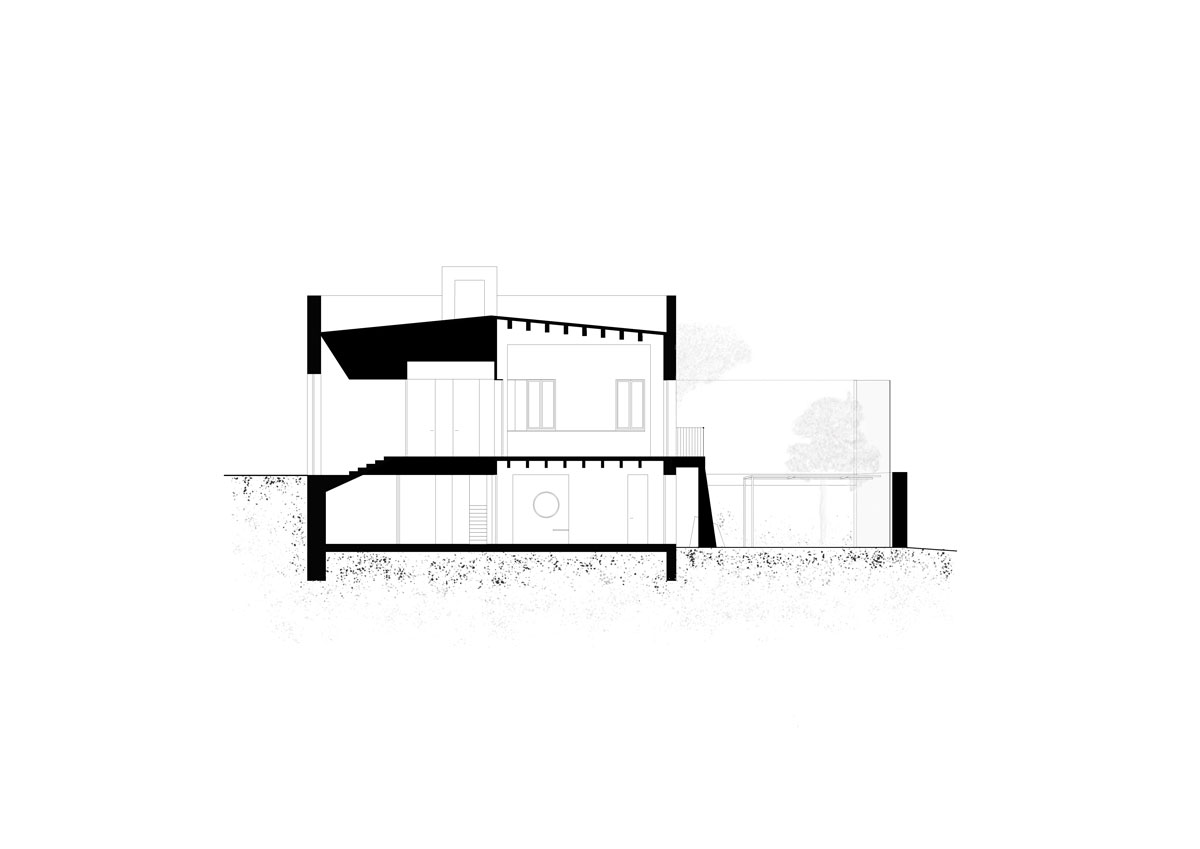
On the semi-buried garden level, the tone shifts: the atmosphere becomes more intimate and protected, characteristic of the nocturnal and private realm. Bedrooms open directly onto the garden, establishing a direct connection with the earth and vegetation.
The play of heights also contributes to the spatial experience: the entrance is slightly compressed, the hall opens as a transition, and the living room and kitchen expand with higher ceilings and exposed wooden beams, creating a spatial gradation that accompanies movement.
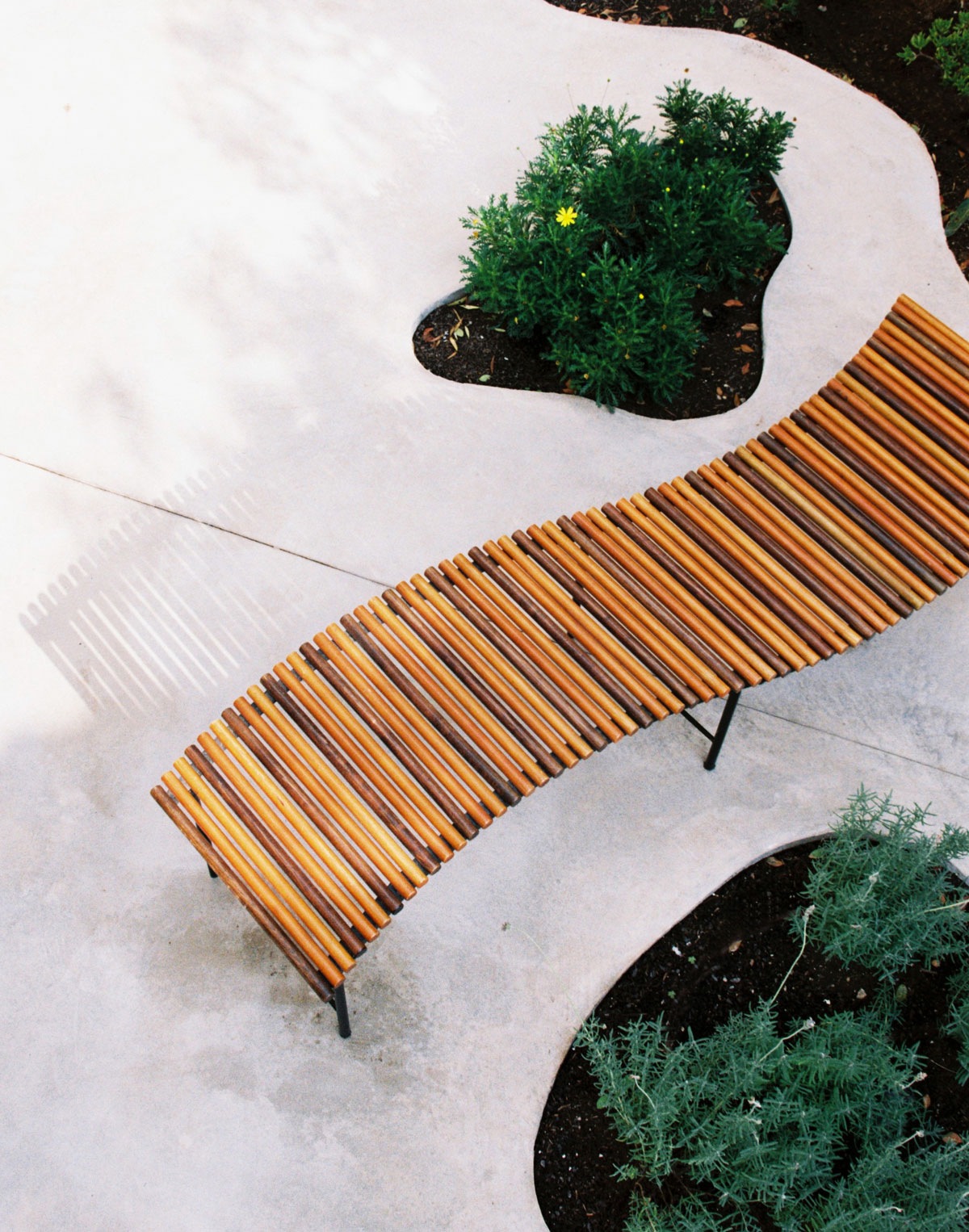
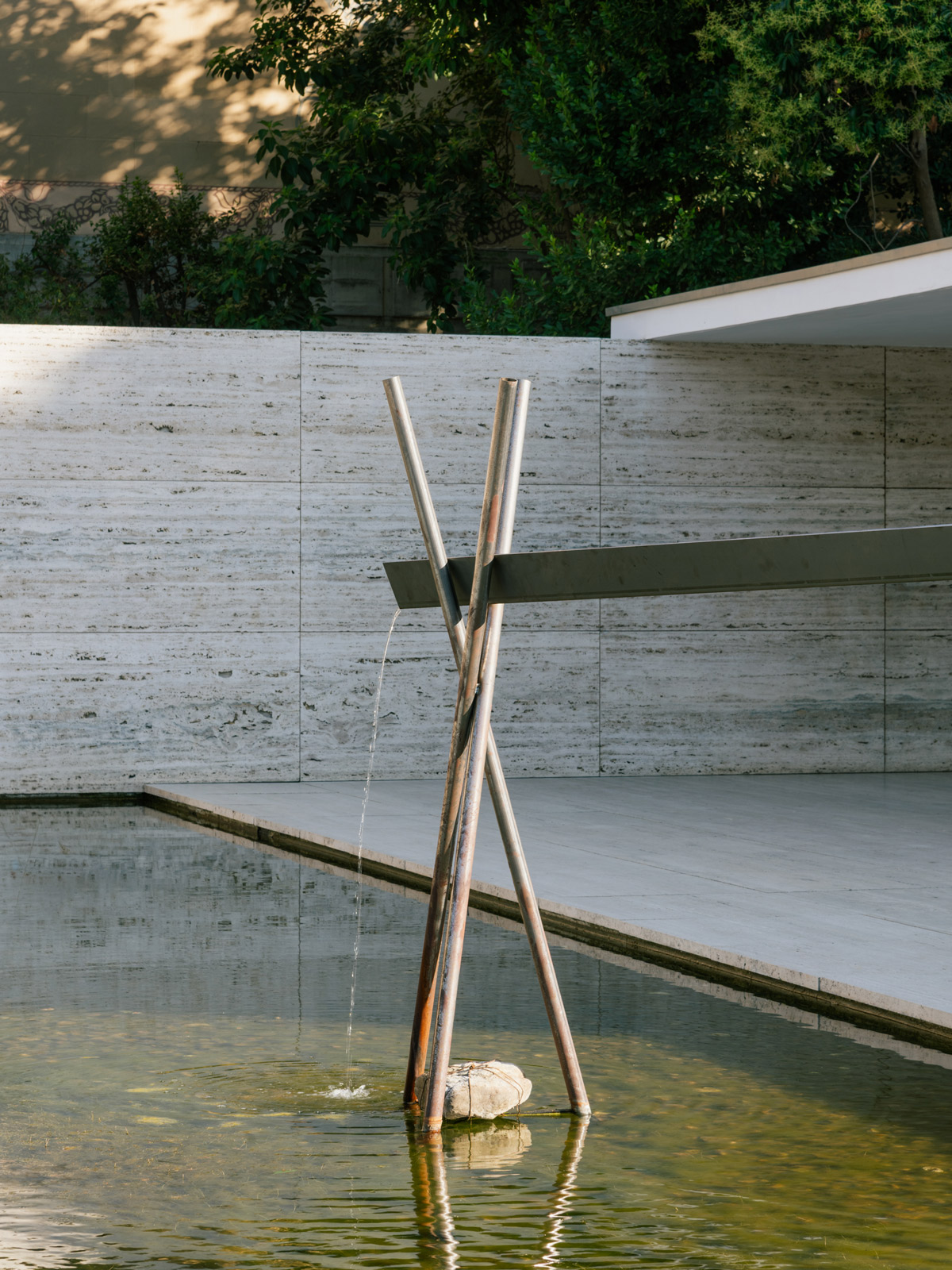
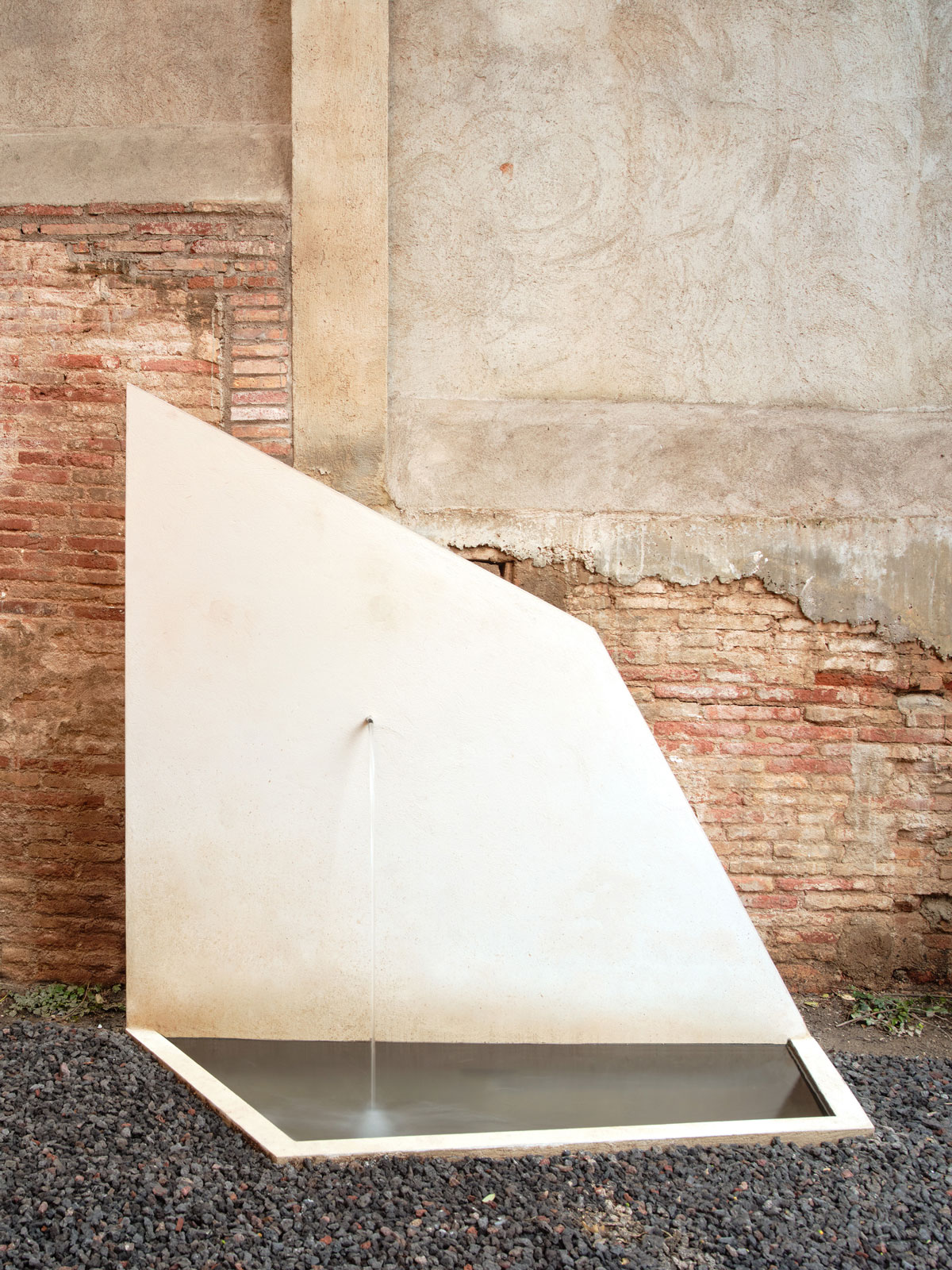
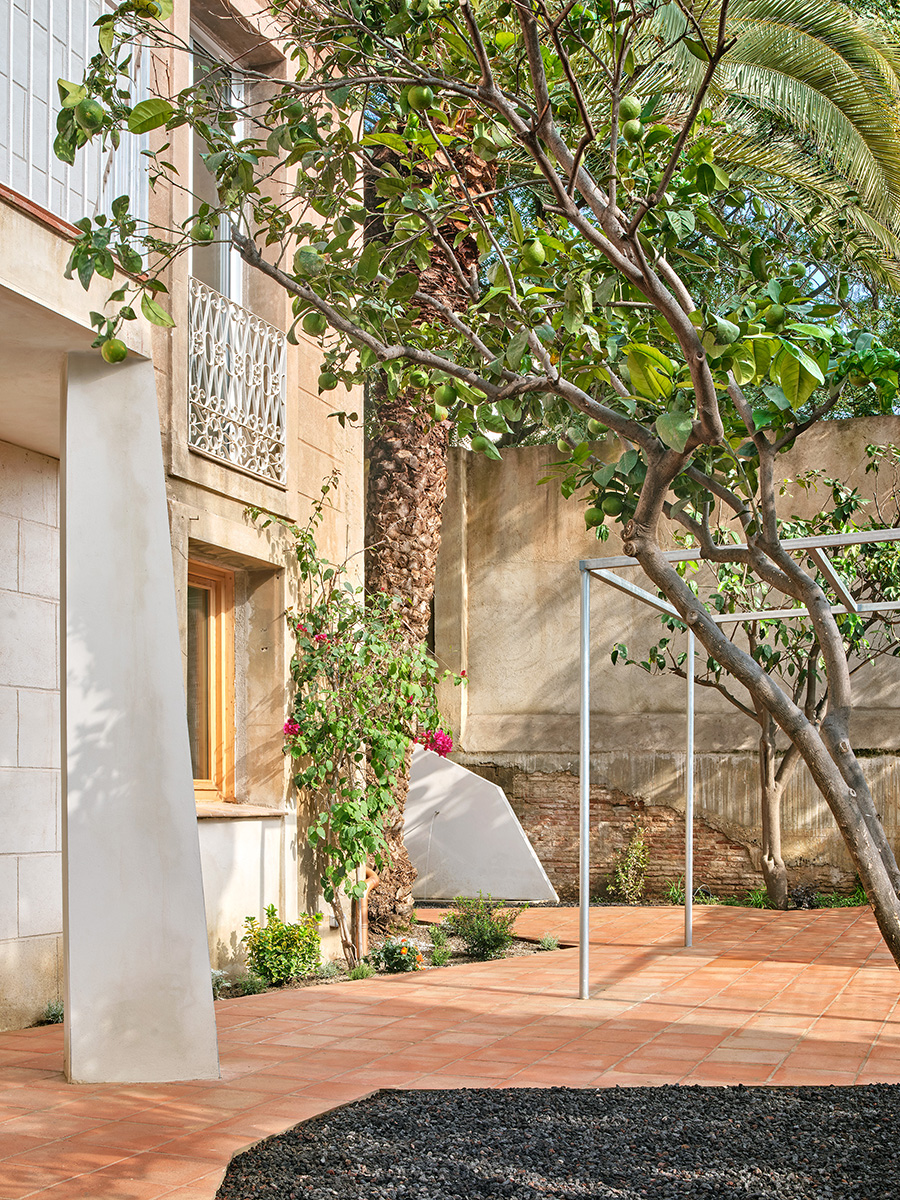
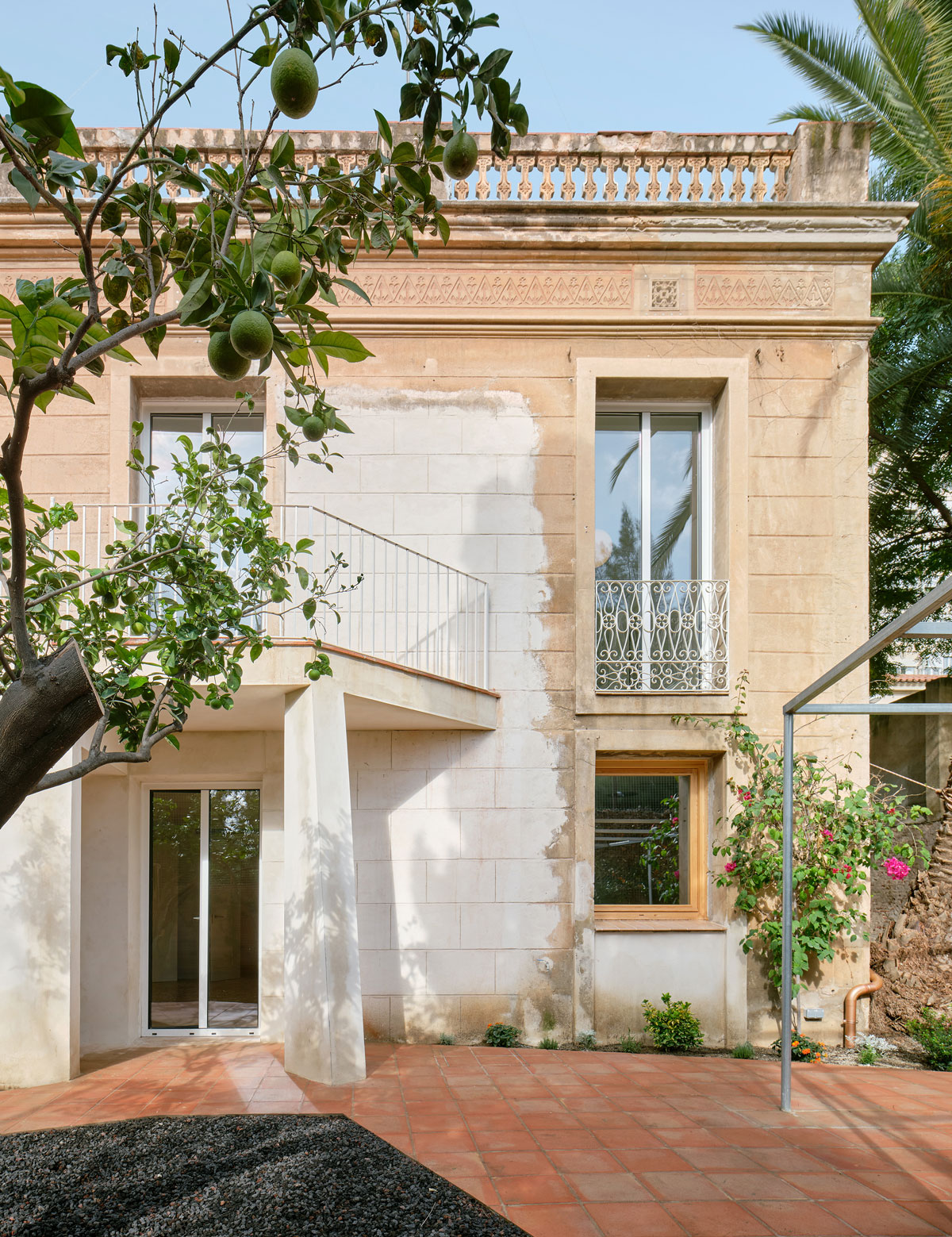
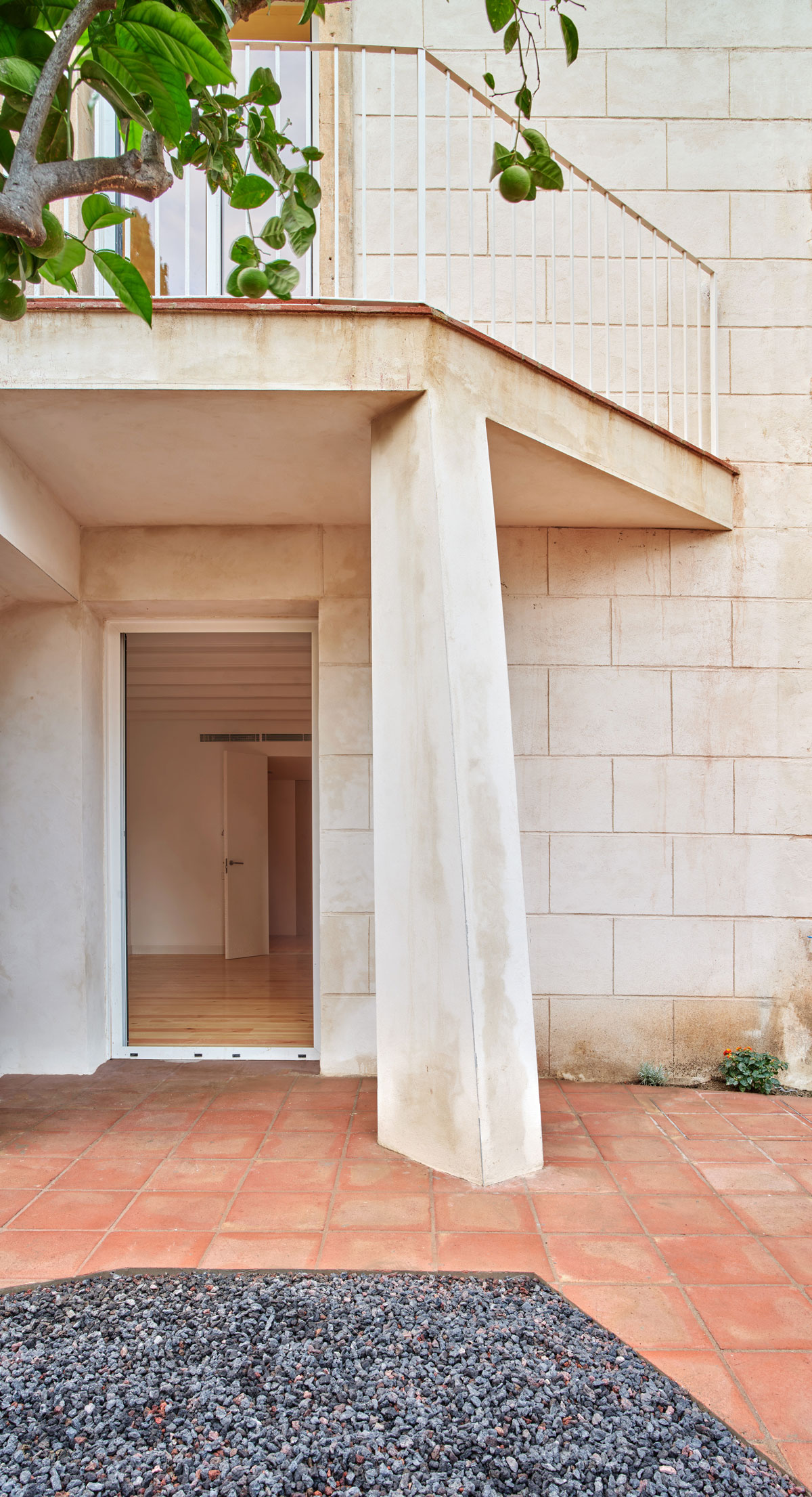
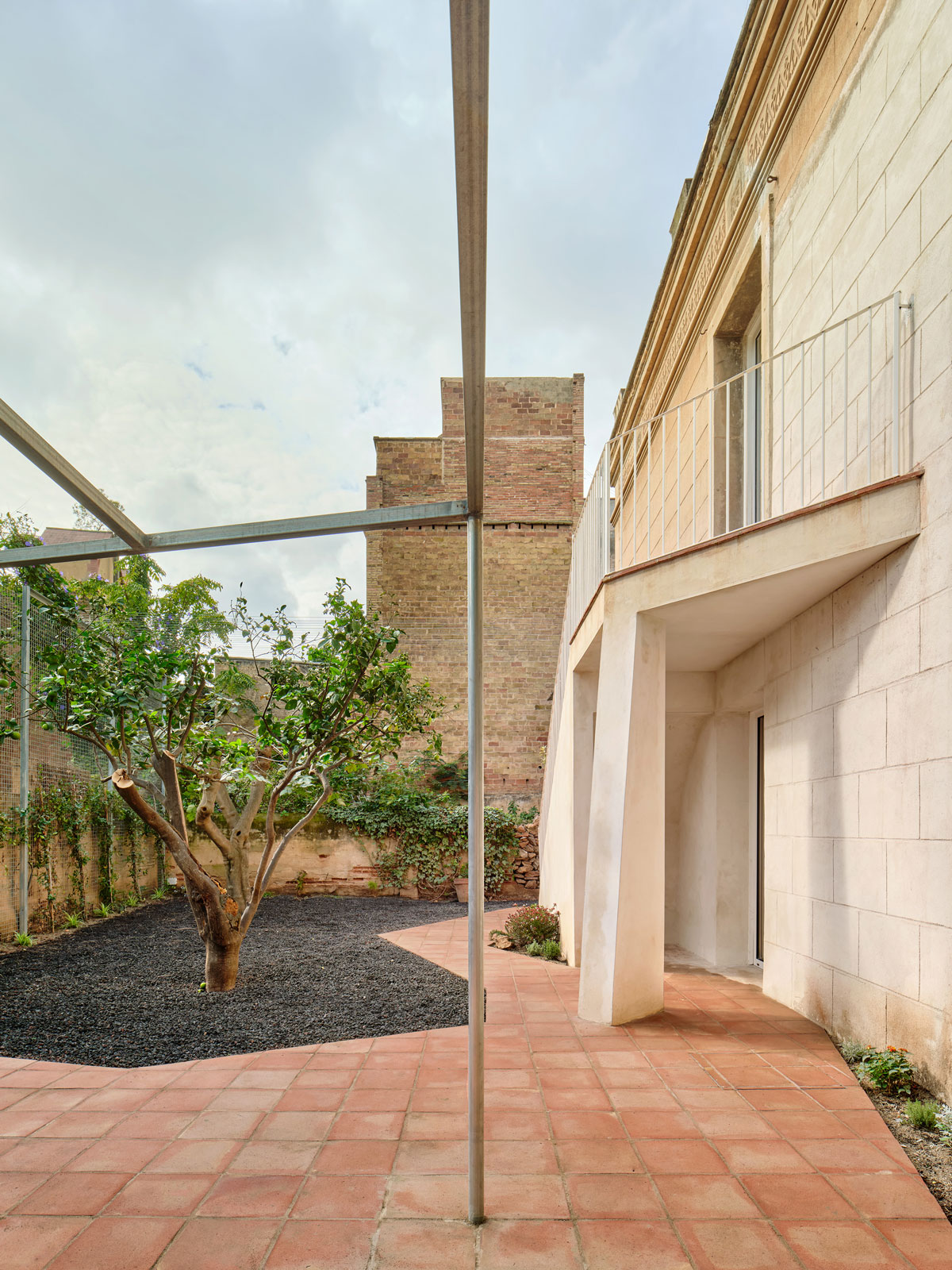
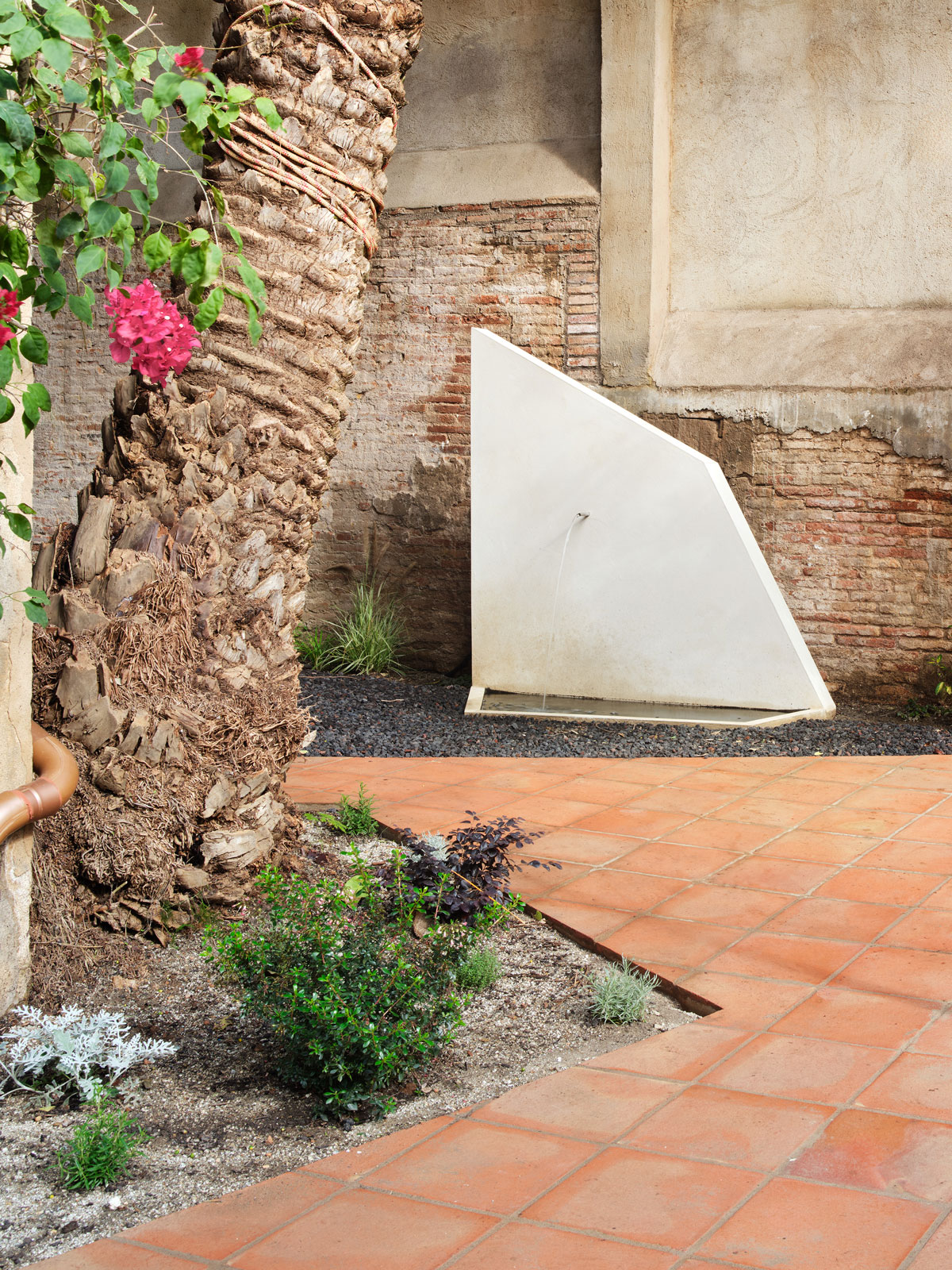
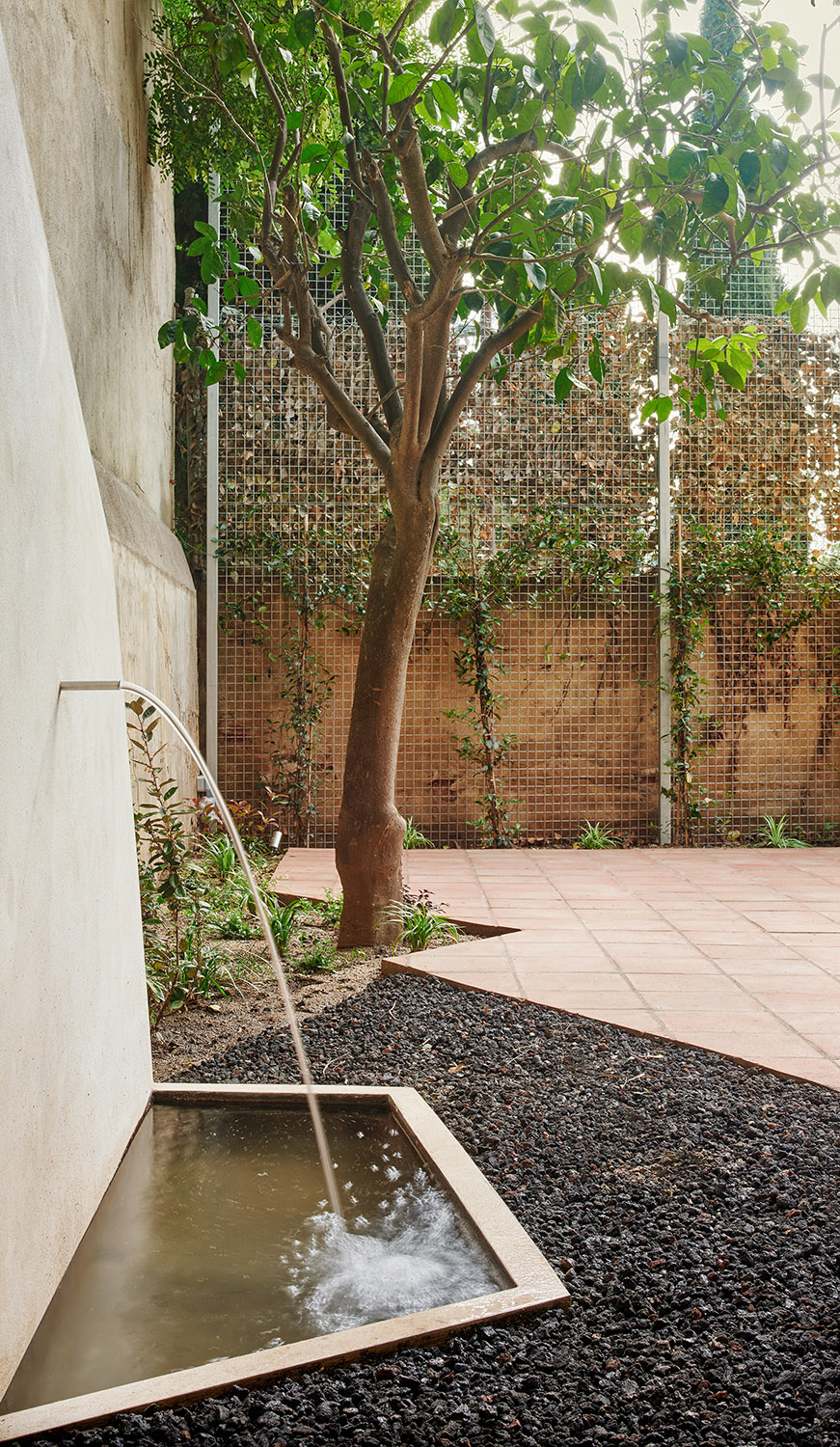
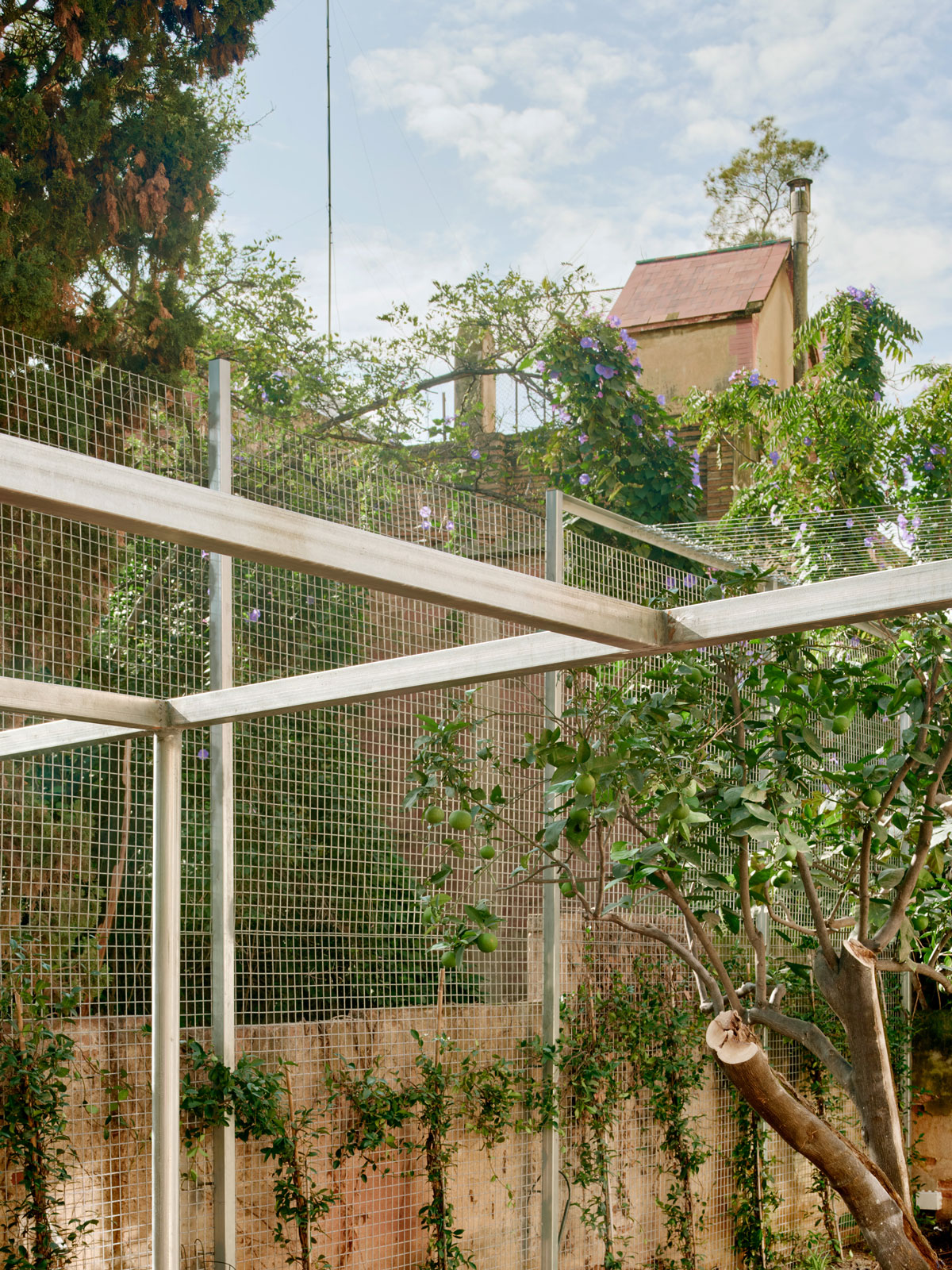
The garden acts as an exterior counterpart: a continuous pavement defines it as a habitable extension of the house, while green areas are placed alongside the façades. An ornamental fountain and a metal pergola provide shade and coolness in summer. The rear façade is simplified to recover its original cubic volume, and the exterior staircase connecting to the garden is now clearly expressed as a new gesture of direct connection to the outdoors.
Materiality
The intervention pursues an honest materiality. The original hydraulic mosaic floors are recovered. Where they were missing, the pattern is extended in monochrome white tiles of the same format. False ceilings are removed wherever possible to reveal the roof structure and wooden beams.
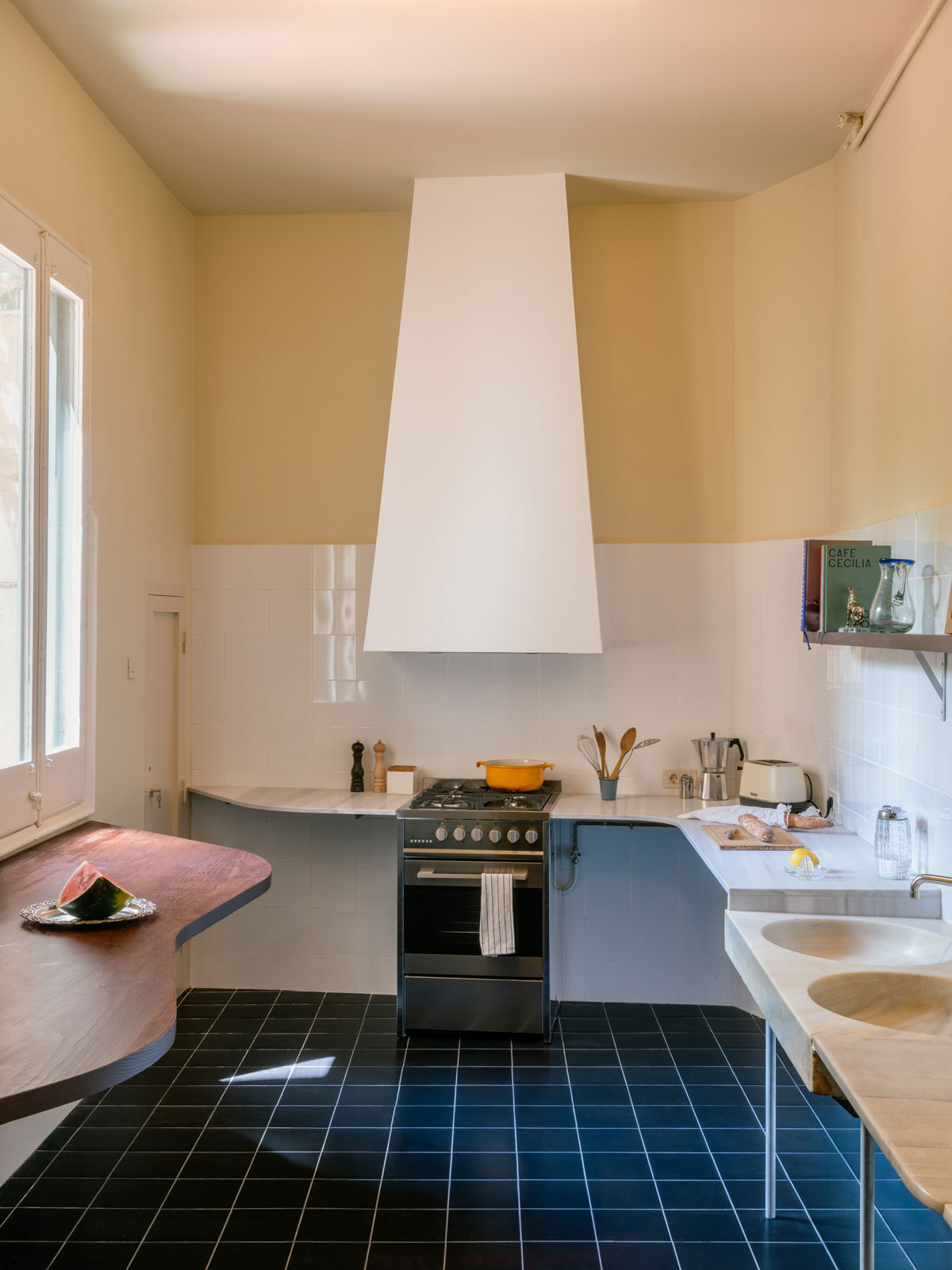
The kitchen floats on small legs, allowing the original flooring to extend beneath it.
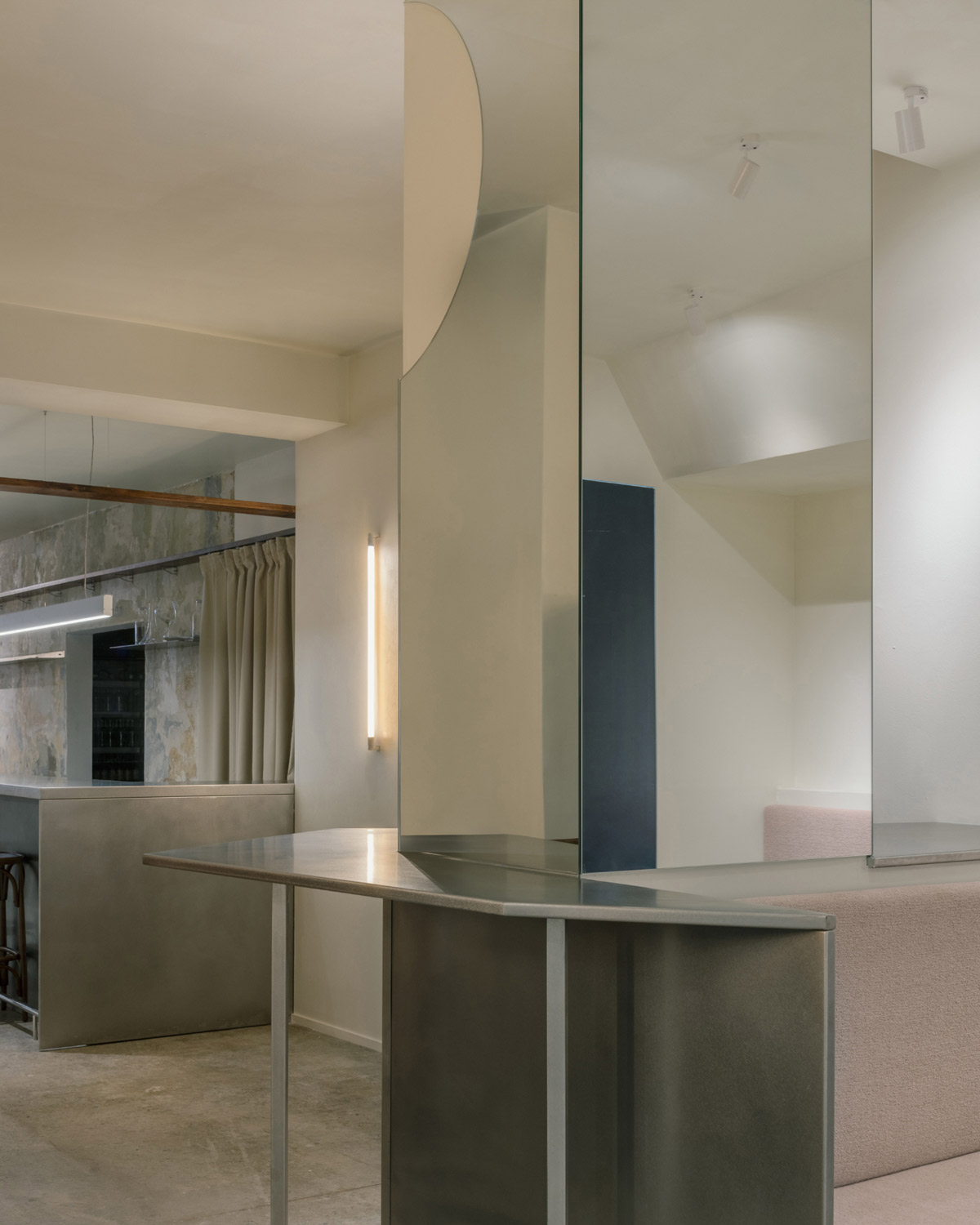
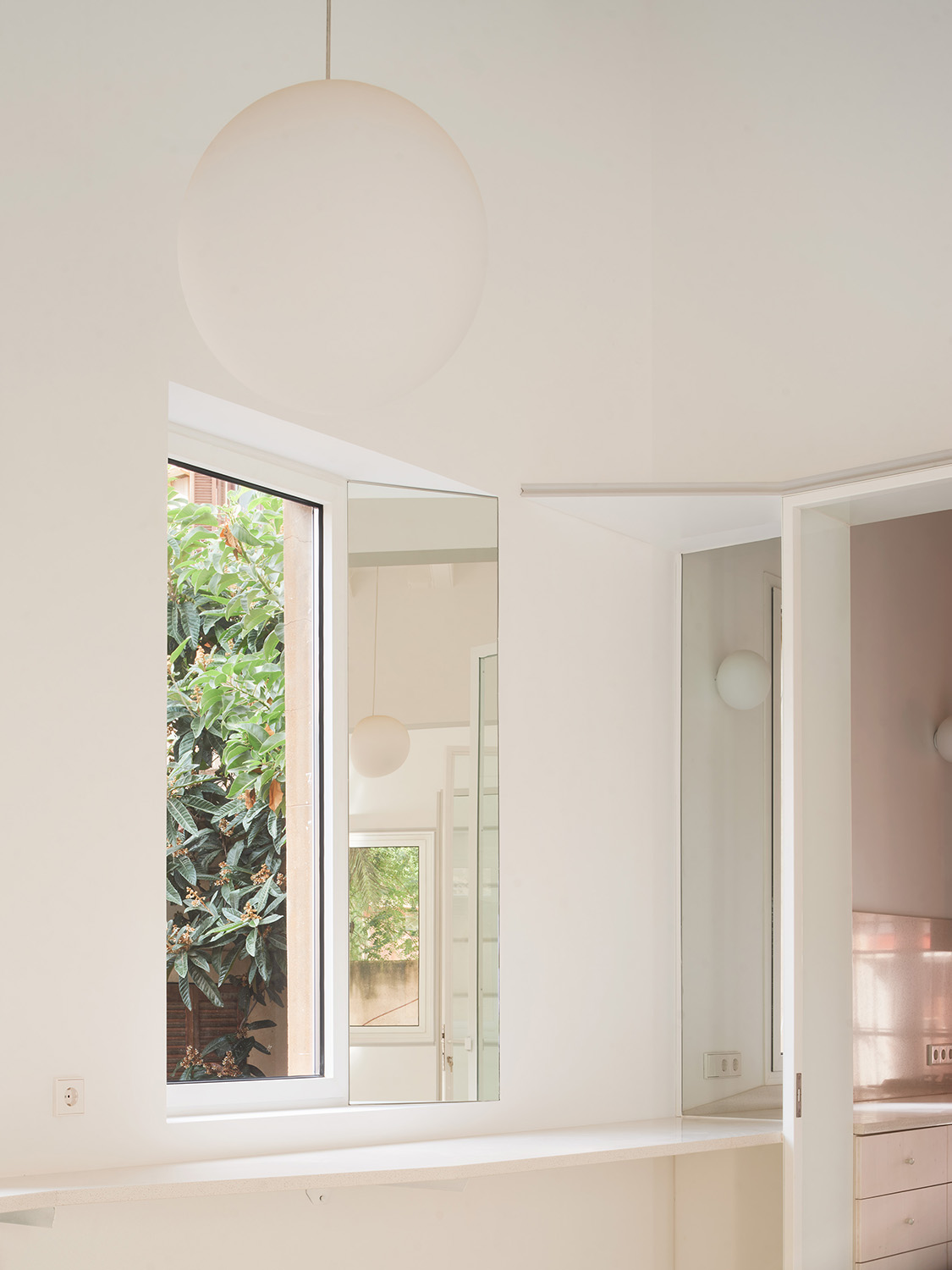
A duality between the two floors is intentionally established. The street-level floor, elevated above the garden, is treated in luminous, light white tones. Fully whitened and complemented with mirrors, it generates reflections and transparencies that evoke the lightness of being elevated and crossed by the greenery of the park and garden.
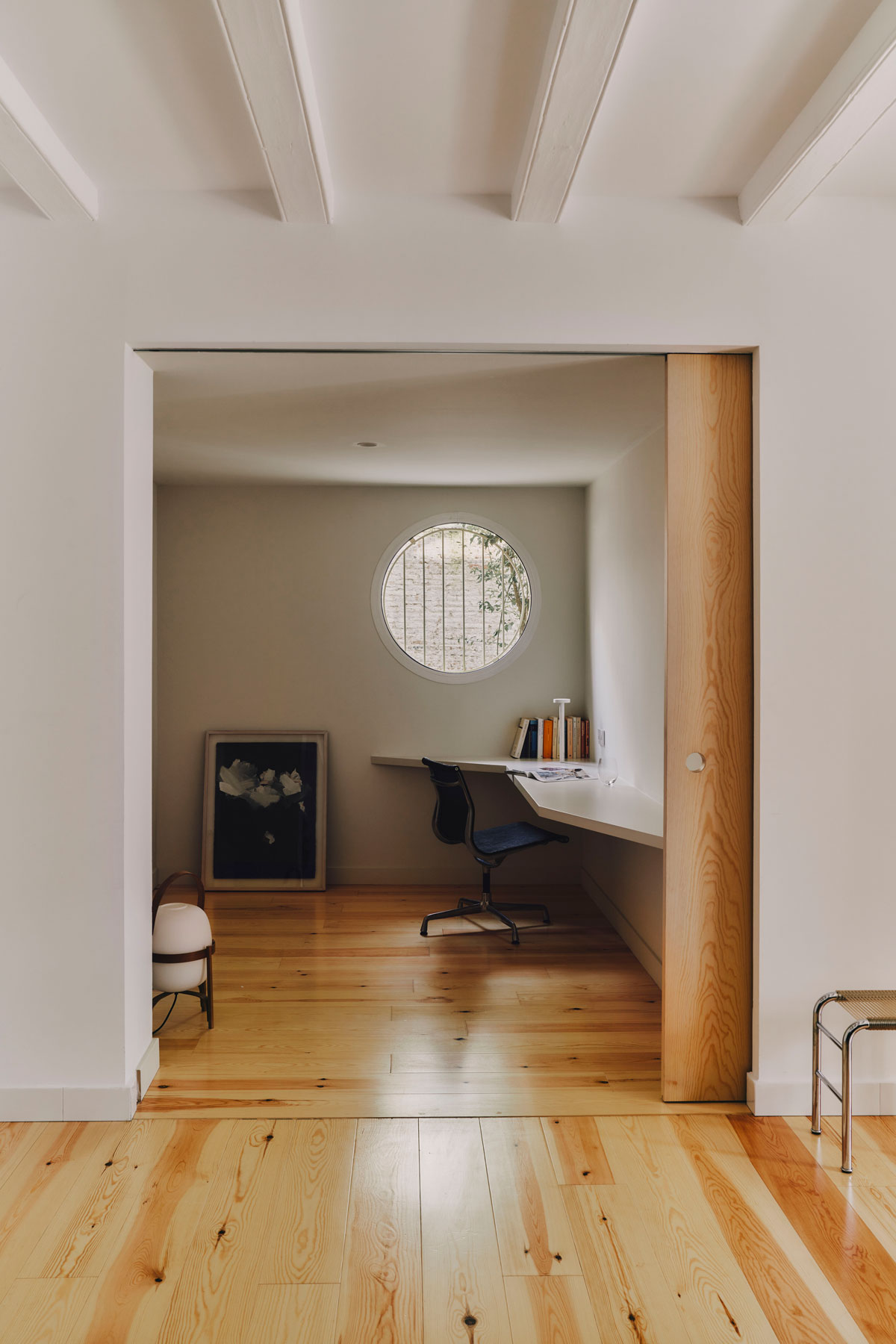
In contrast, the semi-buried garden floor touches the earth, and therefore embraces more grounded materialities. Wooden flooring evokes this contact, while beige wall tones reinforce the connection to the materiality of the soil.
Thus, the elevated street-level floor recalls a cloud in its tones, colors, and atmospheric effects. The garden level, meanwhile, evokes the cave — a more protected dwelling, the place for rest and night.
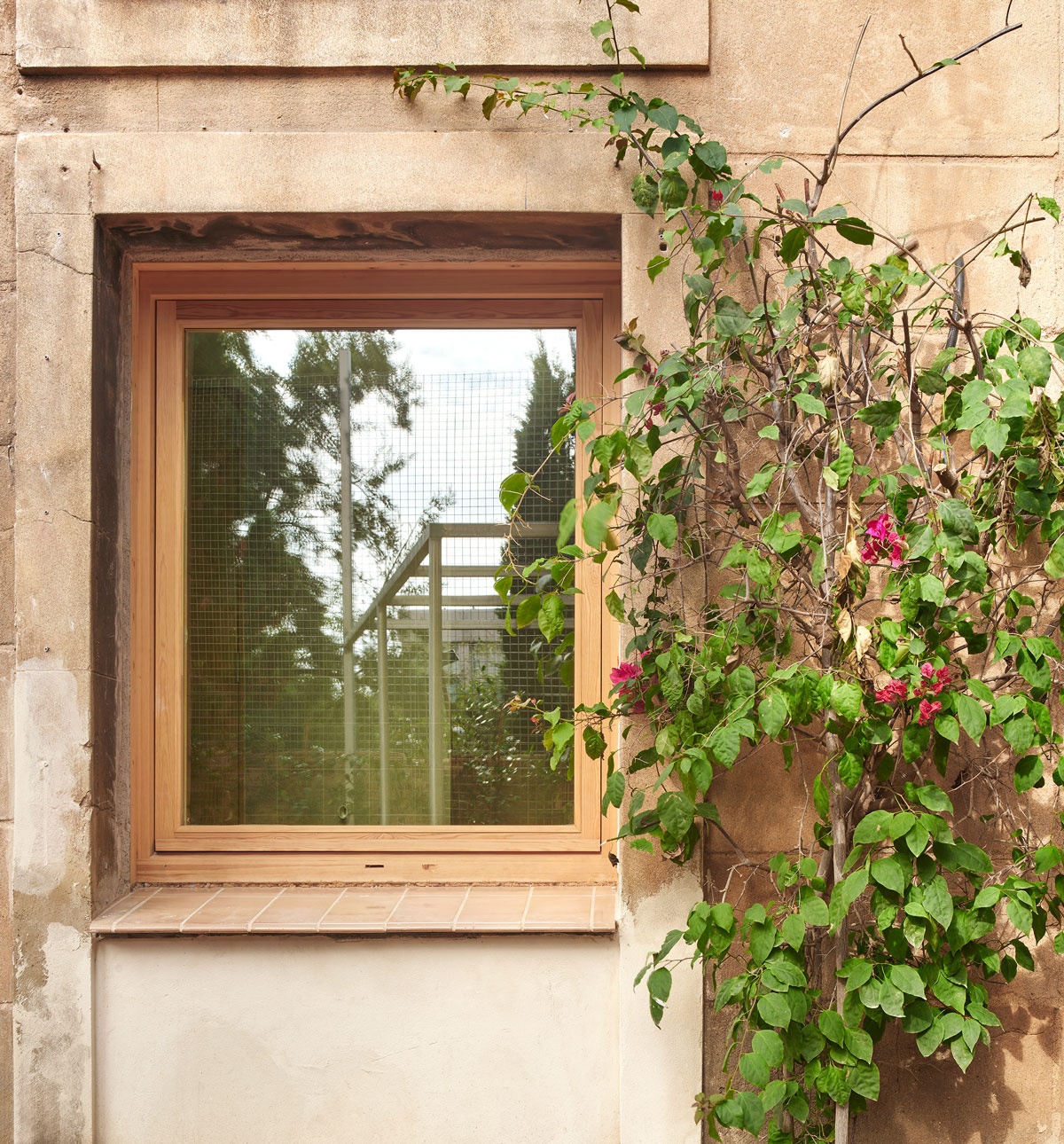
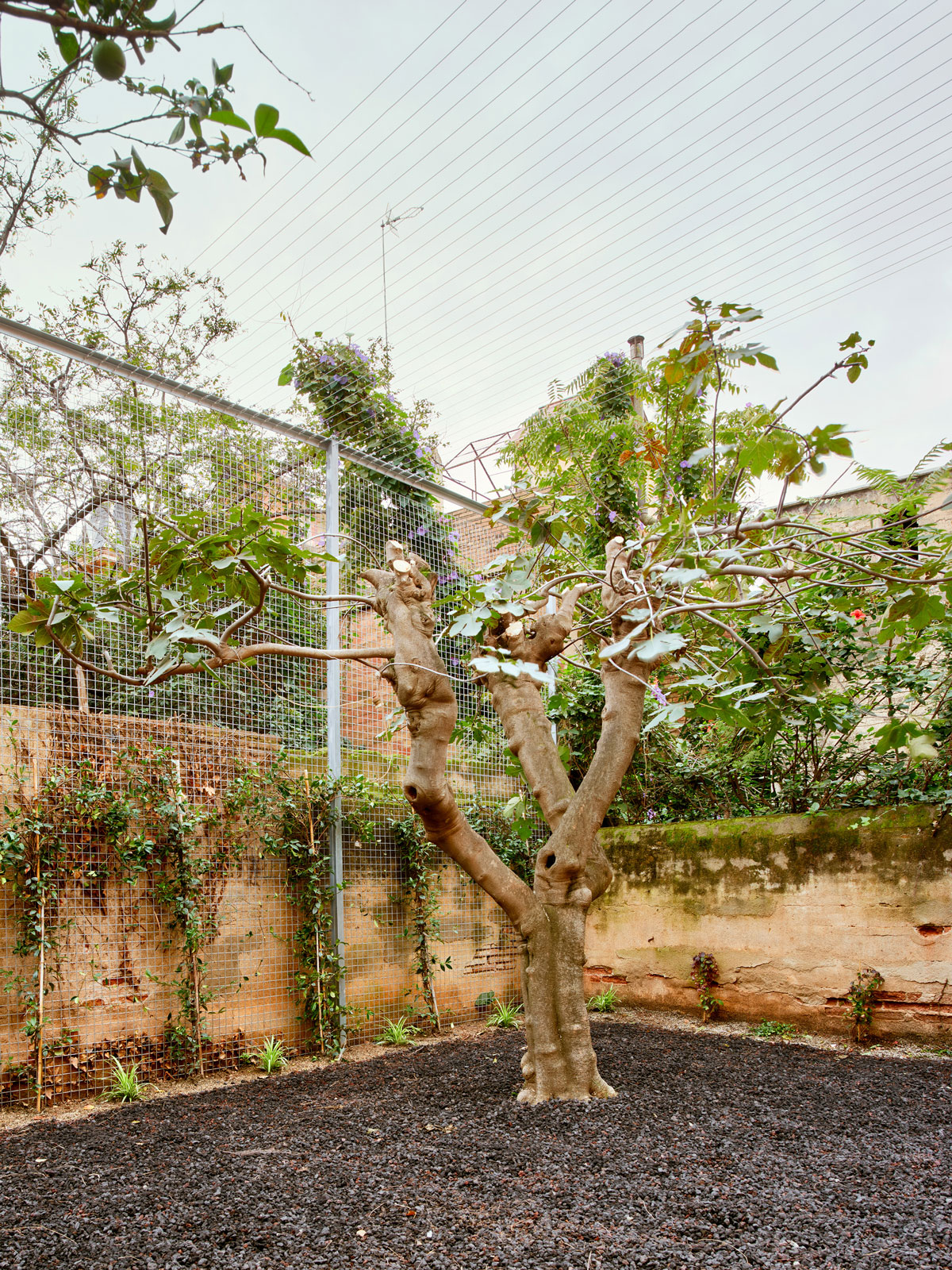
As for the garden, the existing vegetation has been preserved and complemented with low-irrigation plants. The manual brick paving links the interior of the house with the garden. A lightweight metal fence extends the existing walls upward in a contemporary and delicate manner, allowing vegetation to remain the true protagonist.